
Reviewed · WALKING TOURS
Walking Tour “The Old Bazaar, Cfake, Dunavat, Ali Pasha Bridge”
Gjirokaster is famous for its castle and old-town drama, but this walk goes to the parts many people skip. I especially love the cobblestone streets and oldest houses you pass in the Old Bazaar area, and the way the Ali Pasha Bridge aqueduct turns into a real photo moment at the end. The main catch is simple, the terrain can be uneven and not that comfortable, so you’ll want proper shoes.
This is a 3-hour walk that starts at Cerciz Topulli Square and finishes back near the meeting point. You’ll get an English-speaking guide, and the vibe is more like walking with a local friend than sitting through a dry script. Guides such as Arli, Viki, Marco, and Mario are known for making the history feel practical and human, with clear explanations and often extra time when the group is enjoying it.
Quick highlights
- A route through neighborhoods outside the castle walls that most visitors never reach
- Old Bazaar cobbles and some of the town’s oldest houses along beneath-the-walls streets
- Zerzebili Bridge connection to Cfaka, with classic Gjirokaster architecture
- Cfaka’s tekke connected to the Bektashi Order, plus protected historic houses
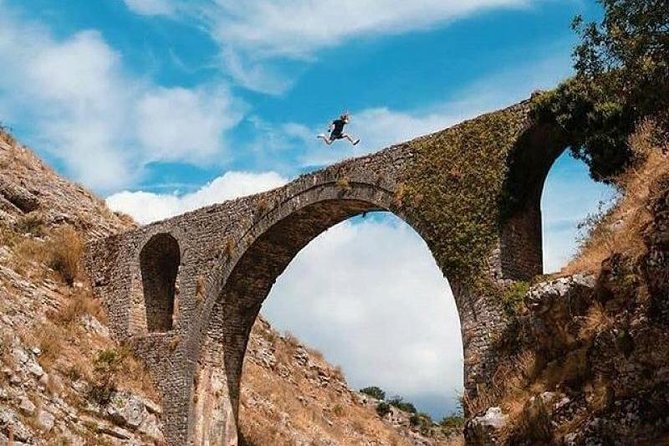
- Ali Pasha Bridge aqueduct remains, more than 200 years old, with strong scenic payoff
- Small-group feel (maximum 30) and English guidance that keeps things lively
Leaving the big sights behind, and walking the real Gjirokaster
This tour works because it shifts your focus. Instead of doing the usual highlight loop, it sends you into the quieter quarters that help you understand how Gjirokaster actually functions as a living town. You’ll start in the old town center and then move outward, first into a neighborhood along the castle walls and then into older residential areas that feel slower and more lived-in.
You’ll also get a guide who connects the physical town to the story. One of the best parts is the way the explanations sound like conversation, not a lecture. That matters in places like Gjirokaster, where street shapes, bridges, and house placement tell you more than a poster ever will.
And yes, you should plan your expectations around walking. The route includes cobblestones and paths that can feel rough underfoot. If your idea of sightseeing includes long strolls on smooth sidewalks, this may test you a bit.
More Walking Tours in Gjirokastra
- Gjirokaster walking Tour Baazar – The Castle – Zekate house
★ 4.6 · 21 reviews - Walking Tour Baazar – The Argjiro Castle – Zekate house
★ 4.5 · 18 reviews - Gjirokaster Walk Tour: Old Bazaar, Cfake, Dunavat, AliPasha!
★ 4.2 · 9 reviews
Cerciz Topulli Square to the Old Bazaar, cobblestones and the first layers outside the walls
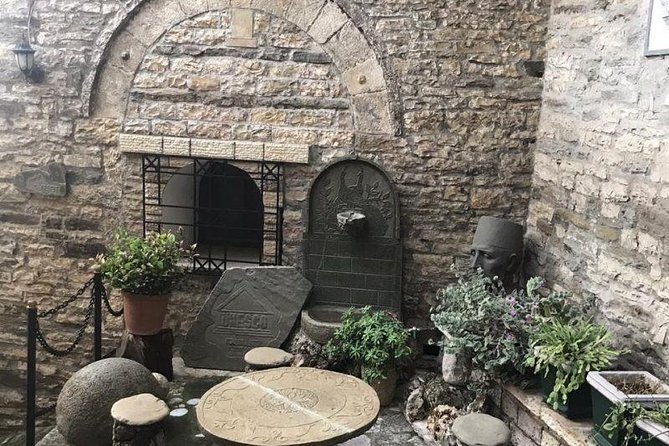
You begin in the center at Cerciz Topulli Square. From there, the walk heads toward the Old Bazaar area, which is not a bazaar in the modern sense. Think of it more like a historic neighborhood that sits along beneath the castle walls, where old houses and cobblestone streets still shape the day-to-day movement.
This part feels important because it is the transition zone. You’re moving from the busiest core toward a section that feels older, quieter, and more grounded in everyday life. As you walk, notice how the buildings crowd the street. In Gjirokaster, the town’s steep geography and stone construction are not backdrops, they are the point.
The cobbles are the practical thing to plan for. I’d put sneakers at the top of your packing list. If you can handle a bit of uneven walking, you’ll enjoy the texture of the place, the footpath lines, the way small streets reveal views you would miss from the main roads.
Crossing toward Cfaka via the Zerzebili Bridge
After the Old Bazaar stretch, you reach the Zerzebili Bridge. The bridge is not just a crossing point. It acts like a hinge in the tour, one that links the beneath-the-walls feel to a different, older neighborhood character in Cfaka.
On the far side, you step into Cfaka, another ancient part of Gjirokaster. Here, the houses and streets feel more residential, and the town’s historic protection shows up in the buildings you pass. This is also where the tour starts to mix architecture with a sense of surrounding countryside, because the views begin to open up in the direction of the hills.
The best guides handle this transition well. They slow the pace when a street angle matters, and they explain how a bridge and a neighborhood connect to the way people lived. If you want more than photos, this is where you start getting that context.
Cfaka’s tekke and protected houses, where faith and daily life overlap
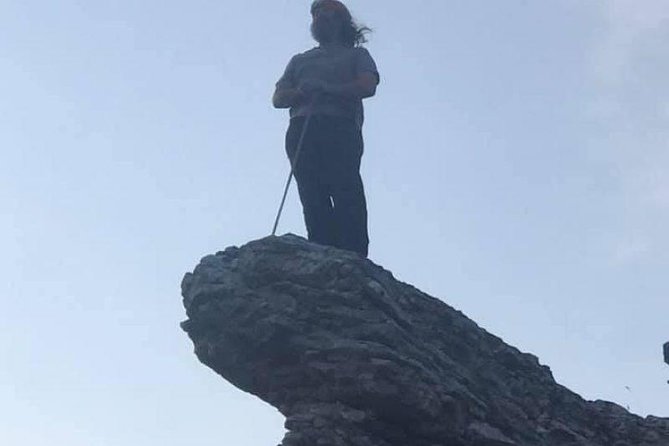
Cfaka isn’t only stone houses. You’ll also pass a tekke tied to the Bektashi Order. Even if you know little about the Bektashi tradition, the guide’s job here is to connect what you’re seeing to how religious life shaped space in the town.
I like this stop because it adds depth without getting too abstract. A tekke is a physical landmark, and you can read it through its setting and the way the street brings you toward it. You’re not just hearing names and dates, you’re learning how community structures fit into the neighborhood.
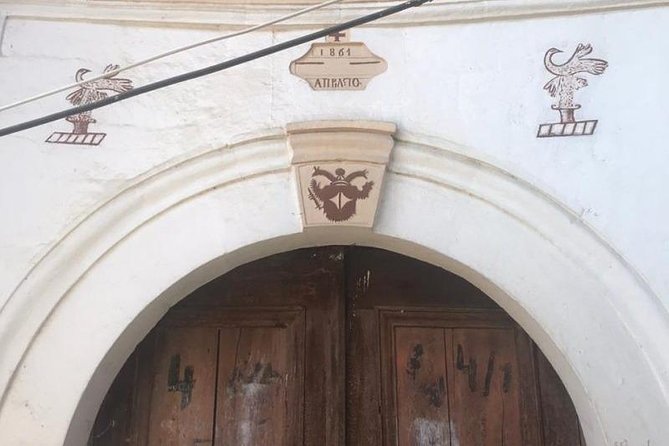
This part also helps you notice the scale of history. You’re walking through a neighborhood where some houses are in a protected category, which gives you a sense that these streets were worth preserving. That changes how you view the architecture. It’s not just scenic, it’s cultural infrastructure still standing in your path.
More walking tours of Gjirokaster:
- Gjirokaster: Old Bazaar and Castle Private Walking Tour
★ 5.0 · 6 reviews - Old Bazaar-Cfake-Dunavat-Ali Pasha Bridge Walking Tour
★ 4.6 · 5 reviews - Gjirokaster walking Tour The Old Baazar, Cfake, Dunavat, Ali Pasha Bridge
★ 5.0 · 4 reviews - Gjirokaster Walking Tour
★ 5.0 · 4 reviews
From hills and sheep to the Ali Pasha Bridge approach
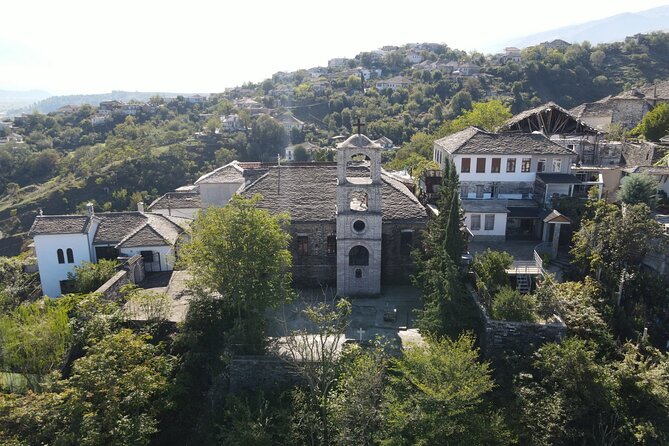
As you continue, the tour brings in nature. You’ll notice the hills and the sense of open space above the town, with sheep often seen on top of the slopes. That might sound like a side detail, but it matters because it shows Gjirokaster as both town and landscape, stone buildings with daily rural edges close by.
Then comes the Ali Pasha Bridge. This is the tour’s endpoint and its big payoff, but the best part is the lead-up. The terrain to reach the bridge can feel difficult, so a good guide navigates you through neighborhoods that set you up for a strong view. If the group’s pace is good, you often get those moments where you pause and look back, seeing how the bridge fits into the wider town.
This is also where you’ll feel the difference between a guided walk and a self-guided wander. A local guide knows which angles give you clarity, and they know how to pace the route so the last stop feels earned rather than rushed.
Ali Pasha Bridge as aqueduct remains, and why it was built
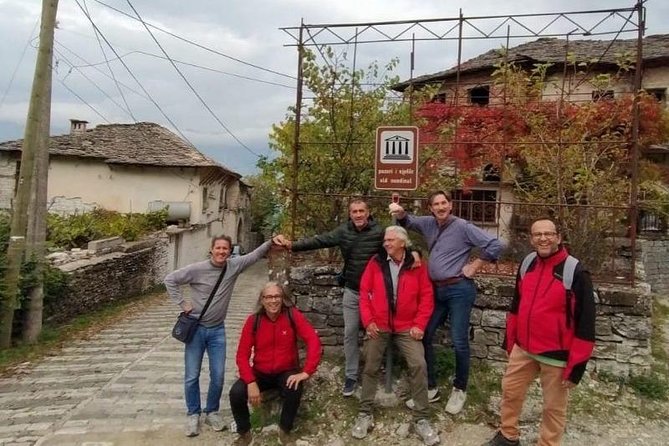
Ali Pasha Bridge is a remaining portion of an aqueduct built by Ali Pasha Tepelena more than 200 years ago. The purpose was straightforward, water for the castle. You don’t just see a bridge. You understand why it exists in the first place.
When you learn the function, the structure makes more sense. It’s easy to think of bridges as purely for crossing, but here it also connects to the town’s water system and the castle’s needs. In Gjirokaster, where elevation is everything, water movement becomes a major story, and the aqueduct remains give you a visible clue.
That’s why I like the ending of this tour. You finish with a landmark that feels both historic and practical. It isn’t only old stone for decoration. It’s evidence of how Ali Pasha Tepelena’s era solved a real problem.
Also, don’t be surprised if your guide slows down for photos and adds extra context. Some guides even spend a bit of extra time showing other nearby sights if the timing works and everyone is enjoying it.
Guide quality is the real value here
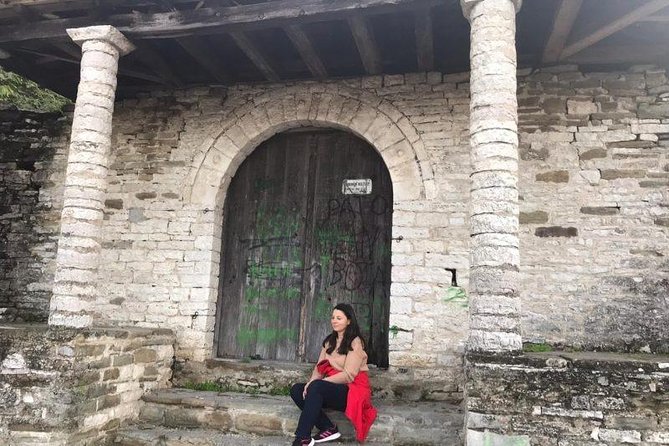
A lot of walking tours fail because the guide treats it like a script. This one tends to win because the guide role feels personal. You’ll hear explanations that connect architecture to life now, not just what happened centuries ago.
Arli, for example, is praised for taking the terrain issue seriously and turning it into a better viewing experience. Instead of pushing people straight to the bridge and hoping for the best, he guides you through neighborhoods that lead to a spectacular perspective. Viki, a local, is known for tailoring the schedule to what you care about and for adding humor and real stories as you go.
Marco and Mario also get highlighted for making it feel like walking with knowledgeable friends rather than sitting through a lecture. That tone matters on a 3-hour walk. If you want the town explained in a way that keeps you moving and paying attention, this tour’s guide style is a big part of the payoff.
Price, timing, and what makes this a good buy at $18.06
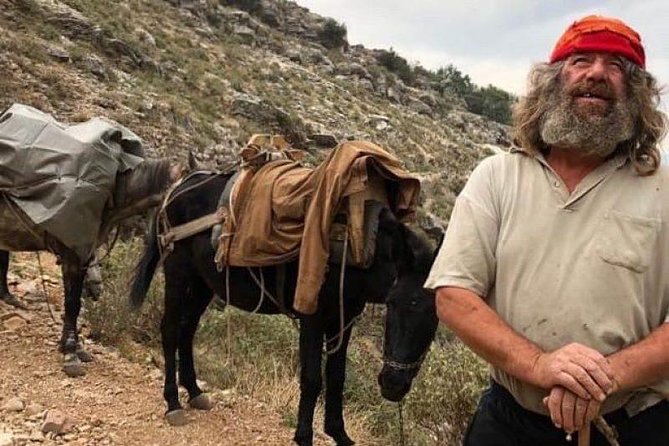
At $18.06 per person for about 3 hours, you’re paying for something specific: a guided route through multiple historic neighborhoods plus an ending at a major landmark. The fact that it’s offered in English helps your value too, since you’re not just paying for transportation, you’re paying for interpretation.
What makes it good value is coverage. You start in the center, move to Old Bazaar beneath the castle walls, cross via Zerzebili Bridge to Cfaka with a tekke linked to the Bektashi Order, and finish at Ali Pasha Bridge. That is a lot to see and understand in one morning block.
It also helps that the group size is capped at 30. That won’t feel like a private tour, but it usually supports a real conversation and not just one-way talking.
Timing-wise, the start is 9:30 am. A morning start is helpful for photo light and for walking comfort. If you tend to get tired in the heat, mornings are usually kinder.
Practical tips so the uneven parts feel fun, not annoying
This walk is doable for most people, but the terrain is your main variable. Plan for cobblestones and some not-so-comfortable ground. My best advice is to wear shoes you’d be happy to walk a long time in, with grippy soles.
Bring a small water bottle. The tour is only about 3 hours, so you do not need to pack for a trek, but you will be walking uphill at times, and you’ll be outside.
If you care about photos, set expectations for the approach to Ali Pasha Bridge. The strongest angles are tied to how the route is navigated, so let your guide lead rather than stopping randomly.
One more small point: service animals are allowed, and the tour is near public transportation. If you’re building a day around Gjirokaster, this makes it easy to fit into your schedule without a big logistics headache.
Should you book this Old Bazaar, Cfaka, and Ali Pasha Bridge walk?
Book it if you want the Gjirokaster you don’t get from the main viewpoints. I’d choose this tour when you like architecture, small historic neighborhoods, and stories that explain how the town works. It’s also a great option if you want a guide who keeps the pace lively and the explanations human, especially toward the Ali Pasha Bridge ending.
Skip it or rethink if you know you struggle with rough cobblestones or uneven walking. The terrain is not described as extreme, but it is also not treated like an easy stroll. You’re walking on ground that can be uncomfortable.
If you’re on the fence, here’s a simple decision rule: if you can handle uneven streets for three hours and you want context for what you’re seeing, this is a very solid value at $18.06. If you want flat, easy walking only, choose a different style of sightseeing.
FAQ
How long is the walking tour?
It lasts about 3 hours.
What time does the tour start?
The start time is 9:30 am.
Where does the tour start?
You meet at Experience Gjirokastra, Rruga Gjin Zenebisi, Gjirokastër, Albania.
How much does the tour cost?
The price is $18.06 per person.
Is the tour offered in English?
Yes, it is offered in English.
What’s included in the price?
The guide is included.
What should I wear or expect for the walking?
You should expect walking on not so comfortable terrain, so wear sneakers.
What if the weather is bad?
This experience requires good weather. If it’s canceled due to poor weather, you’ll be offered a different date or a full refund.
More Markets in Gjirokaster
- Blue Eye & Gjirokaster: 4×4 Tour and Old Bazaar
★ 5.0 · 3 reviews - From Tirana: Kruja Castle, Old Bazaar & Sari Salltik View
★ 4.8 · 2,171 reviews - From Durres/Golem: Kruja Castle & Old Bazaar Day Tour
★ 4.9 · 1,317 reviews - Durres/Golem: Kruja Castle & Bazaar with Traditional Lunch
★ 5.0 · 632 reviews
Newly listed around Gjirokaster
- Gjirokastra Private Half-Day Walking Tour★ 5.0 · 3 reviews
- Private Cold War City Tour in Gjirokaster★ 4.5 · 4 reviews
- Gjirokaster walking Tour The Old Baazar, Cfake, Dunavat, Ali Pasha Bridge★ 5.0 · 4 reviews
- Gjirokaster – The Stone City of UNESCO, Private Tour from Tirana★ 4.5 · 4 reviews
- Gjirokaster Walking Tour★ 5.0 · 4 reviews
- RED LINE: VIP daily tour with SUV: Vlore-Gjirokaster-Permet★ 5.0 · 4 reviews
- Step Back in Time: Gjirokastër Day Trip from Saranda★ 2.8 · 5 reviews
- Old Bazaar-Cfake-Dunavat-Ali Pasha Bridge Walking Tour★ 4.6 · 5 reviews
Walking Tours, compared.
Tirana Center: Magic Walking Tour French/Italian/English Etc
Read our review →
Blue Eye Kayak and walking tour & Lekursi Castle
Read our review →

Browse the lists this tour appears in