
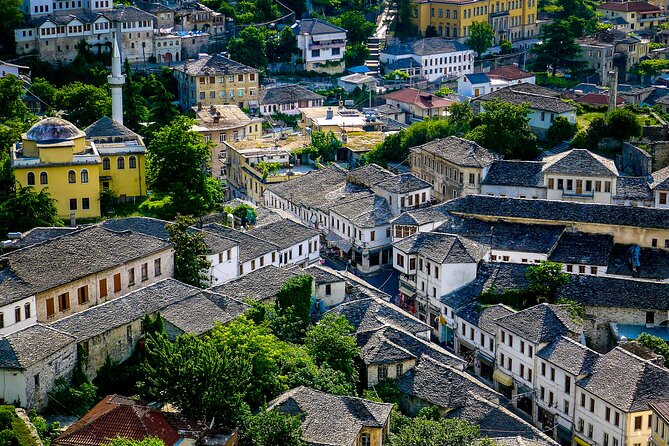
Reviewed · GJIROKASTRA DAY TRIPS
Gjirokaster walking Tour The Old Baazar, Cfake, Dunavat, Ali Pasha Bridge
Gjirokastër can feel like a set of famous viewpoints, but this walking route takes you through the town’s lesser-visited neighborhoods, starting at Çerçiz Topulli Square and ending at Ali Pasha Bridge. I especially like the cobblestone streets and the old houses that sit just below the castle walls, and you get a guide who knows how to explain what you’re seeing in plain terms. One drawback to consider: it is a 3-hour walk, so bring comfortable shoes for uneven stone.
What makes it work is the mix of places, not just the scenery. You cross the Zerzebili bridge, then reach Cfaka (Cfake) for old houses and a tekke tied to the Bektashi Order, with nature and sheep showing up above the rooftops. Small group size helps too, with a maximum of 15 people.
Quick hits before you go
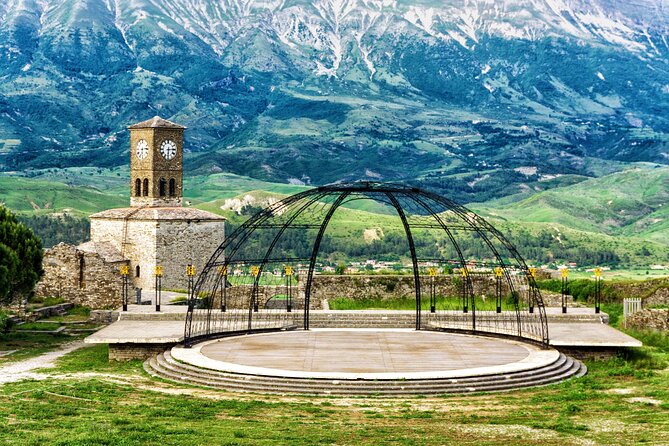
- Old Bazaar area, even though it is not a bazaar anymore, you still get cobblestone lanes and very old homes
- Zerzebili bridge as a connector, it stitches together neighborhoods along the castle side
- Cfaka (Cfake) + a Bektashi tekke, a cultural stop that most self-guided walks skip
- Dunavat with sheep on nearby hills, a change of pace from stone streets
- Ali Pasha Bridge as a clear ending, so the route feels like a complete loop
- Guides like Besi can make the town click, with history explained in an upbeat, flexible way
Why this Gjirokastër route feels more real than the main sights
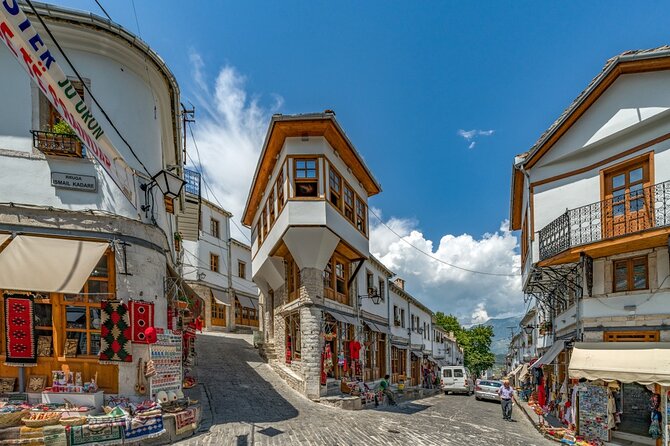
If your goal is to understand Gjirokastër as a living town, this route is a good fit. The walk goes beyond the castle viewpoints and into areas people often overlook, including spaces outside the castle walls that still feel tightly connected to daily life.
I like that it keeps things tangible. Instead of just pointing at buildings, the experience is set up so you move street by street, bridge by bridge, and neighborhood by neighborhood. That makes it easier to see the town’s layers, from old stone lanes to religious architecture and then out toward the hillside view.
The route is also built around contrasts. Cobblestones and ancient homes give you one kind of atmosphere. Then you step into a neighborhood area with a tekke and a different rhythm, and later you end with the broad presence of Ali Pasha Bridge. It is a simple structure, but it helps you remember Gjirokastër in scenes, not facts.
More Walking Tours in Gjirokastra
- Gjirokaster walking Tour Baazar – The Castle – Zekate house
★ 4.6 · 21 reviews - Walking Tour Baazar – The Argjiro Castle – Zekate house
★ 4.5 · 18 reviews - Walking Tour “The Old Bazaar, Cfake, Dunavat, Ali Pasha Bridge”
★ 5.0 · 10 reviews
Price and timing: what $18.08 buys you
This is listed at $18.08 per person, with a tour duration of about 3 hours. For a short half-morning or early afternoon plan, that price can feel fair because a guide is included, and the itinerary is focused. You are not paying just to be dropped at one spot, you are paying to be walked through multiple neighborhoods with context.
A key value point here is that the Old Bazaar stop is marked as free for admission. That matters because it keeps the experience from turning into a ticket-heavy day. You also get a mobile ticket and confirmation at booking time, which makes check-in simpler when you are trying to keep moving.
Two more practical notes affect value:
- The group is capped at 15 people, which usually means you spend more time listening and less time waiting.
- There is a minimum requirement of 2 people. If you book late and the group is not formed yet, your date might not run.
Starting point at Çerçiz Topulli Square: where your bearings get set
You begin at Sheshi Çerçiz Topulli, in Gjirokastër. This is a smart starting location because it gives you a central anchor before the walk starts drifting into the older side streets.
From the first minutes, the focus is on orientation. You start in the old town center, then head toward the Old Bazaar area that is described as no longer being a bazaar in the way you might imagine. That little twist matters. It cues you to pay attention to the architecture and street pattern, not to expect active market stalls.
If you like taking photos, this is also where you can start building your angles. Once you leave the square, the streets tighten and the castle-side buildings become your main frame. Starting here helps your camera and your brain sync up.
The Old Bazaar area: cobblestones and some of the oldest houses
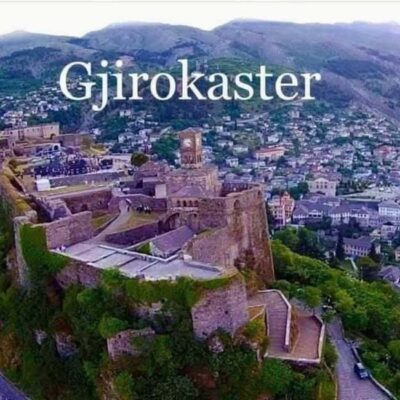
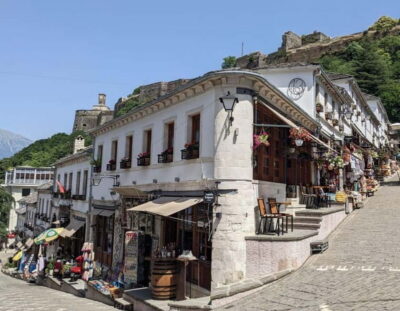
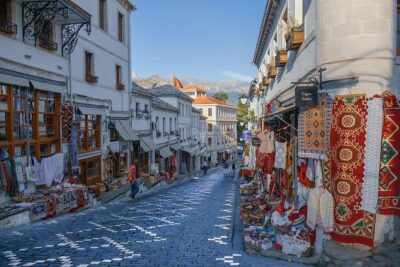
The walk then goes to the Old Baazar neighborhood area, along beneath the castle walls. The time at the Old Bazaar is listed at about 15 minutes, so think of it as a concentrated introduction rather than a long wander.
What you should look for here:
- Cobblestone streets, which change the feel of the walk immediately
- Old houses, including some of the oldest homes in this part of town
- The sense that this area sits just outside the castle walls, still close enough to feel connected
Because this stop is short, you will get more out of it if you slow down for a moment at the beginning. Look up at doorways and windows, then scan the street curve. That is where you start to understand how the neighborhoods relate to the castle above them.
Potential drawback: cobblestones can be slippery or tiring if you are wearing poor footwear. If you are prone to sore feet, treat this as a strong reason to wear shoes with good grip.
Other Gjirokastra day trips from Gjirokaster:
- Sarandë: Tour Gjirokaster,Blue Eye & Lekursi Castle
★ 4.7 · 220 reviews - Gjirokastër: Traditional Albanian Vegetarian Cooking Class
★ 4.4 · 17 reviews - Gjirokaster: Wood Crafting Class
★ 5.0 · 16 reviews - Wood Crafting Experience in Gjirokastra
★ 4.5 · 10 reviews
Zerzebili bridge: the quiet moment that connects neighborhoods
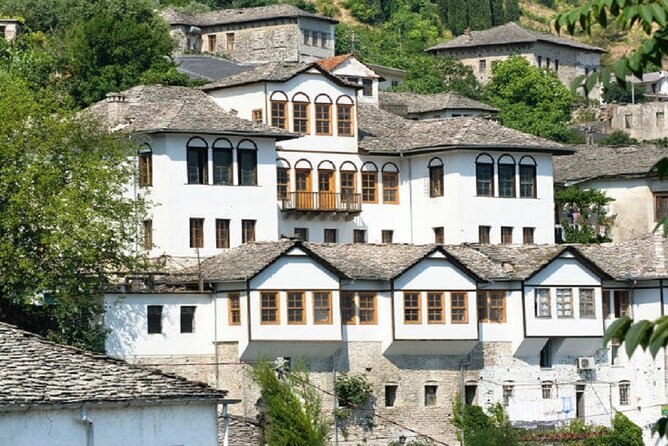
After the Old Bazaar area, the route crosses the Zerzebili bridge. Bridges often feel like a break in a walking tour, but here it functions more like a transition point. You are moving from one cluster of old streets toward another ancient neighborhood.
This is the sort of stop where a good guide earns their pay. The bridge is not just a crossing. It helps you mentally map the town. By the time you reach Cfaka, you are not guessing how the neighborhoods connect, you can feel the route you’re traveling.
Also, bridges in old towns tend to give you a brief change in perspective. Even if you do not plan to take photos, look sideways for a few seconds. It helps you understand the town’s layout faster.
Cfaka (Cfake): old houses and a Bektashi tekke
Cfaka, also spelled Cfake, is one of the most interesting parts of the walk because it adds cultural meaning to the streets. You pass old houses, and you also visit a tekke linked to the Bektashi Order.
That combination is the point. Stone lanes and aging homes tell you one story, but a tekke tied to a specific religious tradition tells you another. Together, they show how spirituality and neighborhood life can live in the same space.
What to do when you are there:
- Take your time at the tekke area. Let your eyes adjust to smaller details, like architectural features around the entrance and surrounding structures.
- Listen for how your guide describes the Bektashi Order connection, since that is the only explicit religious-cultural detail in the route.
One practical consideration: you may want to dress respectfully when you are near the tekke. The tour does not spell out dress code rules, but it is the kind of place where you will feel better if your outfit is modest and comfortable for a walk.
Dunavat and the hillside sheep view
The itinerary includes Dunavat as part of the route before you reach the Ali Pasha Bridge. In the description, Dunavat is tied to nature and hills, including sheep on the slopes above the town.
This section is a nice change from the dense, stone-heavy feeling of the Old Bazaar and Cfaka streets. You get a different sense of place, more open sky and a more rural rhythm.
If you like travel that mixes city and countryside in one short window, this is where it happens. Just remember that sheep-on-hills views can be fleeting, depending on where you pause and where the route angles. Do not rush. A slower pace here often gives you better moments to remember.
Ali Pasha Bridge: your final destination and why it is a strong finish
The walk ends at Ali Pasha Bridge. Ending at a named bridge works well because it gives your brain a finish line. You are not just drifting back into the old town, you are closing the route with a specific landmark.
Even if you do not know the bridge story beforehand, it helps that the route is organized to lead you toward it. You start from the square, move through the Old Bazaar area under the castle walls, cross Zerzebili bridge, reach Cfaka with its tekke, pass Dunavat, and then arrive here with a better sense of how neighborhoods connect.
For most people, that makes the final stop feel like more than scenery. It becomes the “proof” that you actually walked the town, not just visited one or two points.
The guide makes it: what I’d look for, and why Besi stands out
The guide is included, and the reviews strongly emphasize how much difference a good local guide can make. The best feedback centers on clarity, warmth, and flexibility. One guide named in the reviews is Besi, described as warm, curious, passionate, and highly cultured.
More importantly, the praise is about approach:
- Explaining Gjirokastër history in a way that feels personal
- Keeping the walk entertaining, not just lecture-style
- Being flexible, adjusting as the group moves through streets and stops
If you want the town to feel like a place with character, not just a list of monuments, you should prioritize guides who can connect what you see to the broader meaning of the neighborhoods. This route is built for that style of guiding. You have cobblestones, old homes, a Bektashi tekke, and bridges. Without context, it can still be nice. With context, it becomes memorable.
How to pace yourself on cobblestones in a 3-hour walk
Because cobblestones are specifically called out, I recommend you treat this as a real walking tour, not a casual stroll. That means:
- Wear shoes with grip and support
- Give yourself permission to slow down for photo stops, especially around old house facades and bridge views
- Bring water, since 3 hours is long enough to get thirsty even if the walk feels scenic rather than intense
Also, with a small group (up to 15 people), you can usually walk at your own pace with a quick catch-up. If you stop for a longer look at an old doorway or a street bend, just make sure you are not completely separated from the group.
Who should book this Gjirokastër walking tour
This is a good match if you:
- Want to see Gjirokastër beyond the standard castle-area circuit
- Like history explained through neighborhoods, not just through monuments
- Enjoy walking routes that end at a clear landmark like Ali Pasha Bridge
- Appreciate cultural details like a tekke tied to the Bektashi Order
It is also ideal for couples who want a focused experience without committing to a full day. The route length is short enough to fit into a busy itinerary, and the small group size helps keep it personal.
If you dislike walking on uneven stone streets or you want a more museum-heavy day with lots of indoor time, this might feel too “outdoors first.” In that case, consider saving your legs for a day with fewer cobblestone segments.
Should you book this tour?
I think you should book it if you want an efficient, neighborhood-level way to understand Gjirokastër. The price is reasonable for a guided 3-hour route, you get multiple stops that build on each other, and the best part is the guide experience, with standout mentions like Besi for warmth and clear explanations.
I would skip it if your priority is a long, ticket-heavy sightseeing day, or if cobblestones would be a problem for you. Otherwise, this is one of those walks where the route design does half the work, and a good guide does the rest.
FAQ
How long is the Gjirokastër walking tour?
It lasts about 3 hours.
Where does the tour start and where does it end?
It starts at Sheshi Çerçiz Topulli in Gjirokastër, and it ends back at the same meeting point.
What is included in the tour price?
A guide is included.
Is there any admission fee on the Old Bazaar stop?
The Old Bazaar stop is listed as admission ticket free.
What is the group size, and is there a minimum number of participants?
The tour has a maximum of 15 travelers, and it requires a minimum of 2 persons to operate.
What is the cancellation policy?
You can cancel for a full refund up to 24 hours in advance. If you cancel less than 24 hours before the start time, the amount paid is not refunded.
More Walking Tours of Gjirokaster
- Gjirokaster Walk Tour: Old Bazaar, Cfake, Dunavat, AliPasha!
★ 4.2 · 9 reviews - Gjirokaster: Old Bazaar and Castle Private Walking Tour
★ 5.0 · 6 reviews - Old Bazaar-Cfake-Dunavat-Ali Pasha Bridge Walking Tour
★ 4.6 · 5 reviews - Gjirokaster Walking Tour
★ 5.0 · 4 reviews
Newly listed around Gjirokaster
- Gjirokastra Private Half-Day Walking Tour★ 5.0 · 3 reviews
- Private Cold War City Tour in Gjirokaster★ 4.5 · 4 reviews
- Gjirokaster – The Stone City of UNESCO, Private Tour from Tirana★ 4.5 · 4 reviews
- Gjirokaster Walking Tour★ 5.0 · 4 reviews
- RED LINE: VIP daily tour with SUV: Vlore-Gjirokaster-Permet★ 5.0 · 4 reviews
- Step Back in Time: Gjirokastër Day Trip from Saranda★ 2.8 · 5 reviews
- Old Bazaar-Cfake-Dunavat-Ali Pasha Bridge Walking Tour★ 4.6 · 5 reviews
- 2-Hours Guided Drino’s Valley Ride★ 4.5 · 5 reviews
Gjirokastra Day Trips, compared.
Lekursi Castle, Blue Eye, Gjirokaster, & More Tour
Read our review →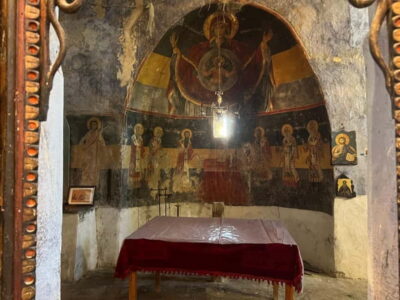
Daily Trip To:Blue Eye,Monastery,Gjirokaster&Lekursi Castle
Read our review →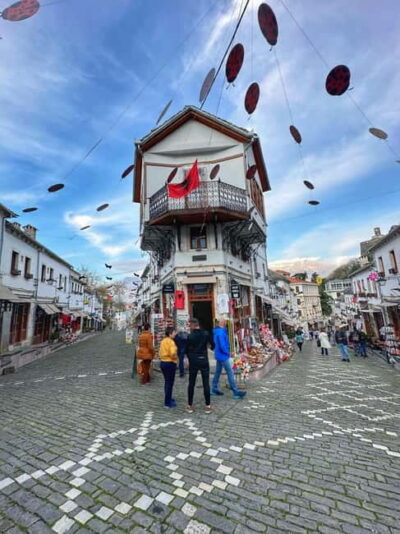
The Stone City & Blue Eye- The monument of Nature.
Read our review →
Day tour from Saranda/Ksamil:Gjirokaster +Blue Eye & Lekursi
Read our review →
Browse the lists this tour appears in