
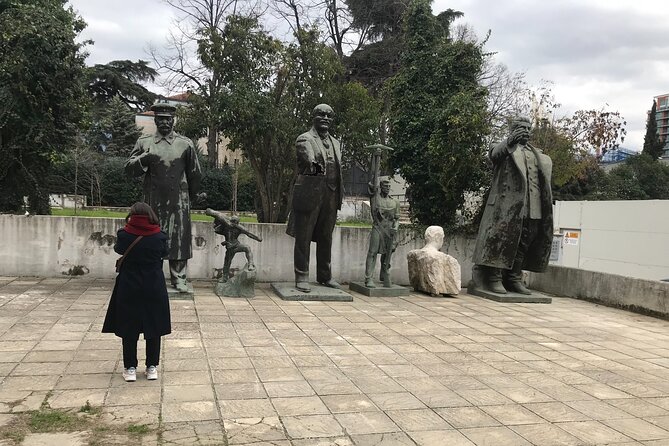
Reviewed · WALKING TOURS
Tirana Walking Tour
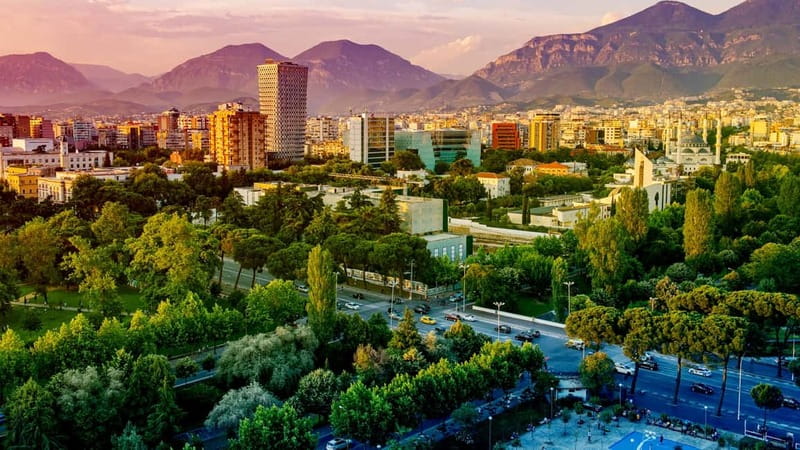
Tirana changes fast, and that is what makes this tour click. You walk a city timeline in a tight loop, from Skenderbeg Square to Blloku, where Albania’s past and present sit side by side. Tirana District is the stage, and your guide stitches it all together.
I love how the best guides, like Ilir and Gloria, bring Tirana to life with clear, personal context, not just facts on a plaque. I also love the rhythm: you get big “wow” stops plus practical breaks, like time for a coffee or cocktail during the walk.
One thing to consider: if the weather is poor or the group is spread out, you may struggle to hear every detail. I’d come prepared to pause and ask questions when you stop, not only while walking.
Key highlights at a glance
- A compact 3-hour loop through Tirana’s core, so you get your bearings fast
- Monumental Center contrasts, including communist-era blocks beside Italian-era government buildings
- Historic stops that people skip, like Tanners’ Bridge and the Watch Tower area
- Blloku-focused history, including Enver Hoxha’s villa area and Bunk’Art 2
- Multiple religious and architectural stops, from Et’hem Bey Mosque to Saint Paul’s Cathedral
- A coffee or cocktail moment built into the tour, with time to regroup and ask questions
Tirana in Three Hours, From Skenderbeg Square to Blloku
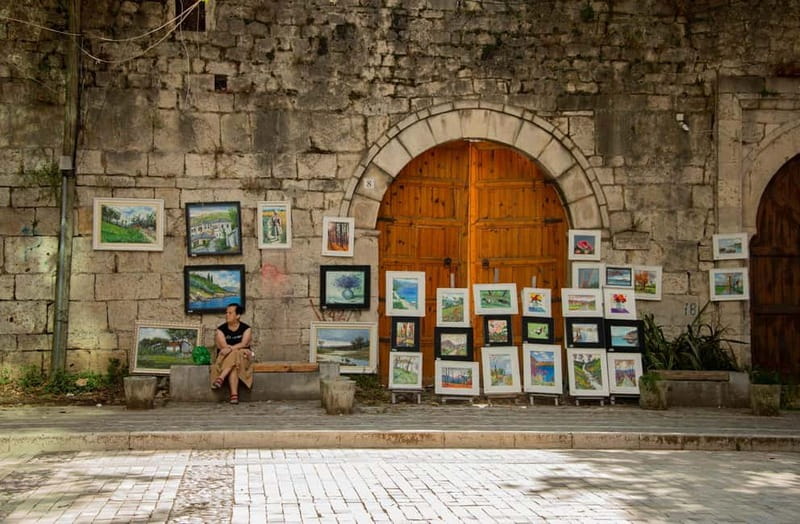
Tirana’s story is not one straight line. It’s a layered mix of Ottoman-era remnants, Italian planning, communist power, and today’s fast-built modern city center. This walking tour is a smart way to read that layering without feeling like you need a month of research.
The heart of the experience is the guide’s ability to connect what you see to what came next. One moment you’re looking at monumental buildings tied to communist symbolism, and the next you’re walking toward Ottoman landmarks like Et’hem Bey Mosque. Then you swing into Blloku, the district tied to Albania’s dictatorship era and the country’s later social shift.
If you like cities where history is visible in the streets, not locked behind walls, this format works. You’ll also appreciate the pace, since it is built for walking, photo stops, and frequent “tell me what this means” moments.
More Walking Tours in Tirana
- Walking Tour of Tirana
★ 5.0 · 646 reviews - Tirana: Express Walking Tour with a Guide
★ 4.8 · 503 reviews - Tirana Center: Magic Walking Tour French/Italian/English Etc
★ 4.9 · 402 reviews
Price and What You Actually Get for $17
At $17 per person for about 3 hours, the value is in the guide and the concentrated route. You’re paying for an organized “see and understand” walk across a lot of major sights, rather than bouncing between monuments on your own.
Also, this tour explicitly includes a qualified guide and skip-the-line support for tickets where applicable. That matters in a city where museum time can feel tricky. Even if you’re not rushing to museums, the guide’s context helps you see why each stop is placed where it is.
One small caveat: meals and drinks are not included. Still, the tour is designed around a coffee or cocktail break, so budget a few euros for what you choose to order.
For me, the best deal is when you’re there for a short stay, like one full day in Tirana. This gives you a structured foundation you can build on later with museums, neighborhoods, and local food.
Meeting Point and How the Walk Flows
You’ll meet at the start point outside Tirana International Hotel at the designated hour, and the tour begins in the city’s Monumental Center. The exact meeting point can vary depending on which option you book, but the hotel is your anchor.
From there, the walk follows a logical arc through central Tirana, then expands outward to landmarks you can easily miss if you only stick to one square. The itinerary is built around photo stops, guided segments, and short breaks, so it feels less like a lecture and more like guided sightseeing.
Bring comfortable shoes. You’ll be on foot for several stretches, and many stops are connected by sidewalks that are busy with everyday city life. If you’re the type who likes frequent photos, you’ll be happy here, because the route repeatedly gives you time to stop and look up.
Monumental Center: Palace of Culture vs. Italian Government Buildings
The tour’s opening is the perfect “set the stage” moment. You start where Tirana’s power and planning feel most obvious, in the Monumental Center area.
You’ll see the stark contrast between the Palace of Culture and the National History Museum area, including the way communist-era architecture can feel heavy and dominant. Then you shift your attention to the Italian governmental buildings of the 1920s, designed by Armando Brasini, which give a different kind of structure and civic tone.
This early segment is where the tour earns its keep. When you understand the why behind the buildings, you stop seeing them as random big structures and start seeing them as political statements and planning decisions.
Expect the guide to frame how Albania went through major political shifts that reshaped what the city built, what it celebrated, and what it tried to replace. It’s a lot to pack into a first hour, but the route keeps it clear by anchoring each explanation to a specific facade or square.
More walking tours of Tirana:
- Walking tour of Tirana
★ 4.8 · 285 reviews - Local food experience & walking tour of Tirana
★ 5.0 · 192 reviews - Tirana: Local food experience & walking tour
★ 5.0 · 154 reviews - Berat Walking Tour
★ 5.0 · 86 reviews
Skenderbeg Square, Et’hem Bey Mosque, and the Watch Tower Area
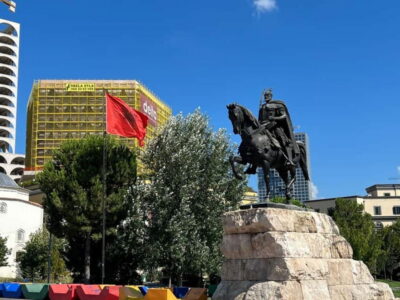
After you pass Skenderbeg’s statue, the tour turns toward the city’s older layers. This is where Tirana’s “Balkan crossroads” identity becomes easier to grasp.
You’ll visit Et’hem Bey Mosque and the nearby Watch Tower area, which connect to the city’s expansion across earlier centuries. The guide’s job here is to point out what tends to disappear when you rush through: how these landmarks link to street patterns, neighborhood growth, and later redesigns.
Even if you’re not a “religion architecture” person, the explanation matters. Mosques and towers are not just monuments; they’re clues about how Tirana functioned before it became the modern capital you see today.
One practical tip: look for the small visual differences the guide points out, like building materials, proportions, and the way a landmark sits in relation to the road. Those details are what make the history feel real instead of abstract.
Toptani Castle, Tanners’ Bridge, and the Repurposed Pyramid Stop
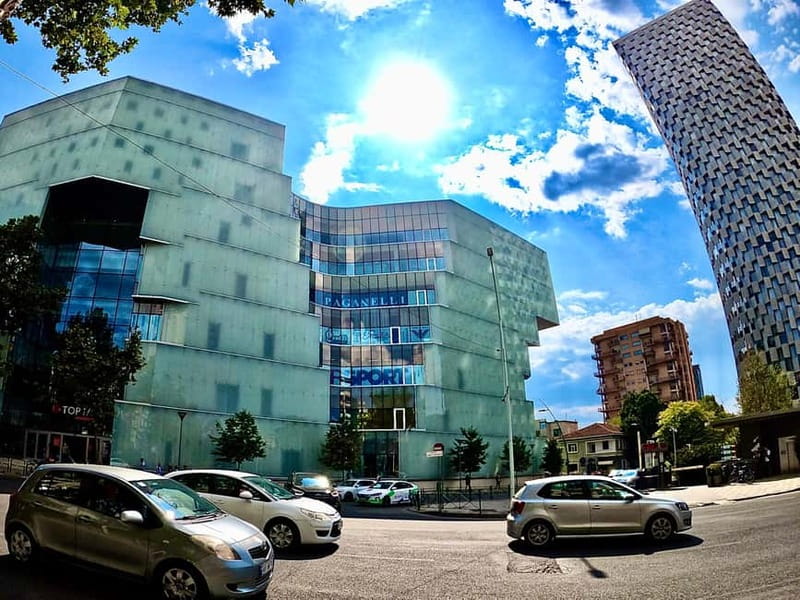
Not every stop here is a museum. Some are “walk by and notice” moments, and that is a good thing.
You’ll get a chance to see the newly reopened Toptani Castle and the stone Tanner’s Bridge. Both are the kind of sights that can look like scenery if you don’t know what you’re looking at. With a guide, you’ll understand why they matter to the city’s historic heart.
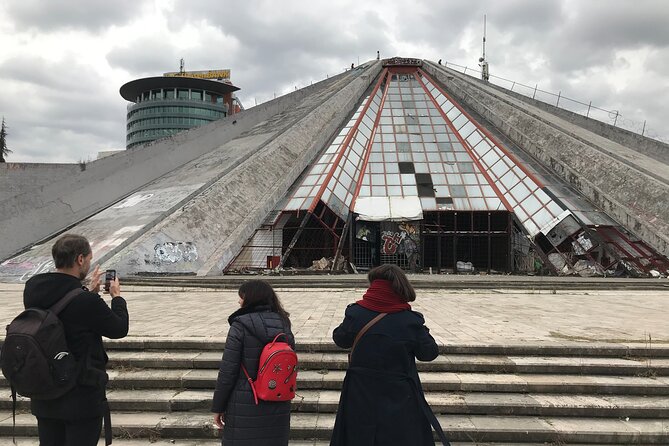
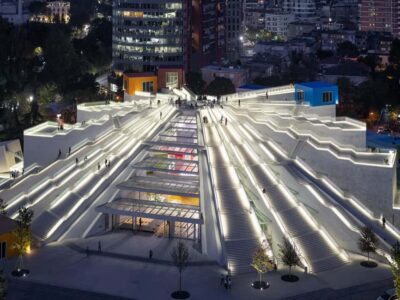
Then comes a quick stop at the Pyramid of Tirana, which has been repurposed. That stop is brief by design, but it’s a valuable pause because the Pyramid is one of those controversial buildings people associate with the communist era. Even if you don’t get long inside, it gives you a “how did this become that?” moment.
If you tend to like photo opportunities, this middle phase is good for you. The mix of bridges, castle walls, and monumental shapes gives you variety without needing extra transportation.
Blloku and Enver Hoxha’s Villa: The Dictator Era District
This is one of the tour’s main emotional beats. The Blloku area is where you go to understand how life under dictatorship shaped daily life and space in the capital.
You’ll visit the dictator’s Enver Hoxha villa area and hear how that district functioned, before it transformed into the café-and-social scene people associate with Tirana today. The point is not to sensationalize it. The point is to show how the same streets can change meaning as power changes hands.
Then you head toward Bunk’Art 2, another major stop tied to Albania’s darker history. This is the tour’s way of balancing outdoor landmarks with places where the story is told more directly through exhibits.
The best guides make this section feel personal without drifting into opinion. In past tours, guides such as Ilir and Iris have been praised for sharing stories in a way that feels like talking to someone who actually lived through the changes in Tirana’s recent decades.
If this topic interests you, you’ll likely want extra time afterward to keep exploring Blloku at street level.
Tirana Castle, Namazgah Mosque, and Church Stops You Might Skip
The tour then expands your view beyond the densest central squares. You’ll spend time at Tirana Castle, including a break period with photo opportunities and some free time, plus mention of shopping.
That castle stop is valuable for more than photos. Higher ground helps you connect the map in your head. Even if you are only there briefly, it helps you see how far the city reaches and where the main districts sit.
After that, you visit Namazgah Mosque, another anchor for Tirana’s older religious geography. From there, you move into more “city big-picture” stops like Saint Paul’s Cathedral and later the run of iconic squares and buildings.
Church visits can be a surprise highlight. Many people in Tirana focus on mosques and central squares, then miss how different communities shaped the city. Having these stops in a single walking loop keeps it efficient.
If you’re trying to plan just one walking day in Tirana, this portion is where the tour earns trust. You see enough varied architecture to understand what kind of capital Tirana has become, not just what it once was.
Mother Teresa Square, Postbllok Checkpoint, and the House of Leaves
By the later half, the tour becomes very “Tirana as concept.” You start landing on places that feel like symbols, not only sights.
You’ll visit Mother Teresa Square, then move to Postbllok, a checkpoint-related area that helps explain how surveillance and control functioned. Next you’ll see the Resurrection of Christ Orthodox Cathedral, adding another layer to the city’s religious map.
The finale is the House of Leaves Museum. This is one of those stops that often stays in your memory, because the title alone tells you it’s not a normal museum visit. It fits perfectly after earlier checkpoints and dictatorship-era stories, giving you a different way of experiencing the past.
This section is also where you’ll feel how much your understanding has changed. If you started the walk thinking you were just seeing landmarks, you’ll finish thinking in cause and effect: what regimes built, what they feared, and how the city rebranded itself afterward.
Coffee and the Local Break That Makes It Feel Like a Walk, Not a Lecture
The tour is built with a social pause in mind. You’ll have a chance to enjoy a coffee or cocktail during the day, and that gives you more than caffeine or a drink.
It gives you a reset. When you stop for a beverage, the guide can answer the questions that pop up while you process what you saw, and you can ask about local restaurant choices, customs, or what to do next in Albania.
One practical thing: if it’s hot, look for shade and use the break to cool off. In real cases, guides have adjusted their routes based on weather and even added extra cooling stops. In rain, guides can shift how they manage the walk so you still enjoy it.
If you’re the kind of person who needs time to absorb before you hit the next stop, this tour’s pace will suit you.
Guides, Pace, and the Small Details That Matter
The biggest difference between a “good tour” and a “great tour” is the guide’s delivery. In this case, the strongest feedback keeps repeating the same pattern: guides like Thomas, Gloria, and Iris have been praised for being warm, flexible, and able to answer questions clearly.
What I value most is adaptability. Some people come for architecture, others for politics, and others just want to learn how Tirana works day to day. When the guide can shift and give you more walking discussion versus more stop-and-explain time, you get a better fit.
There’s also a consistent emphasis on comfort and ease. Guides have been noted for managing the walk on rainy days and keeping explanations at a pace that does not feel rushed. If you need something slower or want more of the “explain, then walk” style, it helps to ask.
This tour is also described as wheelchair accessible, and it offers private group options, which can matter if you want a quieter, more custom feel.
Who This Tour Suits Best
You should consider booking if:
- You want an efficient Tirana orientation in about 3 hours
- You like cities where political history is written into architecture
- You want to visit key areas like Blloku without guessing your route
- You prefer a guided pace with frequent stops and context
You might look elsewhere if you want long time inside museums or a deep, slow historical treatment. This is a walking tour, so it prioritizes coverage and clarity over hours of indoor study.
Should You Book This Tirana Walking Tour?
Yes, if you’re in Tirana for a short stay and you want real context, not just photos. The route hits big anchors like Monumental Center, Skenderbeg Square, Et’hem Bey Mosque, Blloku, and major museum-adjacent history stops, all in one loop that keeps you moving.
I’d say book it especially if you care about understanding how Tirana moved from communist-era symbolism into a modern capital with redesigned public spaces and international architectural influence. If the $17 price feels low, it’s because the value is in the guide and the built-in structure, not in expensive add-ons.
Do it early in your trip if you can. You’ll leave with a mental map and a better sense of where to wander next, whether that’s more museum time or a longer evening in Blloku.
FAQ
How long is the Tirana Walking Tour?
The tour lasts about 3 hours.
How much does it cost?
The price is $17 per person.
Where do we meet for the tour?
The meeting point is in front of the Tirana International Hotel, though it may vary depending on the option you book.
Is there a live guide?
Yes. The tour includes a live tour guide.
What languages are available?
The guide is available in Albanian, English, and Italian.
Is the tour wheelchair accessible?
Yes, the tour is listed as wheelchair accessible.
Are meals included in the price?
No. Meals and drinks are not included, though there is a chance to enjoy a coffee or a cocktail during the tour.
What should I bring?
Wear comfortable shoes.
Can children join?
Children must be accompanied by an adult, and unaccompanied minors are not allowed.
Is there a private group option?
Yes. Private group availability is offered.
Newly listed around Tirana
- Private Day Tour of Saranda Gjirokaster,Butrint from Tirana★ 5.0 · 3 reviews
- From Tirana: Visit Prizren city and Kukesi lake★ 5.0 · 3 reviews
- Rafting And Swimming Adventure on the Black Drin River★ 5.0 · 3 reviews
- Private Transfer: Tirana Airport&City to/from Dhërmi★ 5.0 · 3 reviews
- 3 Hour Pub Crawl Tour in Tirana★ 3.5 · 3 reviews
- Tirana: Bovilla Lake & Gamti Mountain 4×4 Off-Road Tour★ 5.0 · 3 reviews
- Tirana/Durres: Saranda, Ksamil, Blue Eye & Vjosa River Tour★ 4.7 · 3 reviews
- From: Tirana and Shkoder: Theth & Blue Eye Full Day Tour.★ 5.0 · 3 reviews
Walking Tours, compared.
Tirana Center: Magic Walking Tour French/Italian/English Etc
Read our review →
Blue Eye Kayak and walking tour & Lekursi Castle
Read our review →
Browse the lists this tour appears in