
Reviewed · WALKING TOURS
Old Bazaar-Cfake-Dunavat-Ali Pasha Bridge Walking Tour
Gjirokastër feels famous from above, but this walk is what makes it real at street level. You’ll follow the town’s lesser-known lanes to Ali Pasha Bridge, and you’ll see neighborhoods that most people never get to by themselves. I especially like the way it connects the view points with working, lived-in history, not just postcard stops.
Two parts I really value here are the Cfake and Dunavat neighborhoods, where older houses and everyday details take over, and the bridge itself, a surviving piece of the aqueduct built to feed Ali Pasha Tepelena’s castle. One thing to plan for: this is a 3-hour walk on uneven, not-so-comfy terrain, so sneakers matter.
If you want Gjirokastër beyond the obvious route, you’ll get that. And if you end up with the guide Besi, the group vibe can feel very welcoming, with stories mixed in and help offered when needed.
Key highlights at a glance
- Start in the main square and head out from the old-town core with a clear route
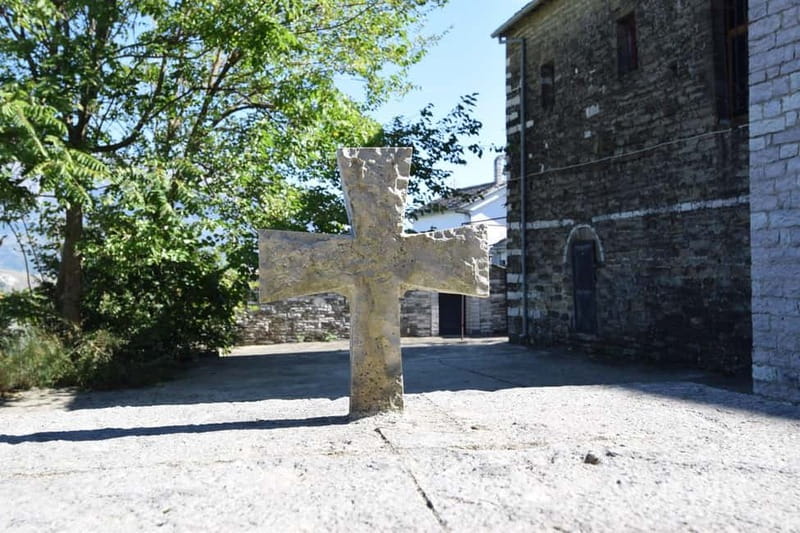
- Old Bazaar neighborhood beneath the castle with cobblestones, an Orthodox church, and some of the oldest houses
- Nanxa stream to reset the pace before stepping into another ancient quarter
- Cfake and Dunavat for the non-touristy feel, including a rebuilt mosque and a Bektashi tekke
- Ali Pasha Bridge as the payoff (a remaining aqueduct feature from more than 200 years ago)
- A live English guide who ties places together with local stories and context (Besi is a standout name)
Why the Cfake and Dunavat side of Gjirokastër is the point of this walk
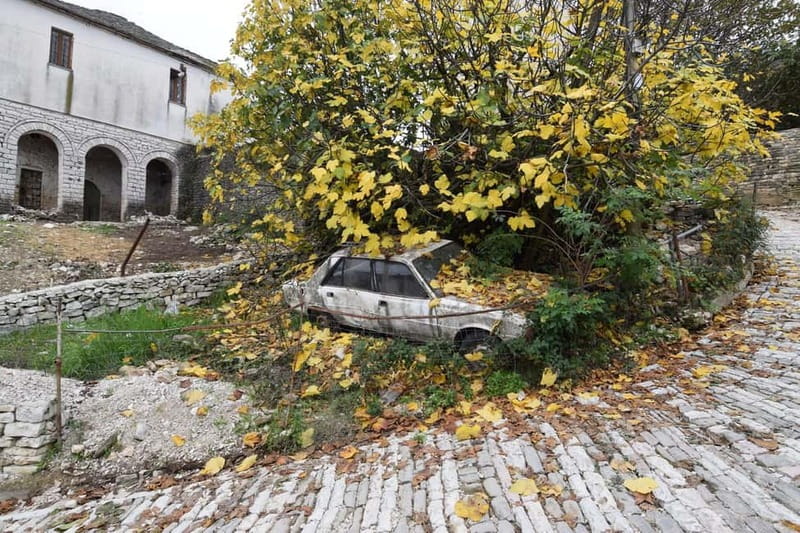
Most Gjirokastër sightseeing funnels you toward the same few sights, then sends you back. This tour takes you outward, into quarters that feel quieter and more “town-like,” where stone walls, old homes, and small details do the storytelling.
I like that the route is framed as a time-walk. You start in the center of the old town at Cerciz Topulli Square, then you move gradually away from the castle walls. That shift matters, because you notice how the town grew, how people built, and how daily life continued outside the fortress line.
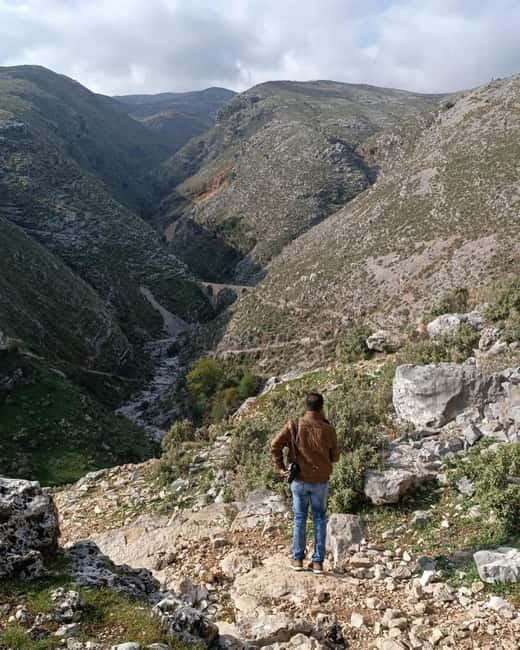
You also get a strong sense of the landscape around the town. There’s nature in the mix, including hills where you may see sheep grazing, so the walk doesn’t feel like you’re stuck in just alleys. It’s part architecture, part countryside edge.
The highlight, of course, is the Ali Pasha Bridge, but the real value is how you earn it. The neighborhoods you pass through make that bridge feel more than a photo spot. It becomes part of a practical system that once moved water to the castle.
More Walking Tours in Gjirokastra
- Gjirokaster walking Tour Baazar – The Castle – Zekate house
★ 4.6 · 21 reviews - Walking Tour Baazar – The Argjiro Castle – Zekate house
★ 4.5 · 18 reviews - Walking Tour “The Old Bazaar, Cfake, Dunavat, Ali Pasha Bridge”
★ 5.0 · 10 reviews
Meeting at Cerciz Topulli Square, then walking into the lesser-known streets
The meeting point is the Experience Gjirokastra office at the main square, behind the statue of Cerciz Topulli. It’s an easy starting anchor, and you’re not scrambling across the town without context.
After you start, the walk is set up to help you get oriented fast. There’s a view point segment built into the timeline, with about 30 minutes of walking to that moment. Even if you’re not a long-time hiker, that pacing is good because it gives you a quick reward before the route keeps unfolding.
From there, you head toward the Old Bazaar area. What helps here is that you’re not just “going from A to B.” Each stretch has a purpose: you’re transitioning between neighborhoods, not only moving down a map.
If you prefer to take photos, plan to do it while moving slowly through the flatter pockets. The viewpoint stop is your time to pause, but the rest is still an active walk.
The Old Bazaar neighborhood beneath the castle walls: cobblestones and oldest houses
The first neighborhood outside the castle walls is along beneath them, and it’s where the tour begins to feel different from mainstream sightseeing.
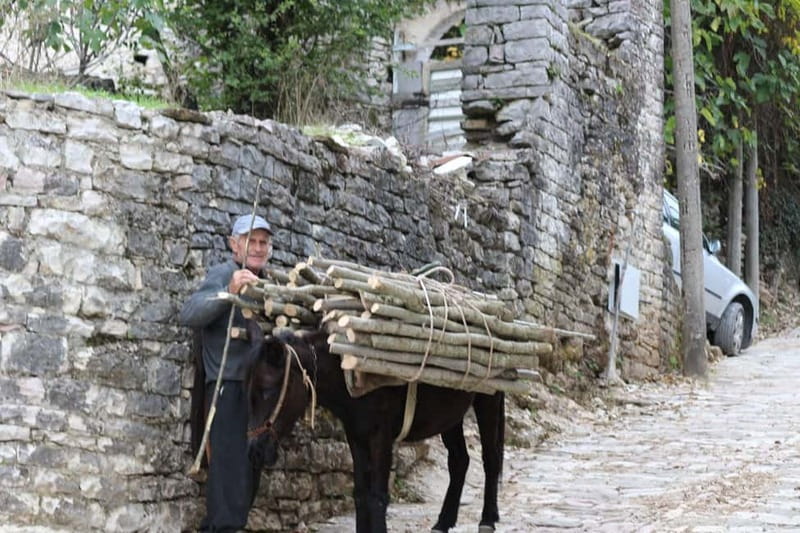
Even though it’s called Old Bazaar, it’s not really a bazaar anymore. Instead, you’ll be walking through a street-level area with some of the classic Gjirokastër textures: cobblestone streets, an Orthodox church, and older houses that still carry a sense of how people lived before tourism took over every corner.
This is the kind of stop where you’ll get more from a guide than from a map. The value isn’t only in what you see, it’s in what you’re prompted to notice. Cobblestones look romantic until you actually walk them. Then you understand why footwear matters and why some parts feel more demanding than you expect.
One practical note: this early section is where you can judge your comfort level. If your knees or ankles tend to complain on uneven surfaces, this is where you’ll feel it first. Bring sneakers, and take your time.
Following the Nanxa stream into Cfaka, where old homes and a rebuilt mosque appear
After the Old Bazaar area, you pass the stream of Nanxa. That small natural marker is useful. It’s not just scenic, it gives the walk a rhythm change, like a reset in the route before you step into the next ancient quarter.
Then you reach Cfaka, another old neighborhood. This is where the tour leans into architectural clues: you’ll pass by older houses that are categorized as monuments, and you’ll see a rebuilt mosque along the way.
Cfaka works well for two reasons. First, it’s quieter than the most obvious tourist loops, so you feel like you’re walking through a lived part of town. Second, it’s a place where religious and domestic architecture sit close enough that you can understand how people organized space historically.
The terrain continues to be part of the experience. So if you want to linger, do it carefully. A short pause for photos and then moving on is smarter than trying to stop for a long time on uneven ground.
More walking tours of Gjirokaster:
- Gjirokaster Walk Tour: Old Bazaar, Cfake, Dunavat, AliPasha!
★ 4.2 · 9 reviews - Gjirokaster: Old Bazaar and Castle Private Walking Tour
★ 5.0 · 6 reviews - Gjirokaster walking Tour The Old Baazar, Cfake, Dunavat, Ali Pasha Bridge
★ 5.0 · 4 reviews - Gjirokaster Walking Tour
★ 5.0 · 4 reviews
Dunavat and the Bektashi tekke: why this neighborhood feels authentic
Next comes Dunavat, and this is where the tour name starts to make sense in your body, not only in your head.
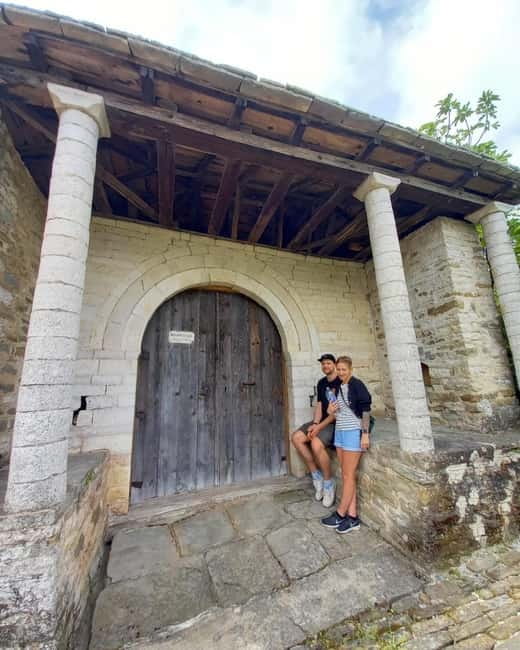
Dunavat is described as the last neighborhood before Ali Pasha Bridge, and it’s where you get a mix of built heritage and nature. You may notice hills above with sheep, then come back down to old houses and a tekke linked to the Bektashi Order.
The Bektashi tekke matters because it’s not just a “building.” It connects religion, community, and local tradition into one place. Even if you don’t know the details beforehand, the guide can point you toward why it’s there and why it’s a meaningful stop on a walk that focuses on parts of town most visitors skip.
This is also an area where the walk can feel slower without you meaning it to. The mix of sights makes you look around more, and that’s when you tend to understand Gjirokastër as more than a backdrop.
If your attention span is short, you’ll still be fine. The route keeps moving. You’re just given small moments to notice things that most people walk past quickly.
Ali Pasha Bridge: the aqueduct remnant that ties the whole story together
You finish at Ali Pasha Bridge, the tour’s main highlight. The bridge is described as a remaining part of an aqueduct built by Ali Pasha Tepelena more than 200 years ago to bring water to the castle.
This is the payoff, because everything you saw on the way begins to click. You’re not just looking at a bridge. You’re seeing the physical evidence of an infrastructure plan that served a powerful fortress.
Look for how it sits in the landscape and imagine the route water had to take. The point isn’t to memorize engineering. The point is to understand why Ali Pasha’s castle depended on supply lines, and how that need shaped the town beyond the walls.
It also makes the end of the walk feel earned. You arrive after moving through multiple neighborhoods, including Cfaka and Dunavat. So the bridge doesn’t feel random. It feels like the natural conclusion of the town’s geography and needs.
Timing, pace, and what to expect in a 3-hour walking window
The total duration is about 3 hours, and the itinerary includes a viewpoint segment after roughly a half hour of walking. That combination is smart for most people. You get a structured pause early, then the route flows into the neighborhoods and ends at the bridge.
Terrain is the main consideration. Expect uneven ground and parts that won’t feel smooth underfoot. Sneakers are the right choice, not fashion shoes. If you’re used to paved sidewalks only, you’ll want to slow your pace and keep your eyes on where you’re stepping.
One other thing to know: the walk is compact. At 3 hours, you won’t get a long, wandering slow day. The upside is that it doesn’t drag. The downside is that if you want extra time for detailed photos or long conversations, you might wish the route had a bit more room. If that’s you, plan to add a little independent time after the walk near your favorite viewpoint or photo spot.
Price at $17: why this tour can feel like strong value
At $17 per person for a 3-hour guided walk, the value comes from two places.
First, you’re paying for access to the non-obvious parts of Gjirokastër. Old Bazaar area, Cfake, Dunavat, and the Ali Pasha Bridge are connected by a route that helps you understand what you’re seeing. Without a guide, you might wander, but the story threads that make it meaningful would be harder to piece together.
Second, you’re paying for interpretation. The tour includes a live guide in English, and the emphasis is on explaining what you pass, not only where you go. People who booked this walk highlighted that the guide can be warm and personable, with history and family stories mixed in. One guide name that stands out is Besi, described as welcoming and attentive, with help offered when needed.
If you’re traveling in a way that prioritizes local texture over “checklist sites,” this price is reasonable. You’re buying time plus context, and you’re using that time in areas most standard routes skip.
Who should book this walk, and who might want a different plan
This is a great fit if you want:
- to see Gjirokastër’s neighborhoods outside the main tourist rhythm
- a walk that connects town growth to a specific landmark, Ali Pasha Bridge
- an easy half-day plan that still feels like more than a quick stroll
- a guide who shares stories and checks in with the group, especially if you happen to get Besi
It might not be the best match if:
- you’re not comfortable on uneven terrain and cobblestones
- you want a fully relaxed, slow wandering pace
- you’re looking for a lot of indoor stops or long sit-down breaks (this is a walking-focused tour)
If you’re the kind of traveler who enjoys small religious sites, old houses, and how water systems once supported a fortress, you’ll probably love it.
Should you book the Old Bazaar to Ali Pasha Bridge walk?
I’d book it if you want the version of Gjirokastër that feels like you arrived late to the party, when the town is already showing its real face. This tour is built around the neighborhoods people often skip, and that alone is worth it.
Choose it when:
- you can do a 3-hour walk on uneven ground
- you want a local, story-driven route with English guidance
- you care about why a bridge exists, not only that it looks good
Pass if:
- cobblestones and slopes make you nervous
- you prefer purely scenic, minimal-walking days
If you do book, wear sneakers, go with curiosity, and give yourself permission to notice small details. That’s where this walk earns its reputation.
FAQ
What is the price of the Old Bazaar to Ali Pasha Bridge walking tour?
The tour costs $17 per person.
How long is the tour?
The tour lasts about 3 hours.
Where do I meet the guide?
You meet at the Experience Gjirokastra office at the main square of Gjirokastër, behind the statue of Cerciz Topulli.
Is the tour in English?
Yes, the live tour guide is English.
What is included in the tour?
It includes a live tour guide.
What should I wear for this walk?
You should wear comfortable shoes because the terrain is not so comfortable and is uneven in places.
What is the main highlight of the tour?
The highlight is Ali Pasha Bridge, described as a remaining part of an aqueduct built more than 200 years ago to bring water to the castle.
What neighborhoods are covered during the walk?
You pass through the Old Bazaar area and then head to Cfaka and Dunavat.
Can I cancel for a refund?
Yes, you can cancel up to 24 hours in advance for a full refund.
Can I pay later?
Yes, the tour offers reserve now & pay later.
More Markets in Gjirokaster
- Blue Eye & Gjirokaster: 4×4 Tour and Old Bazaar
★ 5.0 · 3 reviews - From Tirana: Kruja Castle, Old Bazaar & Sari Salltik View
★ 4.8 · 2,171 reviews - From Durres/Golem: Kruja Castle & Old Bazaar Day Tour
★ 4.9 · 1,317 reviews - Durres/Golem: Kruja Castle & Bazaar with Traditional Lunch
★ 5.0 · 632 reviews
Newly listed around Gjirokaster
- Gjirokastra Private Half-Day Walking Tour★ 5.0 · 3 reviews
- Private Cold War City Tour in Gjirokaster★ 4.5 · 4 reviews
- Gjirokaster walking Tour The Old Baazar, Cfake, Dunavat, Ali Pasha Bridge★ 5.0 · 4 reviews
- Gjirokaster – The Stone City of UNESCO, Private Tour from Tirana★ 4.5 · 4 reviews
- Gjirokaster Walking Tour★ 5.0 · 4 reviews
- RED LINE: VIP daily tour with SUV: Vlore-Gjirokaster-Permet★ 5.0 · 4 reviews
- Step Back in Time: Gjirokastër Day Trip from Saranda★ 2.8 · 5 reviews
- 2-Hours Guided Drino’s Valley Ride★ 4.5 · 5 reviews
Walking Tours, compared.
Tirana Center: Magic Walking Tour French/Italian/English Etc
Read our review →
Blue Eye Kayak and walking tour & Lekursi Castle
Read our review →

Browse the lists this tour appears in