
Reviewed · GJIROKASTRA TOURS
Prepare Osa with Teta Marjeta
This class is interesting because it happens in Marjeta’s home, not a studio kitchen. You walk in, meet the people who make the food matter, and spend about 2.5 hours turning local ingredients into a full meal.
I especially like the hands-on format, where you actually cook alongside the guide and chef. I also like that the menu is built around Gjirokaster specialties you can not just copy from a random cookbook.
One thing to consider: you will be eating and drinking during the experience, and there is an 18+ drinking age requirement.
Quick Highlights You Should Know
- Small group size (max 10) makes it easier to ask questions and get coaching
- Chef-led, home-kitchen style teaching so you learn technique, not just recipes
- A complete Gjirokaster menu: Qifqi, Osa (chicken pasta), and Hasude dessert
- Recipe cards included so you can recreate the dishes at home
- All food plus drinks included, with wine, raki, or soft drinks at the table
- English offered, and the experience is guided by a local team (including Besi, per guest feedback)
Cooking in Marjeta’s Home, Not a Demo Kitchen
This is the kind of experience I think most people come for. You start at Sheshi Çerçiz Topulli 5 in Gjirokastër, then you link up with the host and walk over together to Marjeta’s place. The short walk matters. It helps you shift from sightseeing mode into local life mode.
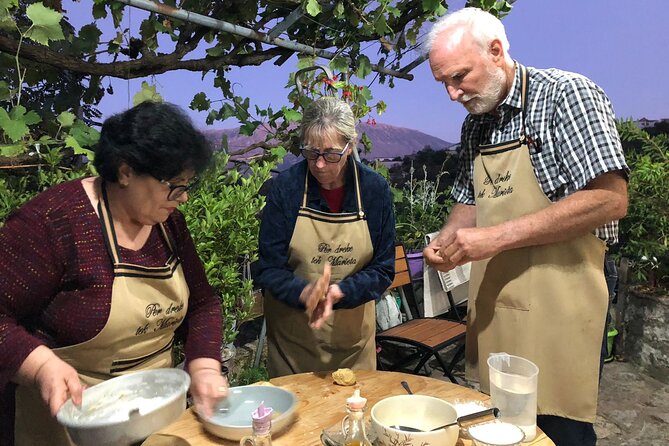
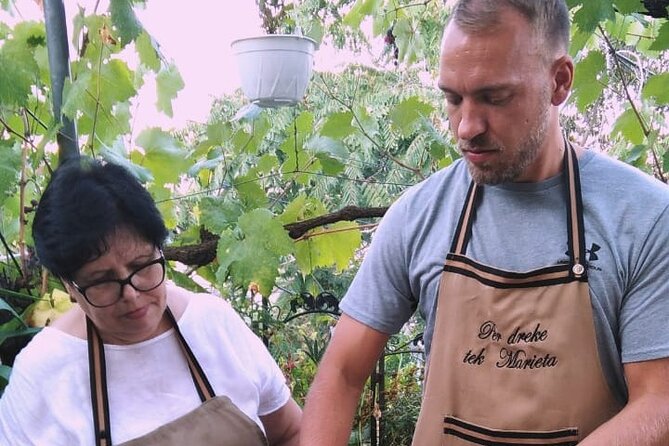
Once you arrive, you are treated like a small dinner group, not a classroom. Marjeta and the chef guide you through the recipes, and you get a feel for how food work happens at home in this part of Albania. The setting is personal, with the group settling onto a veranda style setup that makes it easy to chat while you cook.
The best part is the structure. You do not just watch. You make choices, you get feedback, and you end by eating what you made, with your guide.
A few more Gjirokaster options to put side by side
- Sarandë: Tour Gjirokaster,Blue Eye & Lekursi Castle
★ 4.7 · 220 reviews - Gjirokaster walking Tour Baazar – The Castle – Zekate house
★ 4.6 · 21 reviews - Walking Tour Baazar – The Argjiro Castle – Zekate house
★ 4.5 · 18 reviews
The Menu You’ll Cook: Qifqi, Osa, and Hasude
Here is the core idea: you learn three dishes that are strongly tied to Gjirokaster’s food identity. That means you leave with a skill set, not just a nice meal.
Qifqi, the starter with local personality
You begin with Qifqi, described as a traditional dish found only in Gjirokaster. It is built mainly around rice. That detail is useful, because rice-based starters can feel both familiar and surprising once you see how locals season and shape them.
For you, Qifqi is a great first dish because it sets the tone early in the class. You start with something that is clearly local, then you move into the more substantial meal.
Osa with chicken, the main course focus
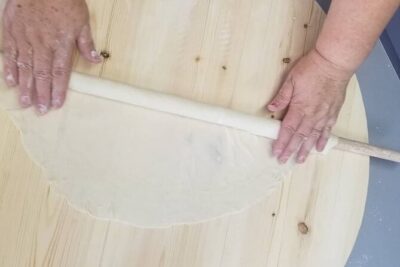
Next comes OSA, a dish described as kind of pasta combined with chicken. This is where cooking class value really shows up. Pasta dough or pasta-like preparation usually teaches technique you can reuse later, while chicken keeps it satisfying and anchored.
If you like meals that feel hearty, this is the center of the experience. You are not just making a small bite. You are working toward something you will sit down and eat as a proper main course.
Same base, a completely different day:
- Gjirokastër: Traditional Albanian Vegetarian Cooking Class
★ 4.4 · 17 reviews - Gjirokaster: Wood Crafting Class
★ 5.0 · 16 reviews - Cooking Class
★ 4.5 · 12 reviews - Vegetarian Cooking Class @Teta Marjeta
★ 5.0 · 11 reviews
Hasude, the dessert finish
Finally you make Hasude, the dessert. Desserts in cooking classes often get rushed, but here it is listed as part of the three-dish menu you prepare. That matters. It means you will have a full progression to follow, from starter to main to sweet ending.
And because you get recipe cards to take home, Hasude is one of the easiest ways to bring the experience back later, since dessert steps often travel well to your home kitchen.
What Actually Happens During the 2.5 Hours
The timing is tight enough to feel like a real activity, but not so long that it becomes exhausting. Plan on about 2 hours 30 minutes total.
Step 1: Meet up and start with a drink
You meet at Sheshi Çerçiz Topulli 5. Then you join the host and walk to Marjeta’s home. The class begins with a glass of raki produced by her husband, or a soft drink, depending on what you want. This is not just a greeting. It is the social warm-up that makes the cooking feel relaxed.
One practical tip: choose your pace right away. If you want to cook comfortably, soft drinks are totally fine. If you want to try the local raki, have it early and drink water alongside.
Step 2: Prep with fresh local ingredients
The experience is guided by a local team and centered on fresh, local ingredients. That phrasing might sound generic, but it is exactly what you want in a class like this. When ingredients are local and familiar, you can taste the difference and you are not translating weird, hard-to-find items at home later.
You will be working on the dishes you are learning, and you will also have a season salad prepared ahead of time and served with your menu.
Step 3: Cook, learn, and ask questions
This is where English really matters. The experience is offered in English, so you can understand what is being taught while your hands are busy. You can ask about technique, timing, and what to look for as food cooks.
In guest feedback, the team includes Besi as a translator, and that is a huge comfort if you want to ask small, specific questions. Cooking goes faster when you can communicate clearly.
Step 4: Eat everything you made
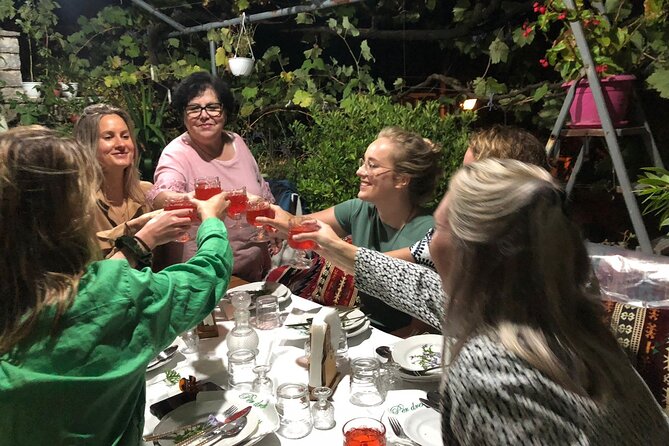
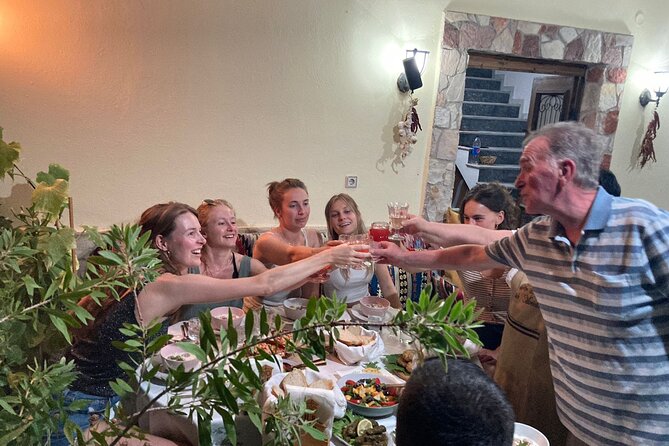
After you finish the cooking, you sit down with your group to enjoy the meal. Your menu is paired with a complimentary glass of wine, raki, or a soft drink. That pairing is part of the fun, because you get to taste your food in a more social setting, not just at standing-room time.
A small but important value point: you eat as a group with your guide. That turns a cooking class into something more like a shared dinner story, and it is where cultural details usually come out.
Step 5: Take home recipe cards
At the end, you receive a recipe of what you cooked so you can prepare it back home. You are not leaving with vibes only. You are leaving with instructions you can actually use.
Drinks and the 18+ Detail You Should Plan For
The experience includes drinks throughout. You get raki or a soft drink at the start, and wine, raki, or a soft drink at the table with your meal.
The key practical detail is the minimum drinking age is 18. If you are under 18, you can still take part, but you need to choose the soft drink options. If you are traveling as a mixed-age group, it is worth aligning everyone’s expectations before you show up.
Also, if you plan to explore Gjirokastër afterward, keep the first drink in mind. You will still be cooking, then eating. A measured approach makes the evening more enjoyable.
Price and Value: What $66 Buys You
At $66.09 per person, this is not a bargain cooking class, and it is not trying to be. The value comes from a few concrete pieces:
- Three dishes made from scratch, including a Gjirokaster-only specialty like Qifqi
- All food included, not just tastings
- Beverages included, with alcohol options listed
- Recipe cards to recreate what you cooked
- A small group max of 10, which usually means better hands-on attention
When a class is cheap but you only get a bite or a cooking demo, you end up spending time without much payoff. Here, you are making a full meal, eating it, and taking home a usable recipe. For many visitors, that is the difference between a fun evening and something you actually remember in a practical way.
Who This Cooking Class Suits Best
This experience fits best if you want more than photos. You will enjoy it if you like:
- Hands-on cooking with step-by-step guidance
- Learning regional dishes tied to one town, not generic Albanian cooking
- Small group interactions where you can chat with your guide and host
- A mix of food and local culture at a home setting
It might not be ideal if you are looking for a fast, sightseeing-focused stop. This is a meal-first activity. You need to be okay with spending the chunk of time cooking and eating, inside someone’s home.
Practical Notes Before You Go
Since the experience includes food and drinks, you do not need to plan meals around it. Still, I recommend you think about your comfort level with cooking and time.
Bring a mindset that works for a home environment. You are walking in, cooking with others, and learning a few dishes that locals actually make. Keep questions ready for the guide, especially if you want technique details, like what the food should look like as it cooks.
Also, plan for an evening rhythm. It is likely that once you sit down to eat, you will stay in that relaxed mode until the end.
Should You Book Prepare Osa with Teta Marjeta?
Book it if you want a genuine, food-centered evening in Gjirokastër. The biggest selling point is the combination of three local dishes, a small group, and a home-hosted setup with real teaching and recipe cards. It is also a strong pick if you care about doing more than sampling and you want to carry skills home.
Skip it if you only want a quick cultural stop or you are not into cooking and dining in a group setting. The experience is designed as a full meal arc, so your expectations should match that.
If you want a practical souvenir you can use later, the recipe cards are the reason this class is worth considering, even if you forget some minor steps. The flavors and techniques you learn are the point.
FAQ
Where does the cooking class start?
The class starts at Sheshi Çerçiz Topulli 5, Gjirokastër 6001, Albania.
How long is the experience?
It lasts about 2 hours 30 minutes.
Is this activity offered in English?
Yes, it is offered in English.
What dishes will I learn to cook?
You will learn Qifqi (starter), OSA (main), and Hasude (dessert).
Are food and drinks included?
Yes. All food is included, along with beverages such as raki, wine, or soft drinks.
Is there an age limit for drinking?
Yes. The minimum drinking age is 18.
How big is the group?
The experience has a maximum of 10 travelers.
What is the cancellation policy?
You can cancel for free up to 24 hours in advance for a full refund. If you cancel less than 24 hours before the start time, your payment is not refunded.
Newly listed around Gjirokaster
- Gjirokastra Private Half-Day Walking Tour★ 5.0 · 3 reviews
- Private Cold War City Tour in Gjirokaster★ 4.5 · 4 reviews
- Gjirokaster walking Tour The Old Baazar, Cfake, Dunavat, Ali Pasha Bridge★ 5.0 · 4 reviews
- Gjirokaster – The Stone City of UNESCO, Private Tour from Tirana★ 4.5 · 4 reviews
- Gjirokaster Walking Tour★ 5.0 · 4 reviews
- RED LINE: VIP daily tour with SUV: Vlore-Gjirokaster-Permet★ 5.0 · 4 reviews
- Step Back in Time: Gjirokastër Day Trip from Saranda★ 2.8 · 5 reviews
- Old Bazaar-Cfake-Dunavat-Ali Pasha Bridge Walking Tour★ 4.6 · 5 reviews
Gjirokastra Tours, compared.
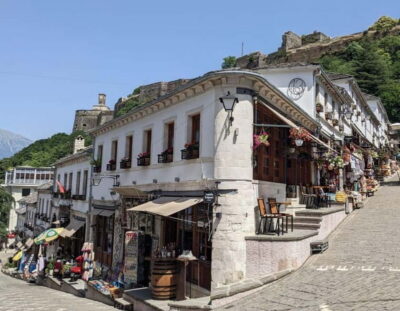
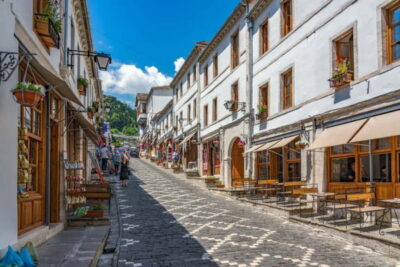
Gjirokaster walking Tour Baazar – The Castle – Zekate house
Read our review →
Saranda Hidden Gems: Sunset at Lekursi,Blue Eye&Wine Tasting
Read our review →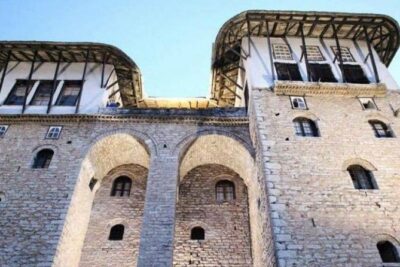
Walking Tour Baazar – The Argjiro Castle – Zekate house
Read our review →
Day Tour to Permet Thermal Baths and Langarica Canyon
Read our review →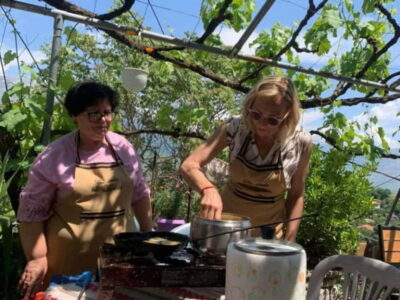
Browse the lists this tour appears in