
Reviewed · COMMUNIST HISTORY TOURS
The truest face of Communism
If you want Tirana’s communist symbols without the usual museum-only approach, this tour is a smart way to get your bearings fast. You’re seeing the city from the center outward, then hitting the specific buildings and monuments built to sell, enforce, and survive the regime.
I love the contrast between the official showpiece areas of the capital and the darker memory stops, like Postbllok. And I especially love that the centerpiece is Bunk’Art 1, with real bunker design logic, not just slogans in passing.
One consideration: even though vehicle comfort is listed, the day can still feel like a lot of walking, so plan on wearing comfortable shoes and keeping a steady pace with the guide.
Key points worth knowing before you go
- Skanderbeg Square sets the stage with major landmarks clustered together, so it is an efficient start to the day
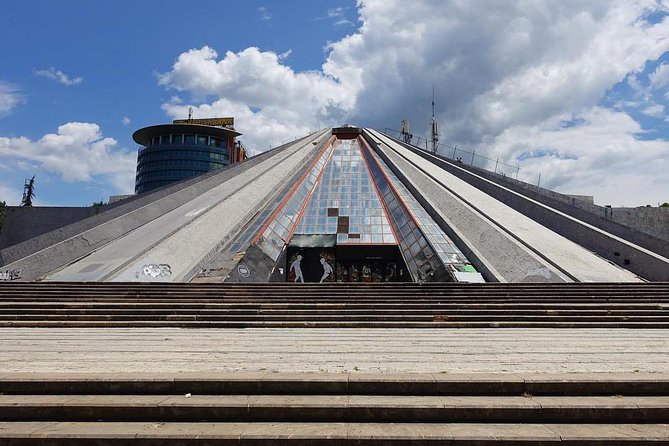
- Enver Hoxha Pyramid is explained as a political machine, not just an odd shape on a boulevard
- Postbllok connects Albania’s isolation to real-world evidence, including references to Spaç labor camp and Berlin’s Wall imagery
- Blloku blends past and present, from the former power zone to the lively coffee and boutique vibe now
- Bunk’Art 1 is underground and engineered for fear, with a nuclear-attack survival concept and maze-like corridors
- English guidance plus included refreshments make it easy to stay focused, with coffee, tea, and rakija part of the experience
Tirana’s communist past, made walkable and human
Tirana is the kind of capital where you can’t fully understand the present until you understand what the last regime tried to control. This tour does that in a practical way. You don’t just read about the Communist era, you walk through the places where power was displayed and the places where people had to think about survival.
The best part is that the stops are varied. You’ll see a grand main square, then you’ll hit architecture built as propaganda, then you’ll move into remembrance and underground shelter design. That mix helps you connect the story instead of treating each site like a separate postcard.
You also get a guide who makes the details stick. Multiple guides are praised in the feedback, including Leo, Dio, Mimi, DC, Aldo, and Eni, and the common thread is clear explanations paired with real, personal perspective. That matters, because communism in Albania can feel abstract until someone points to the human decisions behind it.
More Communist History Tours in Tirana
- Tirana’s Communist Past; Small Group Walking Tour
★ 4.9 · 59 reviews - A Communist Manifesto: Tirana before and after
★ 5.0 · 50 reviews - From Albania: Permet /Thermal Baths with Bunker Food Tasting
★ 5.0 · 19 reviews
Skanderbeg Square: the capital’s center of gravity
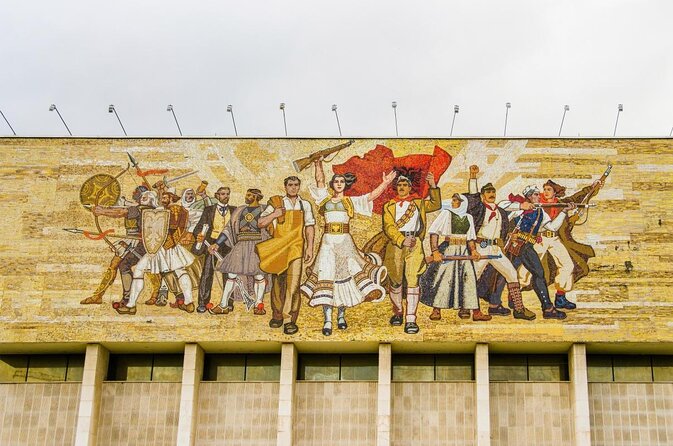
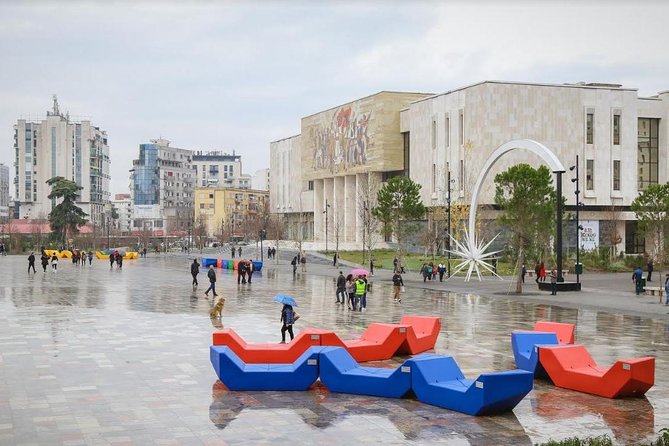
You start at Skanderbeg Square, and that is a smart choice because the area is packed with key buildings. In one place, you can orient yourself and see how Tirana’s identity layers were built, reshaped, and reused over time.
Here’s what you’ll take in around the square:
- Et’hem Bey Mosque
- Tirana’s Clock Tower
- The National Theater of Opera and Ballet, with the note that its first brick was put in by Nikita Khrushchev
- The National Bank of Albania
- Prominent hotels and the broader historic cluster that frames the square
This stop is about getting your visual footing before you step into the more pointed Cold War sites. You’ll have about 30 minutes here, and admission is free, so you can spend your time looking at building details without feeling rushed.
Enver Hoxha Pyramid: ideology turned into architecture
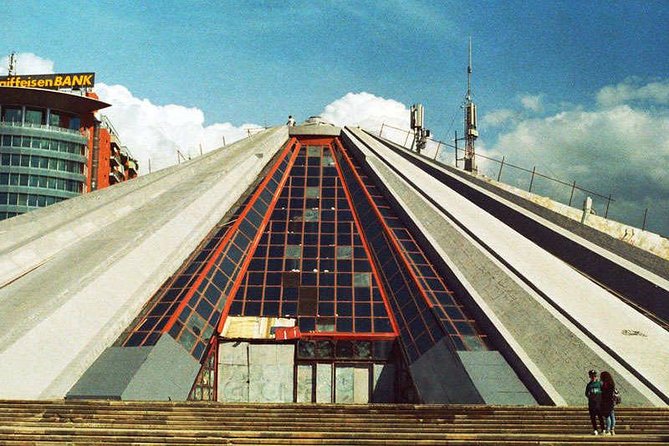
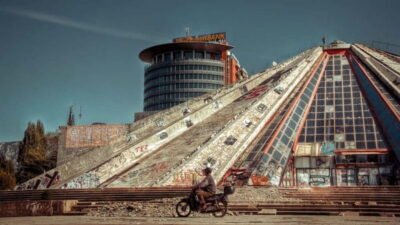
Next comes the Enver Hoxha Pyramid, one of Tirana’s most recognizable communist-era structures. The quick version is that it was built as a museum dedicated to Enver Hoxha, the leader of the Communist Party and First Secretary of the Party of Labor from 1944 to 1985.
The richer context is why it stays in your head after you leave. After Hoxha’s death, an Enver Hoxha mausoleum was opened later in 1988, and it was co-designed by his daughter. Then, after the fall of Communism, the structure shifted functions, including serving as a cultural center and a National Television office, and it survived a project to destroy it.
What I like about this stop is that it reframes the Pyramid as messaging in concrete. You’re not just looking at an unusual landmark, you’re seeing how the regime used monumental design to make authority feel permanent. Admission is free and the stop is short at about 15 minutes, which keeps the pacing moving without turning it into a lecture.
Postbllok Checkpoint Monument: remembering isolation in three parts
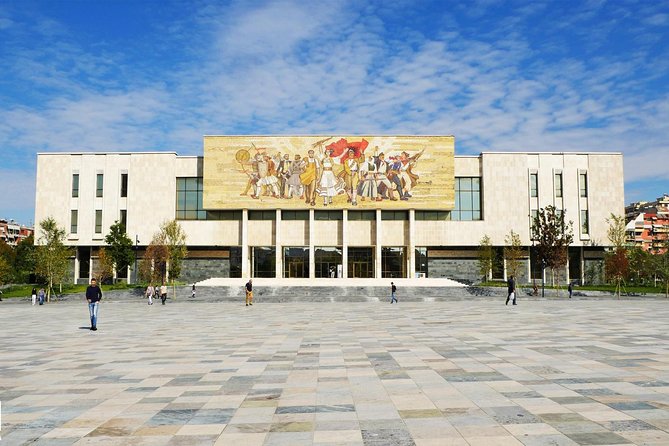
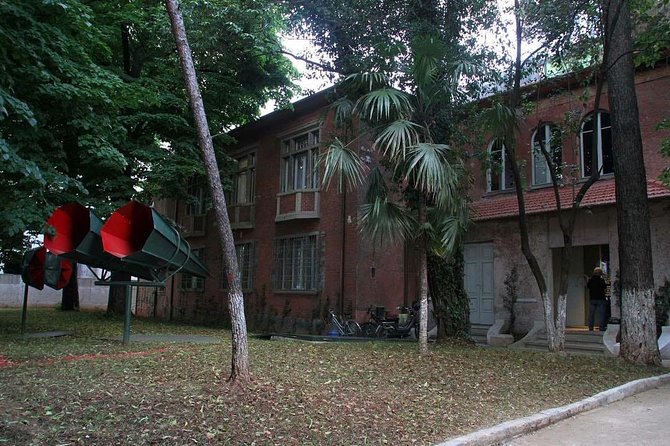
If the Pyramid is about power being presented, Postbllok is about the feeling of being trapped by that power. This checkpoint monument is built to represent communist isolation, and it was created by Fatos Lubonja and artist Ardian Isufi.
The monument is made of three main elements, and understanding that structure helps you read it:
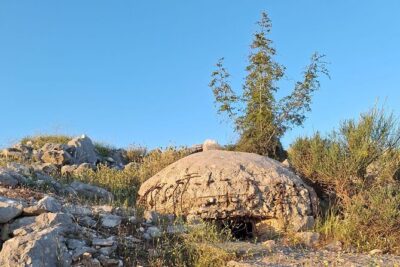
- A concrete defensive bunker concept, tied to the regime’s fear of nuclear or world war
- Concrete supports linked to the mine at Spaç labor camp, where political prisoners suffered between 1968 and 1990
- A brightly painted Berlin Wall section from Postdamer Platz, referencing how Europe was split and how that symbolism traveled
You only spend about 10 minutes here, with free admission, but that time can still be intense. The reason is that it ties Albania’s story to both local repression and a broader Cold War visual language. You’ll likely find it sticks with you during later stops, especially as you shift into Bunk’Art’s survival design.
More of the dictatorship-era sites in Tirana:
- Full-Day Tour of Albania’s Bunkers and Beaches, from Tirana
★ 5.0 · 16 reviews - Communist History Tour Tirana & Street Food
★ 5.0 · 15 reviews - The Truest Face of Communism, Tirana Tour
★ 3.8 · 12 reviews - Tirana Communist Tour: Stories from the Shadows of Communism
★ 4.8 · 8 reviews
Blloku: the communist power neighborhood, now a modern hangout
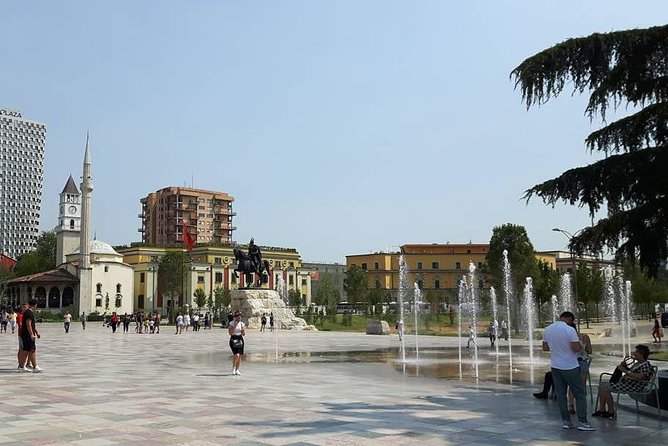
Blloku is where the tour gets more everyday. You’ll pass through this former living and leisure area reserved for the political communist bureau. The tour also notes that even maps used to miss it, which tells you how controlled and insider-only the zone was supposed to be.
Today, Blloku is the heart of Tirana in a very different way: boutiques, colorful coffee shops, cocktail bars, and street art. That contrast is one of the best ways to understand how regimes can disappear while physical traces remain.
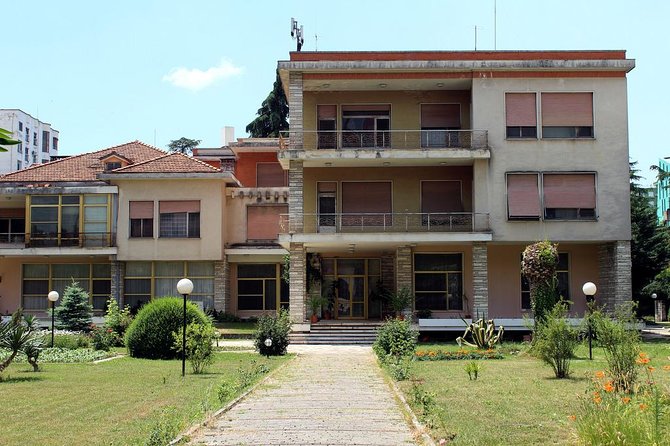
A key detail here is the former villa of Enver Hoxha. You can only see it from the outside, since entry isn’t allowed. Still, just seeing the spot reinforces the message: luxury and privilege were not an accident, they were part of the system.
This stop also includes food and drinks. The tour includes a traditional meal moment near the area, with rakija and coffee, plus the chance to try local items like byrek if it’s offered during your stop. Expect about 50 minutes here, and admission is included.
I like this stop because it turns history into something you can experience with your senses. You get to step out of the heavy symbolism for a moment and experience how Tirana actually feels right now, while still keeping the communist context in view.
Bunk’Art 1: a nuclear-bunker museum you can walk through
The day’s emotional and architectural centerpiece is Bunk’Art 1, and it’s easy to see why it gets repeated praise. This is not a tidy museum with a few display cases. It’s a large underground site, designed like a survival world.
The concept is straightforward: it was built as shelters and elite rooms for an attack that never happened. Today those rooms are turned into museum spaces that show fragments of Albania’s communist past. The tour describes it as almost 3,000 square meters of underground rooms, corridors, and container rooms spread over multiple floors.
A few facts help you understand what you’re stepping into:
- Built in the 1970s
- Kept secret for much of its existence
- Designed to survive nuclear attacks
- Double concrete walls and enough space for more than 100 people
You’ll spend about 1 hour underground. That timing works well because it lets you slow down, absorb the layout, and keep your head around what the designers were trying to solve: fear, distance, and control.
One more thing I appreciate is the sense of movement. The site is described as labyrinth-like, and that matters for your understanding. You’re not only learning about the system, you’re experiencing the physical logic of it, which makes the whole idea harder to dismiss as mere theory.
Price and logistics: is it worth about $90?
At about $90.11 per person for a 4 to 5 hour guided experience, you’re paying for two things: targeted access and interpretation. This is not just a stroll through random streets. You’re covering a concentrated set of major sites tied directly to the communist narrative, plus one big-ticket experience underground in Bunk’Art 1.
Here’s what you’re getting included:
- Hotel pickup in Tirana
- Air-conditioned vehicle listed as part of the experience
- Coffee and/or tea
- Alcoholic beverages, specifically rakija
- Admission included for the stops that require it, and multiple stops have free admission
- A private tour setup for your group
- English offered
Lunch is not included, so plan to eat after the tour or grab something light around the Blloku stop if it’s offered the way you need it.
The best value angle is the combination of interpretive guidance and included admissions. A lot of tours cut costs by leaving out key entry fees, or by skipping the deeper site. Here, Bunk’Art 1 is part of the package, which is the kind of place you would otherwise struggle to understand on your own.
One practical note based on real-world pacing: one guest reported that it turned into a mostly walking day covering close to five miles, even though an A/C vehicle was listed. So I’d treat this as a walk-and-learn tour first, and use the vehicle as a bonus when it shows up.
Guides, group size, and how the pacing feels
This is set up as a private tour for your group, so you’re not sharing your attention with a large crowd. That helps. It also makes it easier for the guide to tailor how fast you move and what you pause for.
At the same time, the experience can still involve keeping a small group together at multiple exterior stops and then funneling into museum spaces. One consideration that came up is that it can be a little tricky to herd everyone if people wander for photos. My advice is simple: pick your photo moments early, then stick with the guide the rest of the time. You’ll get more meaning per minute.
If you care about learning details beyond the obvious, the guide quality is a big part of the payoff. Feedback highlights guides like Leo, Dio, and Eni for careful explanations and attention to the group. People also mention personal touches, including family stories shared during the day, which is exactly what turns a list of landmarks into a real understanding of what it was like to live under the system.
What to wear, what to bring, and how to make it land
This tour mixes outdoor sites with an underground museum. Dress for that reality.
Bring:
- Comfortable walking shoes, because the day can feel like a longer walk than you expect
- A light layer for the bunker museum, since underground temperatures can differ
- Water, even if coffee and tea are included
Eat logic:
- Since lunch is not included, plan your hunger. You will have a food stop near Blloku, and coffee and rakija are included, but that doesn’t automatically replace a full meal for everyone.
Alcohol note:
- Rakija is included, and it can be stronger than people expect. If you want to keep it comfortable, go slow, take small sips, and make sure you stay hydrated.
Who should book this Tirana tour?
You’ll love this if you want Tirana’s communist story with real places attached to it. It’s especially good for people who like architecture, memory monuments, and Cold War context that connects the city to the rest of Europe.
This tour also suits you if you want a guided day rather than self-guided wandering. The stops are meaningful, but some of the symbolism works better with interpretation, and Bunk’Art 1 is the kind of site where a guide can turn the maze into understanding.
If you hate walking or you need a low-footprint day, you might find the pacing demanding. The tour runs 4 to 5 hours and can cover a lot on foot. In that case, you might prefer a shorter, lighter city walk.
Should you book this tour?
If your goal is to understand the truest face of Communism in Tirana, I think this is a strong pick. You get the big symbols, the memorial logic, and the underground survival design in one connected route, plus hotel pickup and refreshments.
Book it if you’re ready to walk, listen, and look closely at what buildings were built to communicate. Skip it if you want a mostly relaxed city sightseeing day with minimal walking and no heavy political memory focus.
FAQ
How long is the tour?
The tour runs about 4 to 5 hours.
What is the starting point and start time?
It starts at Skanderbeg Square at 9:00 am.
Is hotel pickup included?
Yes. Hotel pickup is included, and pickup is arranged from your chosen place of stay in Tirana.
Is this tour private?
Yes. It is private for your group only.
Does the tour include refreshments?
Coffee and/or tea are included, and alcoholic beverages, including rakija, are included as well.
Is lunch included?
No. Lunch is not included.
Are admission tickets included?
Admission is free at some stops, and admission is included for others, including Blloku and Bunk’Art 1.
How much walking should I expect?
The tour involves walking between stops. One guest noted it became a 100 percent walking day covering nearly five miles, so wear good shoes.
What language is the tour offered in?
English is offered.
Is the tour affected by weather?
Yes. The experience requires good weather, and if it is canceled due to poor weather, you’ll be offered a different date or a full refund.
Newly listed around Tirana
- Private Day Tour of Saranda Gjirokaster,Butrint from Tirana★ 5.0 · 3 reviews
- Rafting And Swimming Adventure on the Black Drin River★ 5.0 · 3 reviews
- From Tirana: Visit Prizren city and Kukesi lake★ 5.0 · 3 reviews
- Private Transfer: Tirana Airport&City to/from Dhërmi★ 5.0 · 3 reviews
- 3 Hour Pub Crawl Tour in Tirana★ 3.5 · 3 reviews
- Tirana: Bovilla Lake & Gamti Mountain 4×4 Off-Road Tour★ 5.0 · 3 reviews
- Tirana/Durres: Saranda, Ksamil, Blue Eye & Vjosa River Tour★ 4.7 · 3 reviews
- From: Tirana and Shkoder: Theth & Blue Eye Full Day Tour.★ 5.0 · 3 reviews
Communist History Tours, compared.

ATV Guided Tour in Kallm with Secret Bunker Visit
Read our review →
Tirana’s Communist Past; Small Group Walking Tour
Read our review →
Full-Day Tour of Albania’s Bunkers and Beaches, from Tirana
Read our review →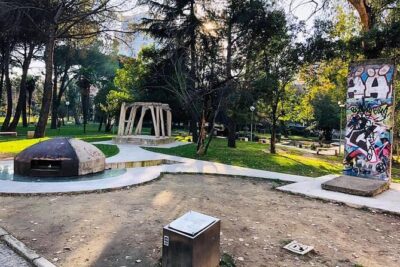
Tirana Communist Tour: Stories from the Shadows of Communism
Read our review →Browse the lists this tour appears in