
Reviewed · COMMUNIST HISTORY TOURS
The Truest Face of Communism, Tirana Tour
Seeing the communist era through Tirana’s physical reminders is what makes this tour so compelling. I like that it starts at Bunk’art 1, an ex-nuclear bunker built for Albania’s communist leader, Enver Hoxha, and it frames the last century of events with photos and documents. I also like the walk through Blloku, the power neighborhood that used to be off limits. One consideration: the Bunk’art 1 portion can feel more like a broad 20th century primer than a full, on-the-ground look at everyday life under the regime.
A good part of the value is how the tour connects facts to places. You’ll move from the underground bunker world up to major landmarks around Skanderbeg Square, then back down into the city’s political geography in Blloku, and finish with two famous propaganda-era structures, the Pyramid and the House of Leaves.
You end with a coffee break at Komiteti Kafe Museum, with Albanian raki included, which helps take the edge off a heavy topic. If you go, bring the right expectation: you’re looking at history through institutions, not through actors recreating daily life.
Key highlights worth knowing
- Bunk’art 1, an ex-nuclear bunker: Photos, items, and documents tied to Hoxha’s fears and Albania’s 20th century turning points.
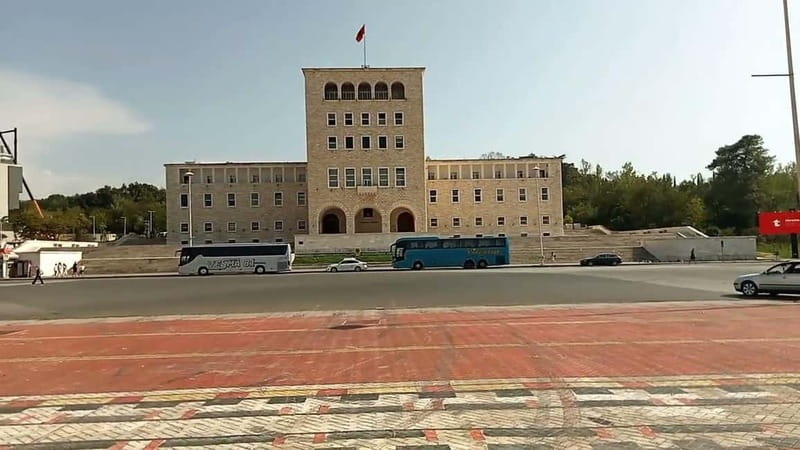
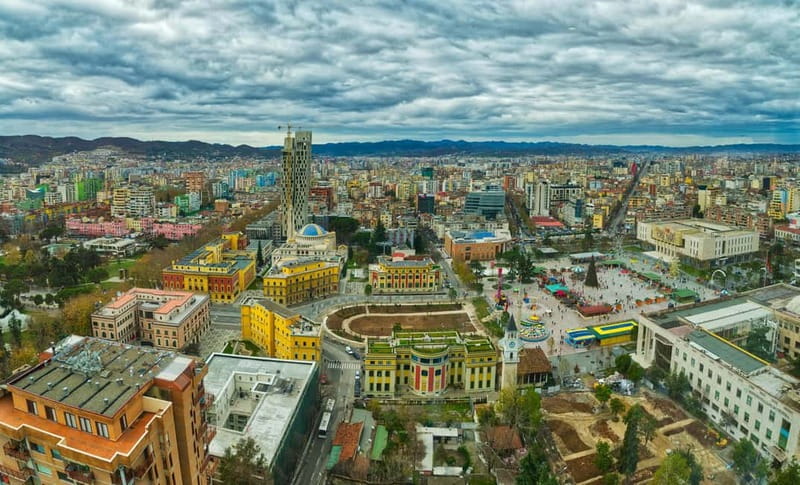
- Skanderbeg Square walk: You get a guided look at landmarks like the Et’hem Bey Mosque and the Clock Tower around the main square.
- Blloku Area and the Hoxha residence zone: You’ll cover where the leadership lived, not just what the ideology claimed.
- Post Blloku memorial: A stop honoring political prisoners in an area that was once forbidden.
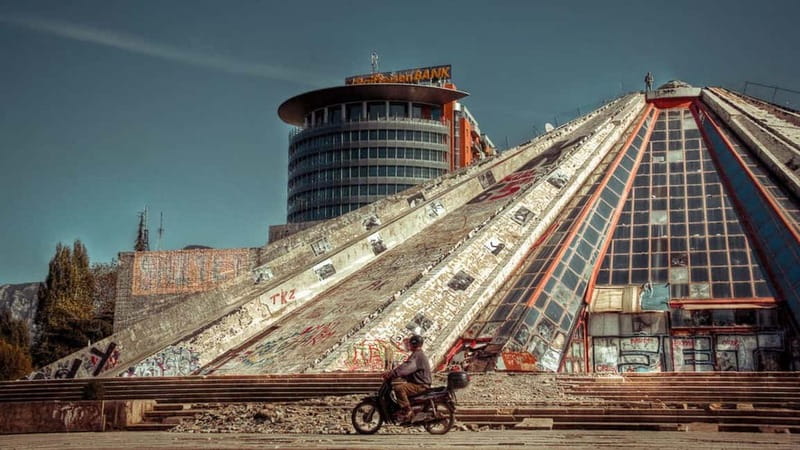
- The Pyramid of Tirana: Seen as the former Enver Hoxha Museum, with context explained by the director during the visit.
- House of Leaves, outside view: The former spy center, viewed externally as part of the route.
Bunk’art 1: the ex-nuclear bunker that explains the Hoxha worldview
The tour kicks off at Bunk’art 1, inside an ex-nuclear bunker. That setting matters because it is not a museum built to feel friendly. It feels like the state planned for pressure, fear, and sudden shocks. You’re guided through the story using photographs, items, and documents, with an emphasis on Albania’s 20th century journey and how the dictatorship shaped what people were told to think.
This is also where you should set expectations. The experience gives you a structured overview stretching back before Hoxha rose to power. You’ll hear about the dictator’s time, but the museum’s strongest pull is the wider timeline that leads to the communist era. If what you really want is an intensely focused, minute-by-minute portrayal of life under the regime itself, Bunk’art 1 may feel a bit too top-level. On the other hand, if you want your mental map in place before you explore Tirana’s other communist-era landmarks, it’s a smart start.
One practical tip for enjoying it: pace yourself mentally. The content can be heavy, and the theme is built around control, propaganda, and the consequences of political power. The bunker walls and the guided flow help, but you still want to keep an eye on your energy level. If you’re short on time in Albania, this museum can quickly turn into the anchor stop that makes everything else click.
Also, keep claustrophobia in mind. This is a bunker, and the tour is not designed for people who get anxious in tight indoor spaces. Even if you are fine in normal museums, the vibe here can be very closed-in.
More Communist History Tours in Tirana
- Tirana’s Communist Past; Small Group Walking Tour
★ 4.9 · 59 reviews - A Communist Manifesto: Tirana before and after
★ 5.0 · 50 reviews - From Albania: Permet /Thermal Baths with Bunker Food Tasting
★ 5.0 · 19 reviews
From Bunk’art 1 to Skanderbeg Square: seeing ideology meet real architecture
After Bunk’art 1, you shift from underground to street level and walk toward Skanderbeg Square. This part works because it reminds you that politics is not just policy, it’s buildings, sight lines, and public space.
Around the square, you’ll learn about historic structures such as the Et’hem Bey Mosque and the Clock Tower. You’re not just told names and dates. A good guide uses these landmarks to explain how Tirana’s identity has been shaped over time, so the city itself becomes part of the lesson.
What I like about this transition is that it gives your brain a breather. You move from controlled narratives in the museum to open-air observation. You can look at the skyline, notice the geometry of the square, and make sense of why certain neighborhoods and institutions became symbolic centers.
This walk is also where the tour feels most like a real city outing. You’re not stuck in one room. You’re moving, asking questions, and building context while you’re still in Tirana’s daylight.
Blloku Area and the Post Blloku memorial: where power lived, and where fear was remembered
Then you head into Blloku, the neighborhood that once belonged to the communist leadership. This is one of the most interesting segments because it turns political history into something you can point at.
You’ll discover the home of Enver Hoxha and other senior members of the regime in the Blloku area. The key idea here is contrast. Blloku was not just where important people lived, it was also a statement of separation, a physical boundary between rulers and everyone else.
The tour then stops at the Post Blloku memorial, honoring former political prisoners. That memorial sits in an area that was once forbidden. Visiting it during the walk matters. You’re seeing the residue of control in real space, not only reading about it in a gallery.
If you prefer guided nuance, this is where you’ll benefit most. The guide can connect the dots between privilege, propaganda, and repression. And even if you already know the broad story of communism and purges, placing it in a specific neighborhood helps the facts land in your head as geography, not just concepts.
The Pyramid of Tirana: a former Enver Hoxha Museum you can read like propaganda
Next comes the Pyramid of Tirana, explained as the former Enver Hoxha Museum. Even without going inside, the exterior has a statement-like quality. It’s a structure that feels like it was designed to communicate power, not warmth.
What you’ll get here is historical context from the local tour director. That means the guide is not only describing what it was, but helping you understand why it became a symbol in the first place. The pyramid format itself is instantly recognizable, so the discussion tends to stick with people. It’s hard to forget a building that looks like it was made for ideological theater.
This stop also helps balance the tone of the day. After the bunker and the memorial stop, you get a more architectural kind of storytelling. You can look at the shape, imagine the intended message, and then compare it with the rest of Tirana around it.
My advice: take a few minutes to slow down here. In a route like this, it’s easy to treat each landmark like a photo opportunity. With the pyramid, the value is in the interpretation, so give your eyes time first, then let the director explain.
More of the dictatorship-era sites in Tirana:
- The truest face of Communism
★ 5.0 · 18 reviews - Full-Day Tour of Albania’s Bunkers and Beaches, from Tirana
★ 5.0 · 16 reviews - Communist History Tour Tirana & Street Food
★ 5.0 · 15 reviews - Tirana Communist Tour: Stories from the Shadows of Communism
★ 4.8 · 8 reviews
House of Leaves from the outside: a spy center that hints at the atmosphere
The tour finishes the sightseeing sequence with an outside view of the House of Leaves. It’s described as a former spy center now converted into a museum.
You don’t go inside on this particular route, so you won’t get the full museum depth here. Still, seeing it from outside during the walk makes sense thematically. You’ve already covered the dictatorship’s institutions and the separation of Blloku. Now you’re looking at the kind of facility that represents surveillance and fear.
This is also a good stop if you want a quick, visual cue before deciding if you want more time exploring communist-era museums on your own. The outside view gives you enough to understand why the site matters, without locking you into one extra building when your day is already packed.
If you want maximum time in the most intense locations, then consider planning your other museum visits around this tour so you don’t feel rushed later. This route is long enough that your brain will appreciate some downtime after.
Komiteti Kafe Museum and the raki break: history with a human finish
At the end, you pause for a coffee break at Komiteti Kafe Museum, and raki is included. If you’re wondering why this matters in a history tour, it’s simple. When the subject is repression and control, you need a social reset, not just an exit.
The cafe setting also helps you shift from facts to conversation. You’ll likely hear other people comparing which stop hit them hardest, which tends to be the best kind of tourism chat. And yes, the raki is a nice bonus, a practical way to make the ending feel like a real Tirana moment rather than a museum stamp-and-go.
If you also drink coffee, you can usually choose to pair it with the raki. The day is long at 330 minutes, so even a small break helps you keep energy through the final stretch.
Price, pacing, and who should book this Tirana route
The price is $88 per person for about 330 minutes, which is 5.5 hours. That includes entry fees, transportation, and a live English guide. For a tour that combines multiple major landmarks plus one guided museum visit, it is a solid value, especially if you don’t want to piece together several sites by yourself.
Here’s how I’d think about value for your own planning:
- If you want one guided framework that ties together Bunk’art 1, Blloku, and major city landmarks, the package is efficient.
- If you only care about one stop, like the pyramid or House of Leaves, then you might feel like you are paying for time you don’t need.
- If you like walking and you’re okay with a structured route, the city transitions make the time feel less monotonous.
The tour is not suitable for people with mobility impairments. It also is not suitable for people with claustrophobia, which makes sense given the bunker stop.
One more practical point, worth taking seriously: confirm pickup details ahead of time. A few recent bookings reported issues with guides not arriving, and that can turn a history day into a lost day fast. If you book, I’d treat the day before as a must-do checklist: double-check your pickup point in Tirana, have your confirmation ready, and be ready to contact the provider if plans change. The tour is worth it when it runs smoothly, but don’t let a preventable logistics gap ruin your schedule.
Should you book The Truest Face of Communism in Tirana?
If your goal is to understand how communist rule shaped Tirana’s spaces, this tour is a good choice. The route connects Bunk’art 1’s institutional storytelling with the neighborhoods and landmarks where that power left physical marks. I especially like the way Blloku and the Post Blloku memorial bring the theme down to a specific geography, and then how the Pyramid of Tirana turns ideology into architecture you can still see today.
I’d skip or adjust expectations if you want a deeply detailed, fully immersive focus on daily life under the dictatorship. Bunk’art 1 is powerful, but it leans toward a wider overview before and around Hoxha’s rise. You’ll get context, not a single narrow story.
Best fit: history-minded visitors who want a guided walking route, English explanation, and an end-of-tour raki break that feels like you actually did something in Tirana, not only visited monuments. If you are claustrophobic or have mobility concerns, plan a different approach and focus on outdoor sites or museums that match your comfort level.
FAQ
How long is the Truest Face of Communism, Tirana Tour?
The tour lasts 330 minutes, which is about 5.5 hours.
How much does the tour cost?
The price is $88 per person.
What is included in the tour price?
Entry fees are included, along with transportation, a tour guide, and the traditional Albanian beverage raki.
Is the tour guide available in English?
Yes. The tour guide provides the experience in English.
Is raki included?
Yes. Traditional Albanian raki is included as part of the tour experience.
Is the tour refundable if I cancel?
You can cancel up to 24 hours in advance for a full refund, and the listing also offers a reserve now and pay later option.
Is this tour suitable for people with mobility impairments or claustrophobia?
No. It is not suitable for people with mobility impairments or for people with claustrophobia.
Newly listed around Tirana
- Private Day Tour of Saranda Gjirokaster,Butrint from Tirana★ 5.0 · 3 reviews
- From Tirana: Visit Prizren city and Kukesi lake★ 5.0 · 3 reviews
- Rafting And Swimming Adventure on the Black Drin River★ 5.0 · 3 reviews
- Private Transfer: Tirana Airport&City to/from Dhërmi★ 5.0 · 3 reviews
- 3 Hour Pub Crawl Tour in Tirana★ 3.5 · 3 reviews
- Tirana: Bovilla Lake & Gamti Mountain 4×4 Off-Road Tour★ 5.0 · 3 reviews
- Tirana/Durres: Saranda, Ksamil, Blue Eye & Vjosa River Tour★ 4.7 · 3 reviews
- From: Tirana and Shkoder: Theth & Blue Eye Full Day Tour.★ 5.0 · 3 reviews
Communist History Tours, compared.

ATV Guided Tour in Kallm with Secret Bunker Visit
Read our review →
Tirana’s Communist Past; Small Group Walking Tour
Read our review →
Full-Day Tour of Albania’s Bunkers and Beaches, from Tirana
Read our review →
Tirana Communist Tour: Stories from the Shadows of Communism
Read our review →Browse the lists this tour appears in