
Reviewed · WALKING TOURS
Private Walking Tour Visit to Durrës with Licensed Guide
A private walking tour through Durrës is interesting because you see the city’s layers in a single route, from fortifications and Ottoman baths to civic squares built in the 1900s. I like that the tour is run as a private experience with a licensed guide, and I really enjoy how the stops connect culture to what you can still point at on the street. You get stories tied to named people, named towers, and specific building choices, not vague history talk.
My second favorite part is the way the route moves you through religion and public life without feeling like a checklist. Still, there is one catch: the tour is timed with quick stop lengths, so it can feel fast if you like to linger in one spot.
Key highlights you should care about
- Venetian Tower of Durrës in multiple eras, plus a renovation funded by the European Commission
- Two “architectural anchors” in one area: the amphitheatre and the Rotonda, Forumi Bizantin
- Ottoman details you can spot, like the 17th-century hammam heating and steam system traces
- Religion along the same walking logic, from Fatih Mosque to several churches shaped by past bans
- Durres in the 1900s, with Freedom Square, the 1931 Municipality building, and the 1960 Palace of Culture
Why Durrës works so well for a short private walk
Durres is not trying to be Paris. It is a working port city with visible remains and reused building materials, so it teaches you how places evolve when different powers take turns. In two to three hours, you get a guided route that links the Adriatic edge to the center, then back to the civic heart.
The tour is private, meaning it is only your group. That matters because it lets you ask practical questions as you go, instead of waiting for a group to catch up at each stop. It also keeps the pace steadier, since a guide can slow down for stairs, corners, or photo angles.
And yes, it is walking. Most of the stops are short visits, so you are mainly there to understand what you are seeing, not to spend hours inside buildings.
More Walking Tours in Tirana
- Walking Tour of Tirana
★ 5.0 · 646 reviews - Tirana: Express Walking Tour with a Guide
★ 4.8 · 503 reviews - Tirana Center: Magic Walking Tour French/Italian/English Etc
★ 4.9 · 402 reviews
The route starts at the Venetian Tower, then lands you at Sheshi Liria
The meeting point is at the Venetian Tower of Durrës area, listed with the plus code 8C5W+VQC. The tour ends at Sheshi Liria, also called Freedom Square. That end point is helpful because it sits near major landmarks, so you can keep exploring with minimal backtracking.
The pacing is built for an easy rhythm. Many stops are set around 10 to 15 minutes each, which is enough time to learn the key story, orient yourself, and get a few usable photo moments. If you want long, quiet museum time, you might find the schedule a bit quick. If you want a smart orientation to Durres, this structure is a good fit.
Also, the tour is offered in English. The guide is licensed, and the experience provider listed is Artan. I’ve seen different guide names associated with the service, including Joana, so the key is that you will be guided by someone who clearly enjoys connecting the city’s past to what you can see today.
Stop by Stop through Durres: what you learn at each place
1) Venetian Tower of Durrës: fortification, Ottoman era, and a new multimedia role
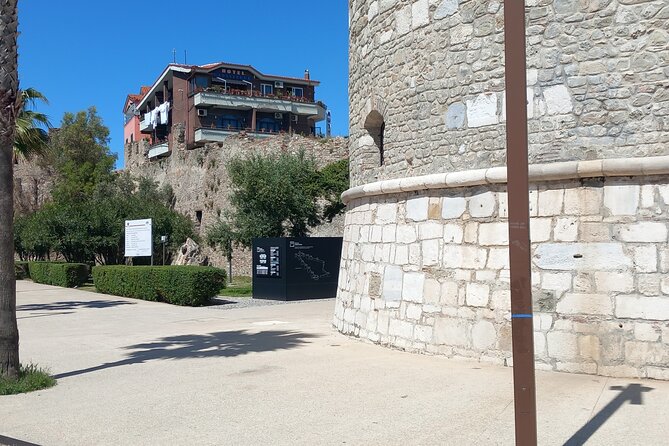
You start with the Venetian Tower, and you get two layers of focus on it. First, you place the tower inside the wider neighborhood story. You look at how older maps, photographs, and the surrounding urban area help explain how multiple cultures, nations, and religions shaped Durres over time.
Then you zoom in on the tower itself. You learn about its construction, including how it relates to other Adriatic Sea towers and what that suggests about shared building thinking along the coast. The guide also explains how the tower functioned and mattered during Ottoman rule.
After that, you move through the next political shifts: demilitarization in the early stages of World War II, then how it was used through the communist regime and after. The most current chapter is a renovation financed by the European Commission, which is turning it into a multimedia center projecting the city’s history.
One practical note that matters: to access the projection and the elevated balcony, you pay an additional fee that is not included in the tour. The interior entrance for the tower is included, so you will still see the core site and learn the story, but if the projection is a must-do, plan for the extra payment.
More walking tours of Tirana:
- Walking tour of Tirana
★ 4.8 · 285 reviews - Tirana Walking Tour
★ 4.8 · 209 reviews - Local food experience & walking tour of Tirana
★ 5.0 · 192 reviews - Tirana: Local food experience & walking tour
★ 5.0 · 154 reviews
2) Church of Saint Paul and Saint Asti: saints, street life, and traces of what was erased
Next you pass by the Church of Saint Paul and Saint Astius. The key experience here is how the guide explains the saints’ connection to Durres and how the church sits inside ordinary street movement.
You also learn about traces of an earlier church, Saint Spiridon, which was demolished during the communist regime. This is one of those moments where the city’s history feels personal, because you realize that what you can still see today is shaped by what was removed yesterday.
If your travel style is about understanding how policy affects real buildings, this stop will click. If you are only looking for major wow-factor architecture, you may want to keep expectations realistic, since this is more about historical context than a huge interior visit.
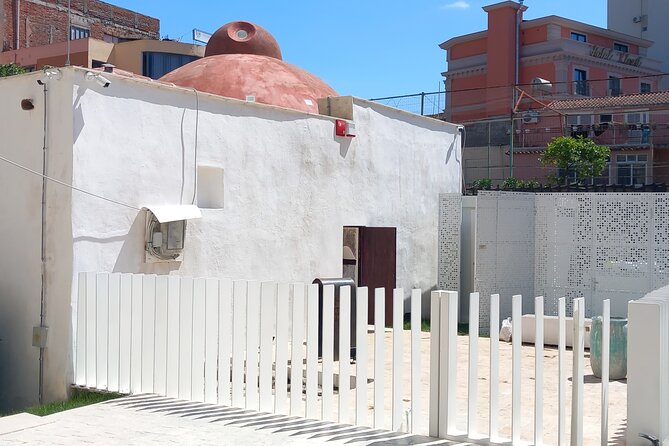
3) Medieval Bath, the Ottoman Hammam: 17th-century steam logic you can read in the walls
The Ottoman hamam is from the 17th century. You get a practical explanation of how baths like this worked, including the steam and heating techniques used in the structure.
The guide also ties the hammam to the wider seaside promenade area. It may have been privately owned or part of government-owned buildings, and it could have been connected in function or location to the White Mosque, which is described as being very close to where the boulevard now runs.
The tour makes this stop more than “look at an old building.” You learn about traces that hint at the old road toward Durres Castle. That makes the hammam feel like part of a bigger street system, not just a standalone ruin.
4) Bulevardi Epidamn: the 1928 urban plan made real
Then you walk along Bulevardi Epidamn. This is where the history stops being purely ancient. The guide explains the street’s role in the 1928 First Urban Regulatory Plan, and how early residential buildings along this segment were shaped by that planning.
This is also the most “break-friendly” part of the route. The tour pauses at a couple of local spots for refreshments, with options like coffee, water, burek, ice cream, or orange juice. You are not forced into a sit-down meal, and that keeps the walking flow comfortable.
Bring a bit of water wisdom here. If it is hot, grab water early. The route is not long, but it still adds up in a sunlit city street.
5) Aleksandër Moisiu Museum: an English consulate, earthquake damage, and a theatre legend’s home
At this point you shift into a more personal story about a specific building. The house is tied to Aleksandër Moisiu and it once served as the consulate of England in Durres, when Durres was the capital after national independence.
Today, it is connected to ongoing repair needs after earthquake damage in 2019. The earthquake also damaged a Byzantine tower adjacent to the house, so your guide gives you a sense of how recent natural events have impacted archaeological and historical sites.
This stop is valuable if you care about how famous people and international connections show up in everyday architecture. It is also useful if you like a “then and now” contrast: consulate and cultural life, followed by modern recovery work.
6) Fatih Mosque: a 1501 building that shares materials with the Byzantine wall
Fatih Mosque is built in 1501 and is described as one of the three oldest mosques in Albania. The location adds a clever defensive logic. It sits at the base of the Byzantine wall between two outer towers, protecting the minaret from seaside views and potential sea attacks.
You also learn about building materials and technique. The mosque uses the same building materials as the Byzantine walls, and the supportive sections of the wall help create the broad ground floor base of the structure.
This is a stop where the guide’s “look at what is physically there” approach is the point. You are learning how the environment and old walls shaped a newer religious building, and how that reuse tells you about the city’s practical priorities.
7) Durres Amphitheatre: excavation work and a government restoration plan
Then you get to the amphitheatre. The guide explains its history and how the amphitheatre structure relates to the city above it, which is one of those details that helps you picture ancient urban stacking.
You also hear about the excavation in 1966 by archaeologist Vangjel Toci, and what was revealed through that work. After that, the focus turns to the present, including a government project aimed at restoring the entire amphitheatre and preserving the historical layers.
This stop is a good reminder that preservation is ongoing. You are not just being shown a finished product. You are learning how restoration and archaeology often travel together.
8) Catholic Church of Saint Dominiku, also linked to Saint Lucy: faith under legal pressure
This part of the route takes you into Kisha Katolike Shën Dominiku, described as the Church of Saint Lucy. It is tucked into the winding streets, and the key experience is understanding how its construction history connects to figures in city governance.
The guide also explains what changed under the communist era, when religious activities were legally banned. You see today’s condition in contrast with the past, and it gives the stop weight beyond architecture.
If you like to connect a building to a political system, you will appreciate this. If you prefer only dramatic interiors, this may feel more reflective, like a history lesson tied to a specific address.
9) Freedom Square, Sheshi Liria: from a floral garden to civic power
Next you reach Town Square, Sheshi Liria, or Freedom Square. The guide explains how it was designed as a floral garden in the 1928 First Urban Regulatory Plan.
This square also hosts the Municipality and the Grand Mosque. You learn how the area developed across time, from the Ottoman era through pre-World War II and into the present. Then the guide connects that story to city form, explaining how early neighborhoods, called Varosh areas, extended out in different directions.
This stop is where the tour becomes easy to understand on your own after. Once you grasp how the square was planned and how the city spread, it makes the surrounding streets feel less random.
10) Municipality of Durrës: Italian civic design and a clock tower replacement
At Durres City Hall, built in 1931, you get another 1900s story. The guide explains how it reflects Italian aesthetic preferences of that era.
A detail I like from the tour concept is the central balcony, originally used for public speeches in the square. After a 1926 earthquake destroyed the clock tower, a new public clock was installed atop the new City Hall building. Today, the building keeps functioning as a governance hub, so the past is not just preserved, it is still used.
This is a strong stop if you enjoy urban history. The architecture is the “how,” and the earthquake and civic use are the “why.”
11) Xhamia e Madhe e Durresit: merchant-backed growth, communist-era change, restoration
The Grand Mosque is explained through a timeline tied to local merchants and Italy’s pre-World War II economic dominance. In 1939 it faced closure and alteration under the communist regime, then it was restored after the 1990s.
The guide frames the mosque as a symbol of resistance and integration in Islam, reflecting Durres’s cultural continuity through political changes. It also gets described as heavily frequented by residents, which helps you understand it as a living place rather than a museum object.
12) Aleksandër Moisiu Theatre and the Palace of Culture: 1960s architecture in context
The route then reaches the “Aleksandër Moisiu” Theatre, linked here with the Palace of Culture in Durres. It is described as the start point of a Downtown thematic tour named after Aleksander Moisiu.
The building was erected in 1960 and is described as Albania’s first structure of its kind. You also learn how its 1960s Albanian architecture character influences buildings across Albania.
Even if you do not care about theatre, this stop helps you read the city as it moved into modern state-building. It is an example of cultural identity expressed in public architecture.
13) Rotonda, Forumi Bizantin: Vangjel Toci’s Byzantine forum and Late Antiquity to the Middle Ages
Finally, you reach Rotonda, Forumi Bizantin. This Byzantine forum was discovered by archaeologist Vangjel Toci, the same name tied to the amphitheatre excavation.
The guide explains why the forum matters: it helps you trace the city’s transition from Late Antiquity to the Middle Ages. You also see artifacts displayed within this open forum setting.
This is a satisfying wrap because it returns you to “what was where” in a way that makes the ancient city layout feel more real. You finish with a bigger picture view, even though the route never leaves the walkable center.
Price and value: what your $24.10 really covers
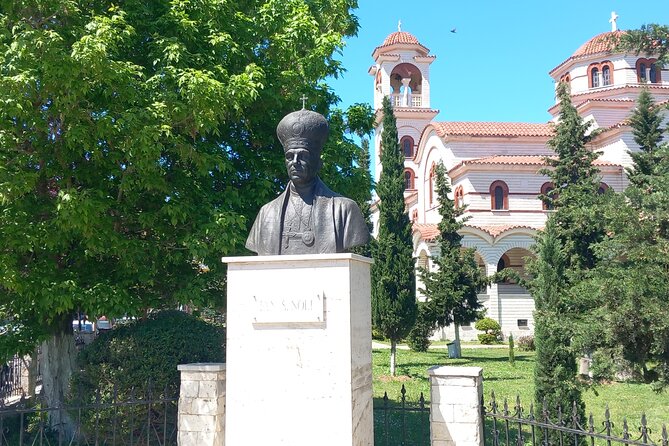
The price is $24.10 per person for a private walking tour with an English-speaking licensed guide. The value comes from what is included in the experience format.
Here is the key part: admission tickets for the listed stops are described as free within the tour. That means you are not paying multiple separate ticket fees just to see the sites with context.
The one extra cost to plan for is at the Venetian Tower. If you want the projection and the elevated balcony, you must pay an additional fee that is not included. You will still be able to access the tower interior as part of the tour, so it is not a paywall for the main experience, but it can matter if you are specifically interested in the multimedia presentation.
One more value angle: average booking is about 24 days in advance. That suggests it is not always easy to grab a spot last minute in the busy season. If you have fixed travel dates, book early and you will avoid stress.
Who this tour suits best (and who might want a different plan)
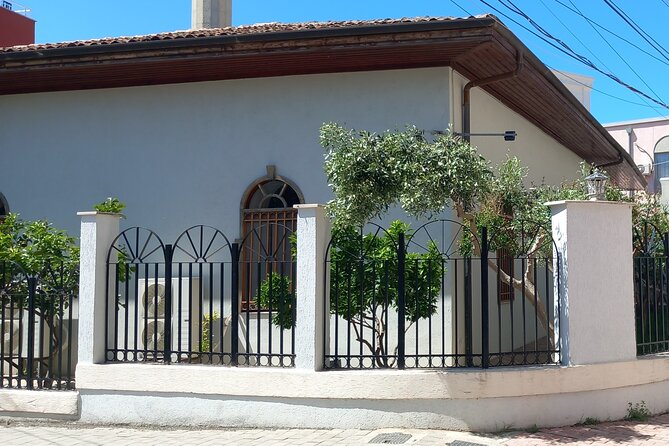
This tour fits you if:
- You like history explained in street-level terms, tied to visible buildings and street planning
- You want a guided route that keeps moving, but still gives context at each stop
- You are traveling with family or friends and want a single organized walk with a clear ending at Freedom Square
You might want to choose something else if:
- You prefer long museum-style visits where you can spend 45 to 90 minutes in one place
- You want only one type of architecture, like just Ottoman or just Byzantine, and do not care about the rest
The tour is also described as doable for most travelers, and it allows service animals. It is near public transportation too, which helps if you plan to connect the tour to other city sights.
Practical tips so the walk feels easy, not tiring
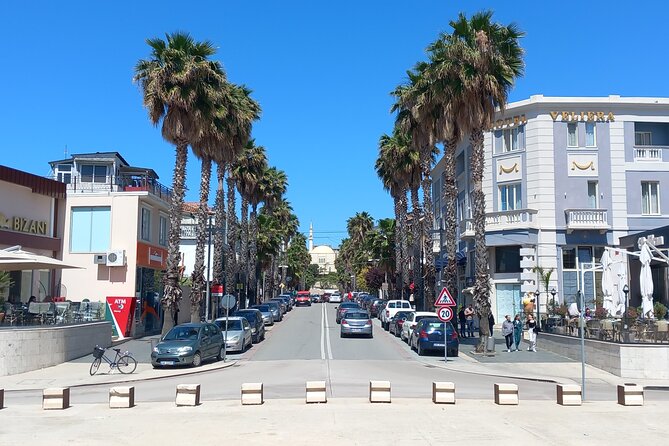
Wear comfortable shoes. The route is short in total distance, but the sites are spread across city streets and you will want stable footing for any uneven paving.
Bring a water plan. The tour includes a chance to stop for refreshments along Bulevardi Epidamn, but having water on hand keeps you comfortable between breaks.
At the Venetian Tower, decide ahead of time if the projection and elevated balcony fee is worth it for you. If you are the type who loves multimedia interpretation, plan for it. If you want to keep costs simple, you can still enjoy the tower interior included in the tour.
Finally, use the meeting and ending points to plan your day. Starting at the Venetian Tower area and ending at Sheshi Liria makes it easier to connect to nearby sights without backtracking through the center.
FAQ
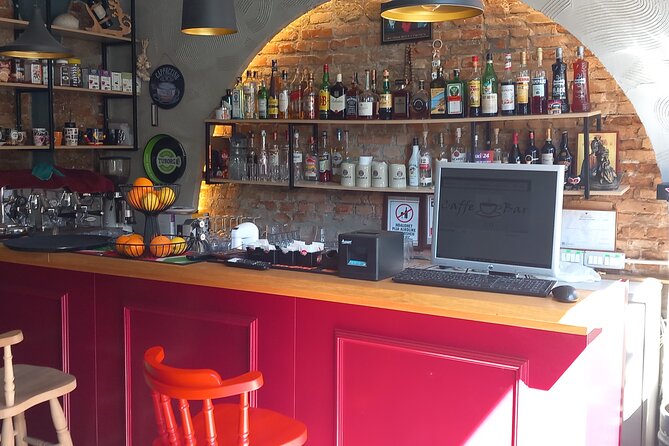
FAQ
How long is the Durrës private walking tour?
The tour lasts about 2 to 3 hours.
What is the price per person?
It costs $24.10 per person.
Is this tour private or shared?
It is a private tour, so only your group participates.
What language is the tour offered in?
The tour is offered in English.
Where do we meet and where does the tour end?
You meet at the Venetian Tower of Durrës area and the tour ends at Sheshi Liria (Freedom Square), in Durrës.
Do I get a mobile ticket?
Yes, it includes a mobile ticket.
Are admission tickets included for the stops?
Admission tickets are listed as free for the stops, but there is an additional fee for the projection and elevated balcony at the Venetian Tower, which is not included in the tour price.
Are service animals allowed?
Yes, service animals are allowed.
What is the cancellation policy?
Free cancellation is available. You can cancel up to 24 hours in advance for a full refund.
Should you book this private Durrës walking tour?
If you want a guided way to understand Durres without spending your whole day hunting for context, I think this is a smart buy. The best part is the structure: you move through major anchors like the Venetian Tower, the amphitheatre, and Freedom Square, while the guide explains how each place fits into the city’s shifting story.
Book it if you like history tied to what you can actually see on the street, and you appreciate having one organized route with an English-speaking licensed guide. If you hate fast stop times and want long interior stays, you may find the pace a bit tight. In that case, consider adding extra time to the sites you care about most after the tour ends at Sheshi Liria.
Newly listed around Tirana
- Private Day Tour of Saranda Gjirokaster,Butrint from Tirana★ 5.0 · 3 reviews
- Rafting And Swimming Adventure on the Black Drin River★ 5.0 · 3 reviews
- From Tirana: Visit Prizren city and Kukesi lake★ 5.0 · 3 reviews
- 3 Hour Pub Crawl Tour in Tirana★ 3.5 · 3 reviews
- Private Transfer: Tirana Airport&City to/from Dhërmi★ 5.0 · 3 reviews
- Tirana: Bovilla Lake & Gamti Mountain 4×4 Off-Road Tour★ 5.0 · 3 reviews
- Tirana/Durres: Saranda, Ksamil, Blue Eye & Vjosa River Tour★ 4.7 · 3 reviews
- From: Tirana and Shkoder: Theth & Blue Eye Full Day Tour.★ 5.0 · 3 reviews
Walking Tours, compared.
Tirana Center: Magic Walking Tour French/Italian/English Etc
Read our review →
Blue Eye Kayak and walking tour & Lekursi Castle
Read our review →

Browse the lists this tour appears in