
Reviewed · WALKING TOURS
Inside Tirana Walking Tour
What makes this walking tour in Tirana so interesting is how it connects the city’s grand public buildings to Albania’s cultural life and its communist-era memory. I love the 2-hour walking format that helps you get oriented fast, and I love the way the guide explains the places clearly. My guide, Era, was friendly and very well informed. One possible drawback: this is an outdoor walk, so good weather matters.
You’ll start at Et’hem Bej Mosque in Sheshi Skënderbej, then move through central landmarks you can also visit on your own. The difference is that you’re not just looking at buildings, you’re getting the story behind why they look the way they do, and what they meant for people at the time.
The big consideration is simply conditions, since the experience depends on weather. If Tirana is being unruly, you may be offered another date or a refund.
Key highlights worth knowing before you go
- Small-group feel with a max of 30 people, which can make the pace more comfortable
- English guide + mobile ticket, easy to use and straightforward
- All the main stops are free to enter, so your money goes to the guiding, not admission
- Skënderbeg Square’s plan has multiple layers, from early architects to later updates
- Postbllok is a heavy stop, built from original concrete and even a Berlin Wall section
- Blloku mixes politics and nightlife, with the communist-era legacy still visible
Getting oriented at Sheshi Skënderbej, the heart of central Tirana
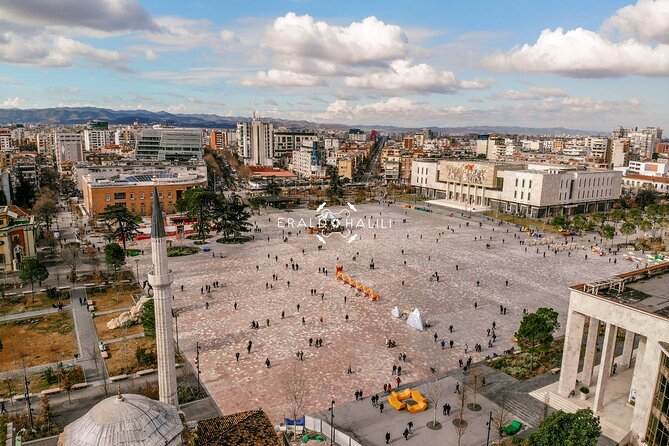
Most of your walk starts exactly where you should start in Tirana, at Et’hem Bej Mosque on Sheshi Skënderbej. If you’ve never been here before, this is the fastest way to understand the city center without wandering randomly. The square is huge, about 40,000 square meters, and it immediately tells you that Tirana was designed to be seen, not just lived in quietly.
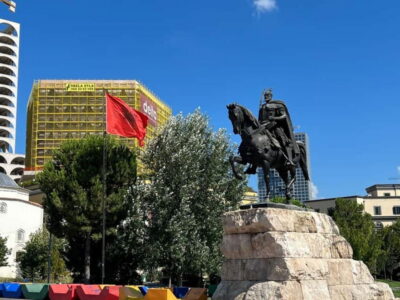
Skanderbeg Square is named for Albania’s national hero, Gjergj Kastrioti Skënderbeu, and the monument at the center gives you a clear visual anchor for the tour. You’ll also hear how the city plan developed over time, including the influence of Italian-era planning updates. That matters, because the architecture and the layout around you make more sense once you know the square was shaped through multiple political and cultural phases.
I like that the guide keeps you moving, but not rushed. You get to stand in key spots long enough to notice details. And because the tour loops back to the same meeting point, it’s easy to build the rest of your day around it.
More Walking Tours in Tirana
- Walking Tour of Tirana
★ 5.0 · 646 reviews - Tirana: Express Walking Tour with a Guide
★ 4.8 · 503 reviews - Tirana Center: Magic Walking Tour French/Italian/English Etc
★ 4.9 · 402 reviews
National Theatre of Opera and Ballet: culture you can point at
A standout stop is the National Theatre of Opera and Ballet of Albania, connected to the larger performing arts story of Tirana. This building sits on what is often described as the Palace of Culture complex area, and it became home to the theater’s ongoing work after the landmark shift in the 1960s.
Here’s what you should take from this stop: Tirana didn’t just “get” a theater. Albania built a national institution for the performing arts that brings together multiple disciplines. The tour explains that the Albanian Philharmonic was established in 1950, with its choir, symphony orchestra, opera singers, ballet troupe, and conductor under one umbrella. That helps you see the theater as an ecosystem, not a single show space.
Also, this is a place you can easily walk past without stopping unless someone points out the significance. The guide gives you the context for why it’s described as a major national institution, comparable in quality to important theaters in the Balkans and beyond. Admission is free, so it’s a low-cost, high-value stop.
Practical note: this stop is on the cultural side of Tirana, so if you like music, theater, or architecture with a purpose, you’ll likely enjoy it more than the “just photos” crowd.
Skanderbeg Square architecture, and why it feels layered
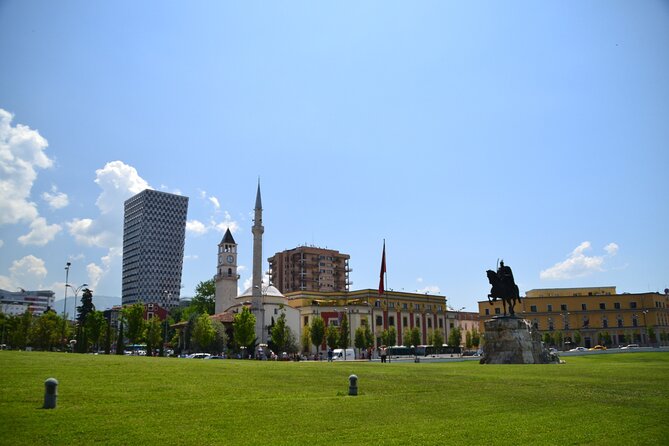
After the opera theater, the walk brings you right back into the open geometry of Skënderbeg Square and its surrounding civic buildings. It’s not only about the statue. The square is also framed by institutions and landmark structures that reflect changes in planning and power.
The guide explains that the original plan for Tirana dates to 1925, shaped by Armando Brasini, then continued in a Neo-Renaissance style with Florestano Di Fausto. Later, after the Italian invasion, the master plan got updated in 1939 by Gherardo Bosio. That kind of timeline matters because it helps you read what you see in front of you.
If you’ve ever looked at a city and thought the buildings feel like they come from different eras, this stop is your answer in plain language. You’ll also hear about nearby major buildings around the square, including the Tirana International Hotel, the Palace of Culture, the National Opera, the National Library, the National Bank, the clock tower, and the City Hall, plus multiple ministries and a national museum. Even if you never go inside all of them today, you’ll understand the square as the administrative and cultural core.
This is also one of the best spots to slow down for photos, because the monument gives scale and the street grid gives you clean lines.
National History Museum: a museum route that tracks changing Albania
Next is the National History Museum (Muzeu Historik Kombetar), which opened on 28 October 1981. The building is large, about 27,000 square meters, with 18,000 square meters devoted to exhibitions. That’s useful to know because it signals you’re not walking through a tiny collection. It’s a big, organized museum meant to cover a long timeline.
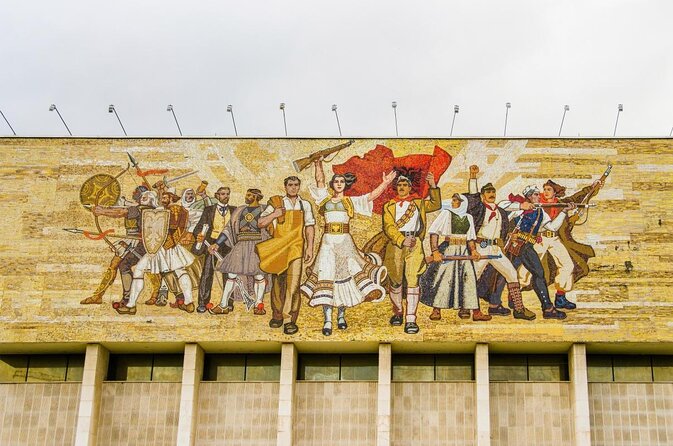
The entrance area has a major mosaic titled The Albanians, described as a large mosaic depicting figures from ancient through modern Albanian history. Even if you don’t catch every exhibit today, this gives you a starting frame: the museum is structured to explain national identity across eras.
What I like most here is the way the tour outlines the museum’s pavilion themes, so you understand what kind of story you’re walking into. The pavilions include Antiquity, Middle Ages, Renaissance, Independence, Iconography, the National Liberation Antifascist War, Communist Terror, and Mother Teresa.
That last list tells you the museum is not just about old coins and costumes. It’s also about twentieth-century politics and the moral and social impact of regime control. And because one of the pavilions is specifically called Communist Terror, you can feel the museum’s priorities clearly.
Admission is free in the context of this tour, which makes it a smart choice if you’re trying to get deep without spending much. If you’re short on time, you still get the big-picture map from the guide.
More walking tours of Tirana:
- Walking tour of Tirana
★ 4.8 · 285 reviews - Tirana Walking Tour
★ 4.8 · 209 reviews - Local food experience & walking tour of Tirana
★ 5.0 · 192 reviews - Tirana: Local food experience & walking tour
★ 5.0 · 154 reviews
Postbllok Checkpoint Monument: history made from concrete and memory
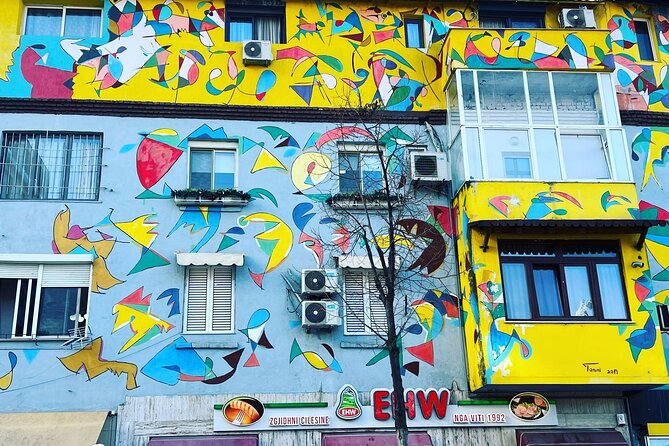
Then comes the emotional center of the walk: Postbllok, the checkpoint monument. This is the stop where Tirana’s past stops being abstract. The site is designed as a somber reminder of the surveillance and persecution linked to the communist regime, associated with Enver Hoxha.
What makes Postbllok hit harder is the way it uses physical remnants. The installation includes original concrete pillars from a notorious labor camp, an old bunker, and even part of the Berlin Wall. That detail matters, because it signals the site is not only symbolic. It’s built from real materials tied to systems of oppression and control.
It’s dedicated to remembering those who suffered during the dictatorship, and the tour frames it as a shared memory of resilience and the push toward freedom and democracy. The guide’s job here is crucial. Without context, you might see a memorial and move on. With context, you start to see what each element is meant to represent.
This is also a good moment to pause and think about how Tirana has chosen to display its past in public. It’s not hidden. It’s placed into the modern city so you have to walk past it, which forces a kind of awareness.
If you prefer light and funny cultural stops only, this might feel heavy. But it also gives the entire tour balance.
Blloku: where communism shaped who belonged, and nightlife moved in
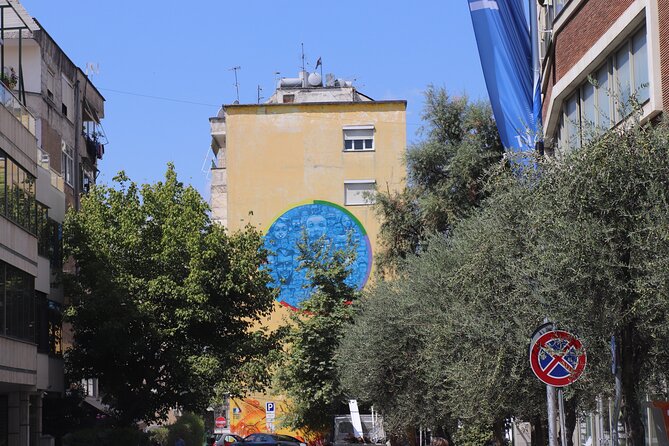
The final major stop is Blloku (often written as Ish-Blloku), Tirana’s upmarket entertainment area. Think boutiques, restaurants, and trendy bars and cafes, with a reputation for lively evenings. It’s part of the Tirana e Re neighborhood in southwestern Tirana, and the tour connects it to the post-communist shift in who could access the city’s most desirable spaces.
Here’s the story I found most important: during communist rule, Blloku was a restricted residential area for members of the Albanian politburo. Ordinary people were not allowed in, and the area was often unmarked on maps. After communism fell, it became attractive again, and development accelerated.
One specific detail you’ll hear is that you can still find the residence of Enver Hoxha in the area. That single fact turns Blloku from “just a nightlife district” into a place where you can trace the change in society with your own eyes.
The guide also describes Blloku as something like a playground for the young Albanian elite, with newer flats and apartments adding to the modern vibe. In other words, the area keeps two identities at once: the social energy people come for now, and the political boundary lines that existed behind it for decades.
If you’re the kind of traveler who likes to understand what you see, not just photograph it, Blloku is a strong closer. You end on energy, but with a sharper understanding of why that energy appeared.
Price and value: what you actually pay for
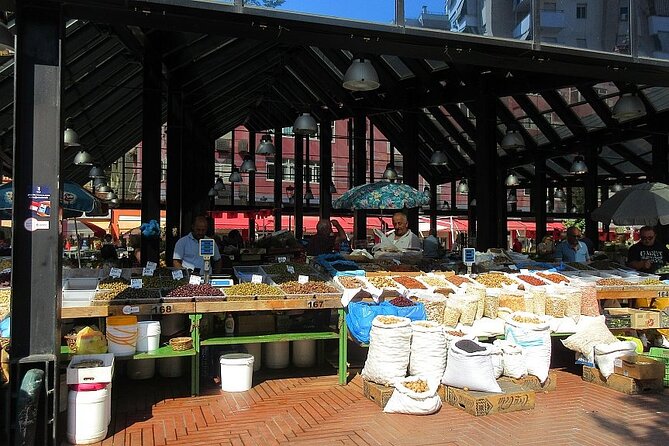
At $6.02 per person, this tour is priced in a way that feels almost too good for what you get. The biggest reason is that your guide is the main paid component. You’re not paying for lots of paid admissions, because each stop on the route notes admission as free.
So what are you paying for? You’re paying for:
- the pacing of a short walk that covers multiple central landmarks
- the guide’s context for what you might miss on your own
- the mental shortcut of connecting cultural sites with political history
Duration is about 2 hours, which is a sweet spot in a city where you may not want to commit a half-day. The tour also caps group size at 30, so it isn’t likely to feel like a huge cattle-herd experience.
Also, it’s offered in English, and you get a mobile ticket. That’s a practical plus when you want to start quickly without printing anything.
If you’re traveling on a tight budget, this is one of those purchases that protects your time and keeps costs low.
Pace, logistics, and how to plan the rest of your day
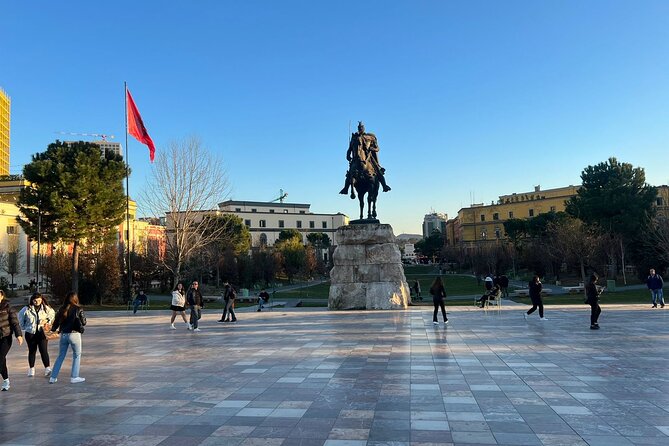
The tour meets at Et’hem Bej Mosque, on Sheshi Skënderbej 1 in Tirana (1001). It ends back at the same meeting point, so you won’t get stuck crossing the city afterward just to find your bearings.
It’s near public transportation, and service animals are allowed. Most travelers can participate, and the walking is spread across multiple short stops rather than one long grind.
My recommendation: wear shoes you can handle on uneven pavement and plan for quick weather changes. The operator specifies the experience requires good weather, so if you book during the season’s rain or heat swings, you should be flexible with the timing.
If you want to keep building your day afterward, this tour is ideal as either:
- your first city-center activity, so you understand the layout
- or a late afternoon walk, so you end near places where you can grab a meal
Should you book this Tirana walking tour?
If you want a fast, guide-led orientation to central Tirana, this is an easy yes. The mix is smart: you cover culture (opera and ballet), civic design (Skanderbeg Square), education and identity (National History Museum), memory and accountability (Postbllok), and finally the living city mood (Blloku).
Book it especially if:
- you like having a guide connect the dots
- you want free entry stops
- you’re short on time but still want depth
Skip it or think twice if:
- you strongly dislike heavier history content
- you’re traveling only when rain is guaranteed, since good weather is required
If you do book, give yourself a little extra time for a last pass in Skanderbeg Square afterward. The monument and the surrounding buildings start to look different once you understand the layers behind them.
Newly listed around Tirana
- Private Day Tour of Saranda Gjirokaster,Butrint from Tirana★ 5.0 · 3 reviews
- From Tirana: Visit Prizren city and Kukesi lake★ 5.0 · 3 reviews
- Rafting And Swimming Adventure on the Black Drin River★ 5.0 · 3 reviews
- Private Transfer: Tirana Airport&City to/from Dhërmi★ 5.0 · 3 reviews
- 3 Hour Pub Crawl Tour in Tirana★ 3.5 · 3 reviews
- Tirana: Bovilla Lake & Gamti Mountain 4×4 Off-Road Tour★ 5.0 · 3 reviews
- Tirana/Durres: Saranda, Ksamil, Blue Eye & Vjosa River Tour★ 4.7 · 3 reviews
- Private Tour. Berat UNESCO City, Optional Wine Tasting. Car & Driver included★ 5.0 · 3 reviews
Walking Tours, compared.
Tirana Center: Magic Walking Tour French/Italian/English Etc
Read our review →
Blue Eye Kayak and walking tour & Lekursi Castle
Read our review →

Browse the lists this tour appears in