
Reviewed · APOLLONIA & ARDENICA
Full Day Trip to Durres, Apollonia and Ardenica Monastery
This full day trip is interesting because you pack 2500 years of Albanian history into one practical route, without losing the ability to actually enjoy the places. I especially like the combo of Apollonia Archaeological Park and Ardenica Monastery, two very different settings that still feel connected by the same big story of the region.
One thing to consider: the walking is on uneven surfaces, and the tour is not recommended for people with walking disabilities or wheelchair users. If you know you need smooth ground and minimal stairs, you will likely feel rushed or uncomfortable.
Key things to know before you go
- Small group, max 6 people, which usually means questions can actually happen, not just crowd noise
- Skip the ticket line, so you spend more time looking and less time waiting
- Three major stops that cover Roman, classical Greek influence, and medieval Orthodox life
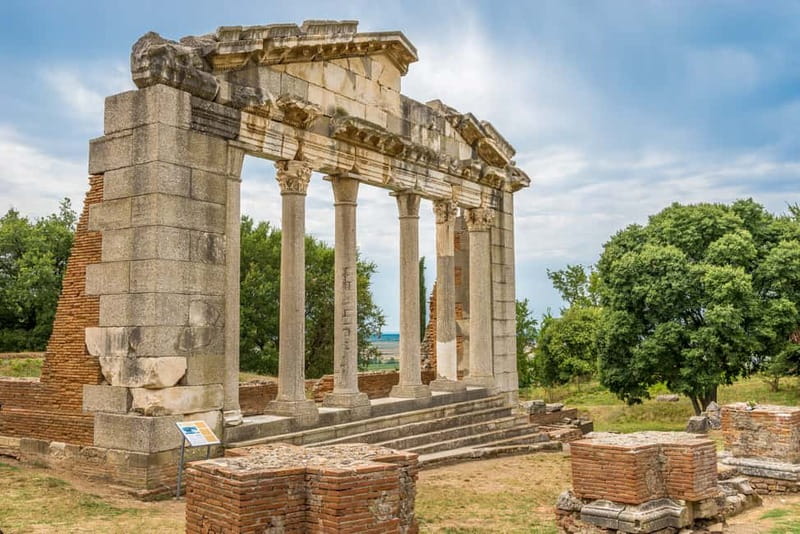
- Apollonia includes multiple highlights like the Odeon, Museum, and the Bouleuterion
- Ardenica Monastery is still active, and the story includes Skanderbeg’s 1451 wedding
A fast ticket to 2,500 years of Albanian history
This is the kind of day trip that works best when you want context, not just photos. You start in Durres, where major powers and trade routes shaped the port city for centuries. Then you head to Apollonia, where classical learning and politics left behind ruins you can still read with a guide. Finally, you end at Ardenica Monastery, tied to medieval events and still connected to living monastic tradition.
The time frame is eight hours, so you are not “doing everything” at a slow pace. But the planning is tight in a good way: each stop has a clear focus, and the guided parts help you understand what you are looking at when the stonework, names, and dates start to blur.
More of Apollonia and Ardenica:
- 1001 Windows of Berat & Golden Sunset in Apollonia
★ 5.0 · 16 reviews - Ancients and Ottomans – Apollonia and Berat
★ 5.0 · 11 reviews - Explore Berat(UNESCO) and Apollonia from Tirana/Durres
★ 3.5 · 5 reviews
Durres: the port city where Rome took an interest
Your day begins with a drive toward Durres, also known as Dyrrachium, Albania’s second largest town. It has roots around the 7th century BC, then grew into an important node of the Roman world. One detail I really like is the connection to the Via Egnatia, a major route that began in this city and tied it to the wider Roman landscape.
At Durres, you will visit the Amphitheatre of Durrës, often described as the largest amphitheatre in the Balkans Peninsula. The scale matters here: it once held about 20,000 people. Even if you only have time for a partial look, the amphitheatre gives you a feel for Roman-era public life: entertainment, status, and crowds on a scale that is hard to imagine in a small modern city.
You also get a coffee break by the Marina or the city’s more modern center. That pause is not just comfort. It helps reset your brain after the amphitheatre stop, especially if you are the kind of person who likes to ask questions and then needs a moment to process the answers.
Practical note: you’ll be moving around historic areas, so comfortable shoes matter. The tour is built for sightseeing, not for gliding on smooth sidewalks.
Apollonia Archaeological Park: UNESCO ruins tied to learning and power
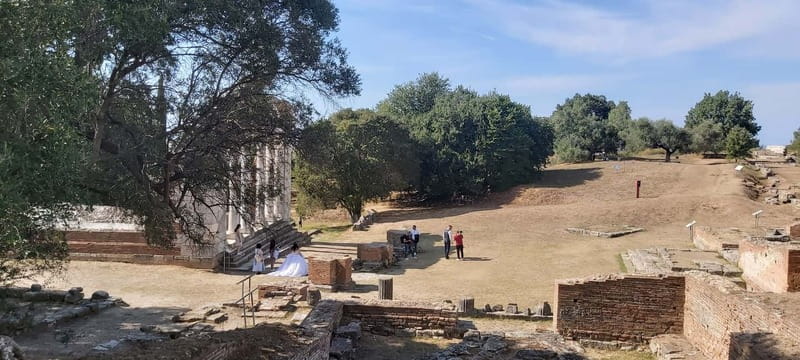
After Durres, you continue toward Pojan, home to Apollonia Archaeological Park, a UNESCO site. Apollonia was founded around 600 BC and became famous as a cultural center, including a noted school of philosophy. One of the big-name connections here is that students attracted from the wider world included Augustus, the first Roman emperor.
It is also a place with a clear arc: the city was abandoned in the 4th century AD, so you walk through the aftermath of a major urban life rather than an actively lived city. That gives the ruins a particular kind of emotional clarity. You can stand where institutions once operated, then look out at the still-alive setting that replaced the old one. With a guide, it feels less like random stones and more like a readable blueprint of how the city worked.
Inside Apollonia, you will visit several highlights:
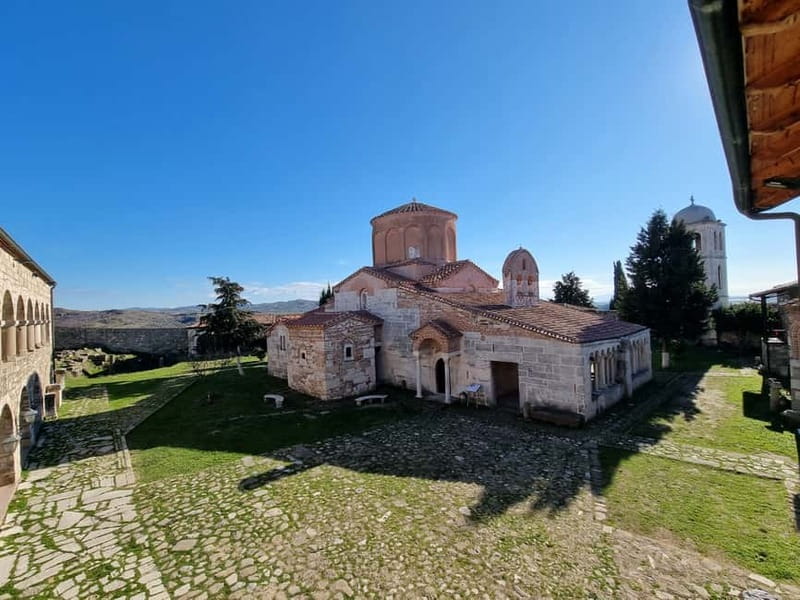
- Church of Saint Mary, which helps you connect the classical past to later religious layers
- Archaeological Museum, which gives context so the site makes more sense
- Odeon, a smaller theater space used for performances
- Library, tying back to the city’s reputation for learning
- Bouleuterion, often the most photographed monument, linked to civic decision-making
Why this works: when a day trip includes multiple structures, the guide’s job becomes turning “I see ruins” into “I can picture the function.” The Odeon and Bouleuterion, in particular, are the kind of spots where you benefit from someone pointing out what you might otherwise miss.
A small strategy for you: when you are at Apollonia, slow down for photos only after you have listened to the guide for a minute. If you rush to pictures first, you risk missing the connections that make the ruins feel like a story instead of scattered remnants.
Ardenica Monastery: Orthodox life, Skanderbeg, and a burned library
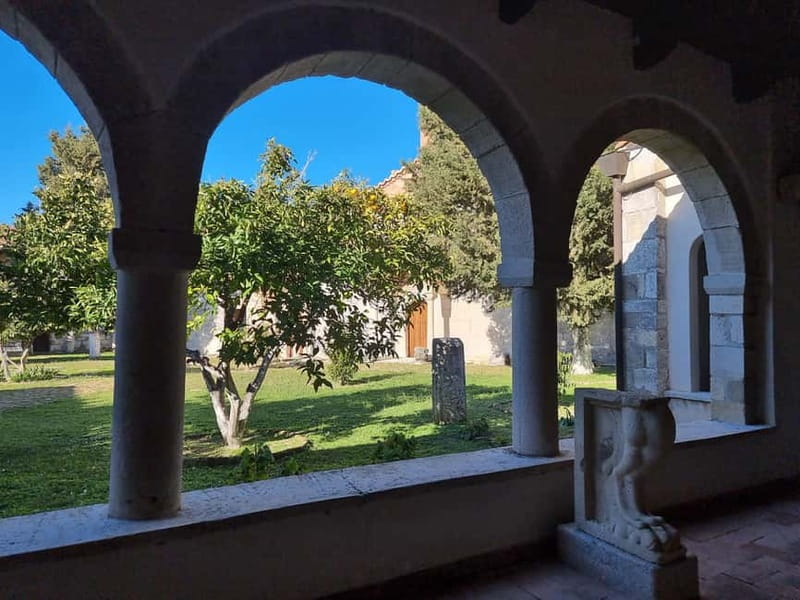
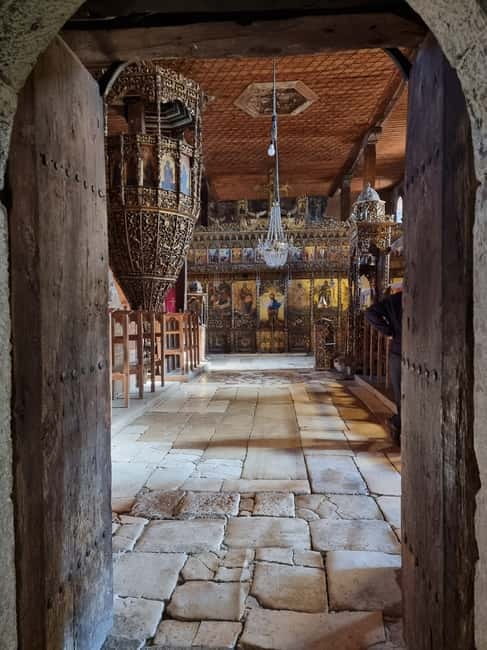
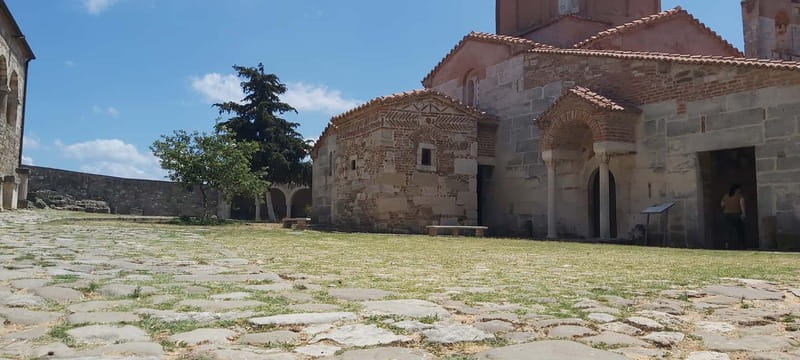
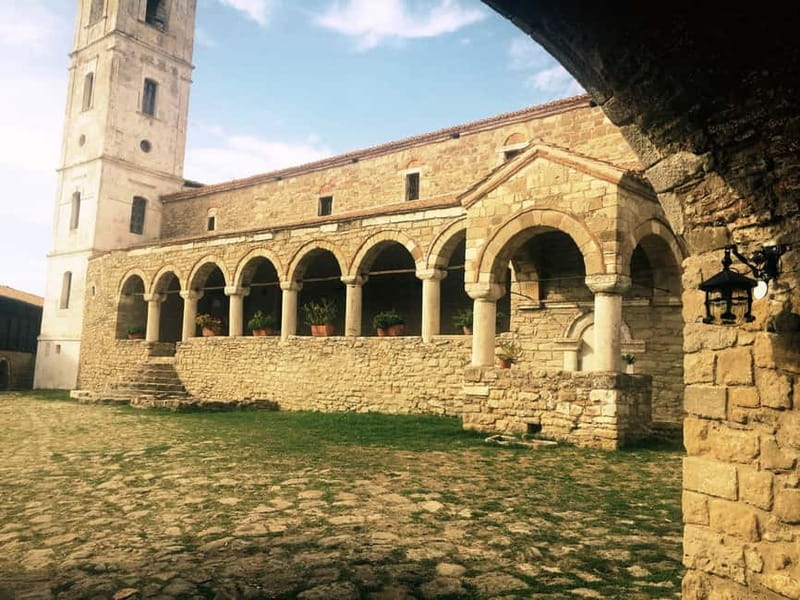
Next comes Ardenica Monastery, described as the last monastery where monks still live today. Built in 1282 as an Eastern Orthodox monastery, it gives your day a medieval anchor after the classical world of Apollonia.
This place is famous for a specific historic moment: in 1451, Ardenica hosted the marriage of Albania’s national hero Skanderbeg with Andronika Arianiti. It is the kind of detail that makes the site feel personal, like history is attached to names you have heard before, not just dates on a timeline.
Ardenica also matters for learning and religious education. In 1780, it started a theological school to prepare clerics in Greek Orthodoxy. There was also an important library with 32,000 volumes, and that is where the story turns tragic: a fire in 1932 burned the collection completely.
That mix of reverence, education, and loss shapes how the monastery feels in real time. If you like sites where you can sense more than one era, Ardenica delivers. You are not just seeing architecture, you are seeing evidence of how faith communities functioned as centers of study, tradition, and cultural memory.
There is also some flexibility at the end of the day. You’ll have free time, and lunch is optional. If you’re hungry, plan to use that time well, because the day is dense, and the return trip eats up the minutes after the monastery.
A few more Tirana options to put side by side
- From Tirana: Bovilla Lake & Gamti Mountain Hiking Day Trip
★ 4.9 · 4,397 reviews - From Tirana: Bovilla Lake & Gamti Mountain Hiking Tour
★ 4.9 · 3,003 reviews - From Tirana: Bovilla Lake & Gamti Mountain Viewpoint Hike
★ 4.8 · 2,053 reviews - Tirana/Durres/Golem: Saranda, Ksamil, Blue Eye Day Trip
★ 4.8 · 1,584 reviews
Small-group pace with hotel pickup and a real live guide
This tour keeps things manageable by limiting the group to up to 6 participants. That small size is a big deal on an eight-hour day, because you can hear the guide without fighting the noise level that comes with bigger groups.
Transport is in an air-conditioned vehicle, which you will appreciate in warmer months. Pickup is included from your hotel area, starting about 15 minutes before departure. The tour also skips the ticket line, which sounds minor, but on a tight schedule it helps protect your time at the sites.
Language options are English and Italian, and the guide is live. I like that the guides named in participant feedback, including Ilir and Arnir, are described as punctual and clear in their explanations. That matters because these sites can be confusing without help. The guide’s job is not only to tell facts, but to make the places understandable.
One more reality check: because you are covering three major stops, you should expect a “see and learn” pace. If your ideal travel day is slow, long lunches, and wandering without time pressure, this might feel a bit structured. If you want a day that actually connects the dots across regions, it’s a strong fit.
Price and logistics: what $212 buys you, and what it does not
The price is $212 per person for an eight-hour outing. That number is easiest to judge when you look at what’s included.
Included highlights:
- AC transport
- Hotel pickup and drop-off
- Guided tour in Durres
- Guided tour at Apollonia
- Guided tour at Ardenica
- Entrance fees to the mentioned monuments and museums
- A driver/guide
Not included:
- Meals and drinks
- Personal expenses
- Any optional activity costs
So the value is strongest for you if you want guided access plus admissions without having to plan each ticket and timing on your own. It is less ideal if you prefer to control every stop and spend extra time sitting and reading alone.
For the money you spend, the tour also gives you a streamlined way to see places that are not “next door” to each other. That saves energy, and it saves the mental workload of figuring out routes, parking, and timing between sites.
What I recommend you do before you go: set aside a budget for lunch since it is optional, and bring a simple layer for temperature changes. You’ll be outdoors around ruins and within church interiors, so comfort matters.
What to pack and how to handle the walking
The tour advises comfortable clothes. I would add a few practical thoughts based on the setting.
- Expect uneven surfaces across historic ground and archaeological areas
- Wear shoes with good grip, not fashion sneakers with slick soles
- Bring a small water bottle if you like, because meals are not included
- If you wear glasses, keep them protected. Dust and sun can be real around outdoor monuments
Also, plan around the documents requirement: you need a current valid passport on the day of travel.
And if you are traveling with kids: unaccompanied minors are not allowed, and children must be accompanied by an adult.
Who this tour fits best, and who should skip it
This tour is a great match if you:
- Enjoy history that spans different time periods, Roman through medieval Orthodox
- Like guided explanations that make ruins and architecture easier to understand
- Prefer a small group with a real person talking, not just headphones
It is not a good match if you:
- Need smooth surfaces and step-free access, because the tour is not suitable for people with mobility impairments
- Can only do very light walking, since archaeological terrain and old structures can be challenging
If you want a low-effort day, this may feel more demanding than you expect, even though it is only eight hours.
Should you book this Durres, Apollonia and Ardenica trip?
I think you should book it if you want one organized day that connects three headline sites into a meaningful story. Durres gives you the Roman port scale, Apollonia gives you the classical learning and civic structures, and Ardenica Monastery brings the medieval human side with Skanderbeg’s 1451 wedding and the story of a library lost to fire.
If your top priority is comfort and minimal walking, you should reconsider because of uneven terrain. If your priority is understanding and seeing, this tour is strong value for the guided coverage and included entrances.
FAQ
How long is the Durres, Apollonia and Ardenica Monastery day trip?
The tour lasts 8 hours.
What is included in the price of $212 per person?
It includes transport with air conditioning, guided tours of Durres, Apollonia Archaeological Park, and Ardenica Monastery, the driver/guide, hotel pickup and drop-off, and entrance fees to the mentioned monuments and museums.
Are meals included?
No. Meals and drinks are not included, and lunch is optional.
What languages are the live guides available in?
The guide is available in English and Italian.
Is this tour suitable for wheelchair users or people with mobility impairments?
No. The tour is not recommended for those with walking disabilities or using a wheelchair.
Do I need a passport for this trip?
Yes. A current valid passport is required on the day of travel.
Is hotel pickup included, and where do you drop us off?
Yes. Hotel pickup and drop-off are included, and you return to Tirana and are dropped off at the same place as the pick-up.
Newly listed around Tirana
- Private Day Tour of Saranda Gjirokaster,Butrint from Tirana★ 5.0 · 3 reviews
- Rafting And Swimming Adventure on the Black Drin River★ 5.0 · 3 reviews
- From Tirana: Visit Prizren city and Kukesi lake★ 5.0 · 3 reviews
- Private Transfer: Tirana Airport&City to/from Dhërmi★ 5.0 · 3 reviews
- 3 Hour Pub Crawl Tour in Tirana★ 3.5 · 3 reviews
- Tirana: Bovilla Lake & Gamti Mountain 4×4 Off-Road Tour★ 5.0 · 3 reviews
- Tirana/Durres: Saranda, Ksamil, Blue Eye & Vjosa River Tour★ 4.7 · 3 reviews
- From: Tirana and Shkoder: Theth & Blue Eye Full Day Tour.★ 5.0 · 3 reviews
Apollonia & Ardenica, compared.
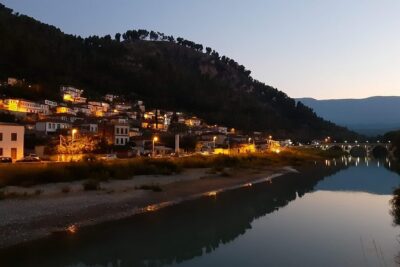
1001 Windows of Berat & Golden Sunset in Apollonia
Read our review →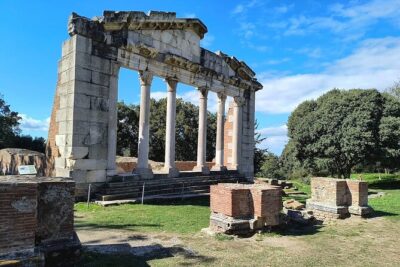
Zvernec, Apollonia and Berat Day Trip Experience
Read our review →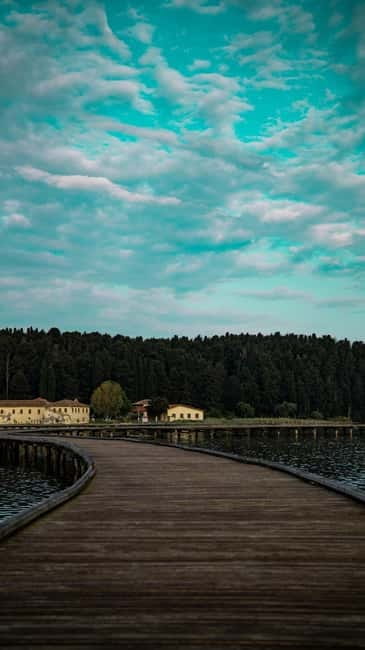
Day tour to: Apollonia, Narta Lagoon & Zvernec Monastery
Read our review →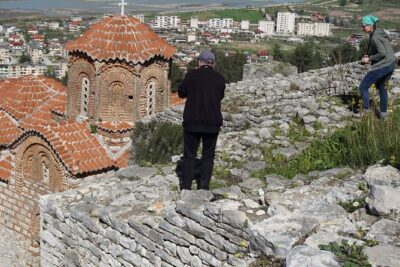
Zvernec, Ardenica, Local Winery & Food Experience
Read our review →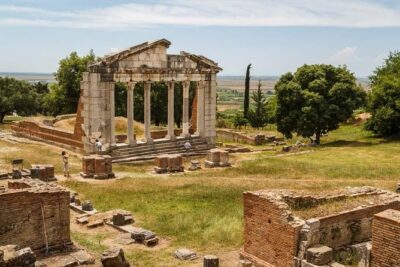
Explore Berat(UNESCO) and Apollonia from Tirana/Durres
Read our review →Browse the lists this tour appears in