Reviewed · PRIVATE
Tirana to Sarajevo / Belgrade; Semi – Private Tour
This semi-private Balkans itinerary strings together Albania, Kosovo, Montenegro, and Bosnia and Herzegovina in 8 days, with a strong focus on food stops and hands-on local towns. You’ll bounce between old bazaars, monastery art, and UNESCO streets, then end with Sarajevo’s war scars and famous coffee culture. It is an efficient way to see a lot, without feeling like you are trapped on a bus all day.
What I like: I love the food-and-market rhythm, from byrek and grape raki in Tirana to slow food style farm tastings and Ottoman sweets in Sarajevo. I also like the mix of major sights and smaller, very “lived in” stops, like Kruja Castle side paths and Bišćevića House in Mostar.
One consideration: it is a long cross-border driving circuit, and lunch and dinner are not included, so you will want to budget for meals and plan for some walking on uneven streets.
Quick hits before you go
- Byrek and grape raki in Tirana: eat early, shop smart, and bargain at local markets
- Kruja in layers: medieval bazaar plus Kruja Castle views from a strategic hill
- UNESCO frescoes at Decan: Orthodox monastery life plus major Byzantine art
- Slow food farm time: Mrizi i Zanave with bio products and a traditional lunch option
- Old Bridge plus Ottoman house in Mostar: Stari Most and Bišćevića Kuća in one day
- Sarajevo on foot: Latin Bridge story and a Turkish coffee or tea stop to close the loop
Why This Tirana-to-Sarajevo Route Feels Better Than a Checklist
This trip is interesting because it treats the Balkans like a connected region, not separate stops. You start in Tirana and steadily travel toward Sarajevo, with a natural logic: markets and crafts first, then monasteries and UNESCO heritage, then the emotional weight of Bosnia’s capital.
The tour also works for people who want more than photos. Many of the stops are designed around time to look closely, talk with sellers, and understand why a place matters. That fits a small group setting, with a maximum of 10 travelers, plus private transportation.
If you prefer an ultra-relaxing pace with no driving day after day, you might find this demanding. But if you want momentum and value, this route has a lot going for it.
A few more Tirana options to put side by side
- From Tirana: Bovilla Lake & Gamti Mountain Hiking Day Trip
★ 4.9 · 4,397 reviews - From Tirana: Bovilla Lake & Gamti Mountain Hiking Tour
★ 4.9 · 3,003 reviews - From Tirana: Bovilla Lake & Gamti Mountain Viewpoint Hike
★ 4.8 · 2,053 reviews
Price and What $2,549.21 Buys You (and What It Does Not)
At $2,549.21 per person, this is not a budget trip. You are paying for a full 8-day circuit with:
- 3-star hotel stays with breakfast included (7)
- Private transportation across multiple countries
- A professional tour leader
- Entry tickets for the sites that are marked as included
- Tourist and road related costs listed as included (like tourist taxes, road taxes, and petrol)
- One Ottoman style coffee or tea in Sarajevo (day 7)
- A final transfer/drop in Sarajevo (day 8) or a Belgrade drop based on your preference
What is not included is equally important. Lunches, dinners, drinks, and snacks are on you, along with souvenirs and anything else not named. So in real terms, the price covers the core planning and the “must-see” logistics, but your food budget will still matter.
The value sweet spot is when you want fewer planning headaches. With a private setup, you avoid the worst parts of group logistics. And with a cap of 10, you are more likely to get actual attention from your leader instead of just hearing announcements.
Day 1 in Tirana: Byrek, Çam Bazaar, Second-hand Treasure, and Raki
Tirana sets the tone with a food-first city orientation. The day opens with a meet-up and a built-in reminder to come with an empty stomach. That is not just marketing talk. It signals that the early rhythm is about tasting, not sightseeing from a distance.
Stop 1: Tirana introduction.
You get a city orientation with a local companion who shares culinary highlights. You’re given free room for your own exploration later, but the morning is structured to help you understand how Tirana works day to day.
Stop 2: Tregu Çam and Çam Bazaar.
This is where byrek becomes more than a menu item. You try byrek made from thin dough layers filled with things like cheese, meat, or spinach. Then you move into Çam bazaar, where you can browse goods from clothes to kitchen items and bargain with sellers. The practical takeaway: go in ready to negotiate lightly, and don’t treat every stall as a fixed-price museum.
Stop 3: Pazari i Ri (New Bazaar).
You’ll see colorful neighborhoods, second-hand shopping, and then a sit-down meal. The meal includes traditional Albanian food plus Albanian grape raki. After that, you get free time to explore Tirana on your own.
A small drawback: this is a day where you will spend time eating and shopping. If you dislike markets or bargaining, Day 1 might feel more consuming than you want.
Day 2 Kruja and Prizren: Resistance Legend, Castle Paths, and Kosovo Culture
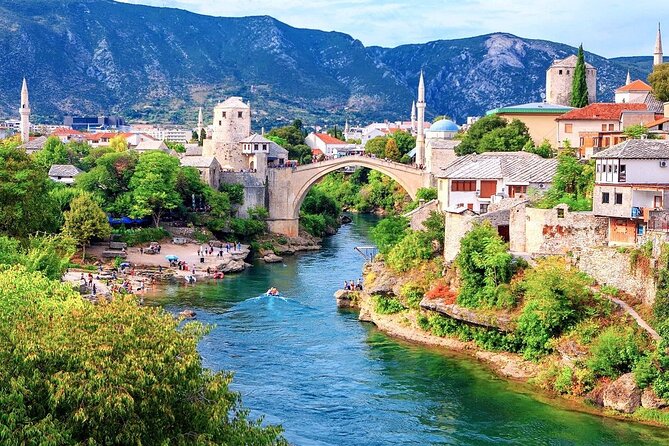
Day 2 shifts from Tirana’s energy to the stories of resistance and cross-cultural city life.
Stop 1: Krujë.
Krujë is tied to Albanian resistance against Ottoman expansion in the 15th century, and it sits in central Albania on rocky slopes around 560 meters above sea level. The location matters because it creates natural defensibility, and the tour uses that geography to explain the history.
Stop 2: Krujë Medieval Old Bazaar.
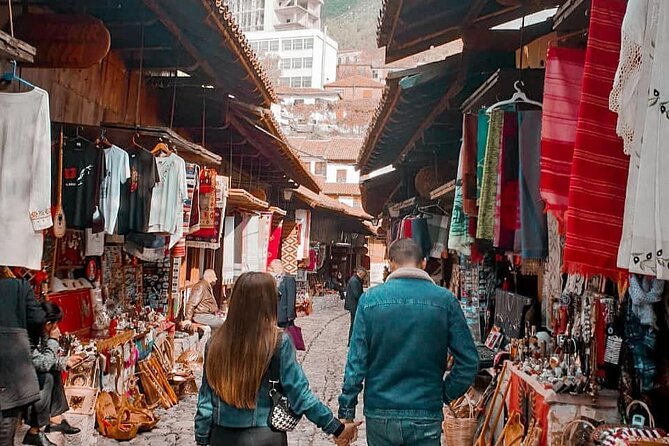
This is one of the best places on the route to shop for souvenirs. You’ll walk through narrow streets and wooden houses in the Medieval Old Bazaar, described as one of the biggest and oldest in the Balkans. Expect stalls selling everything from typical souvenirs to more handmade finds like carpets and jewelry. If you like crafts, this is a good day to go slow and compare.
Stop 3: Krujë Castle.
The castle is set strategically on a rocky hill. Your guide takes you through routes locals used, including hidden paths from the hilltop used during danger periods. That kind of detail is exactly what lifts a sight tour into something more memorable.
Stop 4: Prizren (Kosovo).
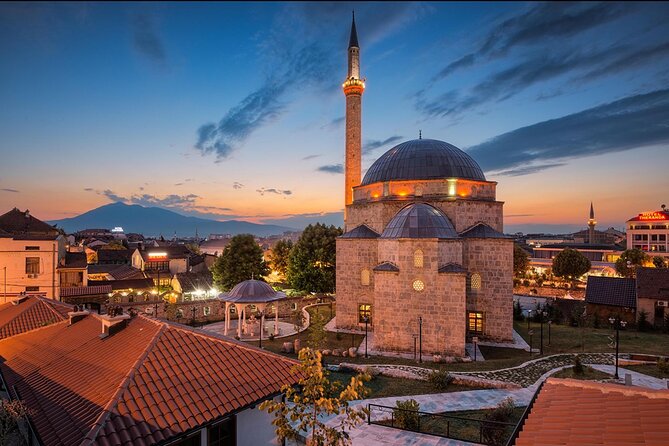
Prizren is framed as a cultural capital with a mix of religious tolerance, architecture, and nature along the river through the old town. The day includes time to wander and take in bridges and medieval houses. If August lines up with your dates, Dokufest is mentioned as a major film festival tied to the city, so you may see extra activity.
Possible consideration: you are crossing borders on this day. Plan for some variability in timing, and pack snacks if you tend to get hungry between stops.
Same base, a completely different day:
- Tirana/Durres/Golem: Saranda, Ksamil, Blue Eye Day Trip
★ 4.8 · 1,584 reviews - Hike Gamti Mountain with Bovilla lake view & canyon- From Tirana
★ 5.0 · 1,280 reviews - Tirana: 2 Hour Guided Hidden Treasures Sightseeing Tour
★ 4.8 · 948 reviews - Berat city UNESCO tour, the Castle & Belshi lake- From Tirana
★ 5.0 · 804 reviews
Day 3 Gjakova, Decan Monastery, and Rahovec Valley Wine Country
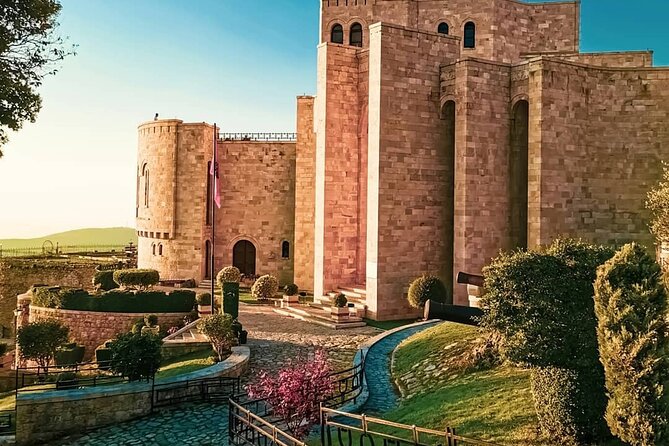
This day blends markets, major Orthodox art, and a wine region founded on ancient grape cultivation.
Stop 1: Gjakova bazaar.
You’ll visit Gjakova’s bazaar, described as the oldest and largest in Kosovo. Even after being destroyed in major conflicts, it has been rebuilt, and the tour focuses on artisan shops and craft workshops. The practical value: watching crafts being made is often more rewarding than buying a finished product, especially if you like understanding technique.
Stop 2: Monastery of Deçan.
Deçan is highlighted for its white appearance, but the bigger reason to go is the frescoes. The monastery is noted as part of UNESCO since 2004, and it’s still lived in by Orthodox monks who make fresh organic food there, including cheeses. If you care about art history, this is one of the most meaningful cultural stops on the whole itinerary because the story is tied to how the place functions today.
Stop 3: Rahovec valley.
After Deçan, you head to Rahovec, known as a viticulture capital of the region. The tour mentions grapes grown since Illyrian times, about 2,000 years, and vineyards at elevations from roughly 350 to 520 meters. There’s also a September wine festival noted for the area.
This is a nice change of pace after monasteries and bazaars. But if you’re not into wine culture at all, you may still enjoy the scenery and the idea of how agriculture shaped the valley.
Day 4 Slow Food at Mrizi i Zanave, then Shkodra and a Venetian Mask Workshop
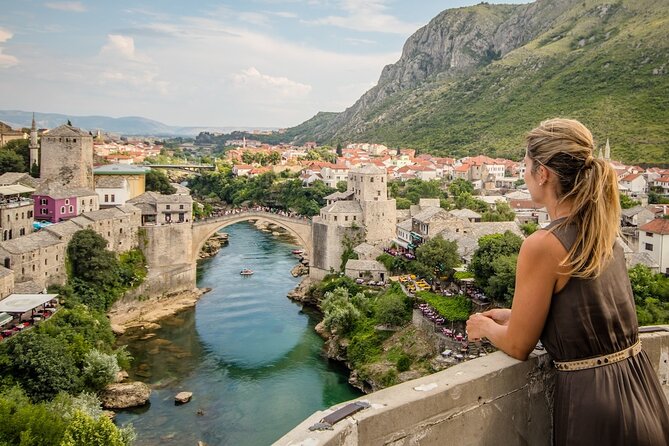
Day 4 turns the volume down and adds sensory detail: food, lake views, and handmade art.
Stop 1: Mrizi i Zanave (Agroturism farm).
This is the “taste and learn” block. You take a farm tour, hear the story of how the business created jobs for more than 400 people in the surrounding area, and see how regional bio products are collected, elaborated, and preserved. You can also use free time for a traditional lunch or buy fresh farm products. Even if you skip buying, this stop tends to make the region feel human and connected.
Stop 2: Shkodra County and Rozafa Castle.
You drive into Shkodra, Albania’s north-west region associated with the biggest lake in the Balkans. The route includes Rozafa Castle, which gives scenery of the lake and three rivers meeting toward the Adriatic. The tour notes Shkodra’s layered architecture, with Illyrian foundations, Ottoman tradition, and Venetian elegance. It is a great example of why the route crosses so many borders: styles and stories travel with people.
Stop 3: Venice Art Mask Factory (paper-mâché masks).
This workshop sells papier-mâché Venetian style masks crafted by hand and painted by hand. It is a short stop, about 30 minutes, but it adds a modern craft layer to a day that otherwise leans historical.
A consideration: if you want more time outdoors and less time in studios, this is one place to mentally prepare for a quicker art visit.
Day 5 Montenegro: Sveti Stefan Viewpoint and Budva’s Old and New
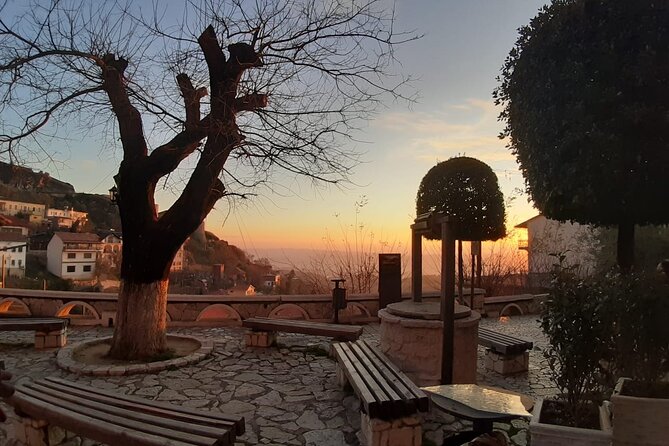
You cross into Montenegro and the route gets more coastal.
Stop 1: Sveti Stefan viewpoint.
You stop at a viewpoint near Sveti Stefan, once a fishing town on a small island. Now, the island has turned into an exclusive residential resort, and the tour notes that it is not possible to visit the island anymore. Still, the coast views are presented as picture-worthy.
Stop 2: Budva.
Budva splits into new and old parts. The tour keeps it practical: you have time to understand the difference between the modern side with restaurants and shopping, and the old town with sights like St. Ivan church and the smaller St. Mary church. You also walk the medieval old town streets as your group moves through.
This day is often a good reset if you’ve been spending the previous days on indoor or fortress-heavy sights. Just be realistic: you are still moving on a schedule.
Day 6 Kotor and Mostar: UNESCO Cobblestones and Ottoman Homes by the River
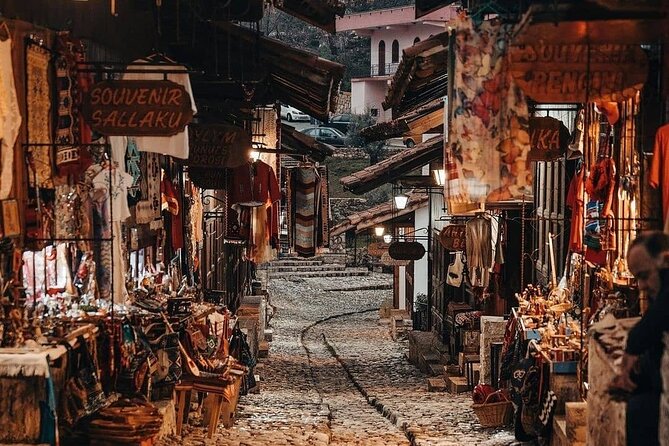
Day 6 is built around UNESCO level old towns and a strong Ottoman-to-modern contrast.
Stop 1: Kotor.
Kotor is described as a UNESCO world heritage site, a maze of narrow cobblestone streets in the old town. The city layout is explained as a defensive design, made to confuse intruders who came to plunder. You visit Saint Luke’s church, highlighted as locally important because it represents unity.
Stop 2: Blagaj.
You cross into Bosnia and Herzegovina and stop in Blagaj near Mostar. It’s presented as an Ottoman medieval town under a cliff with the blue waters of the river Buna spring. This stop feels like a palate cleanser between two heavy heritage days.
Stop 3: Mostar and Stari Most.
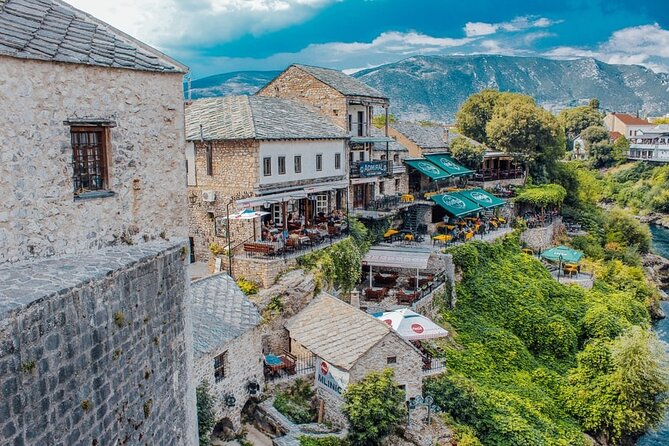
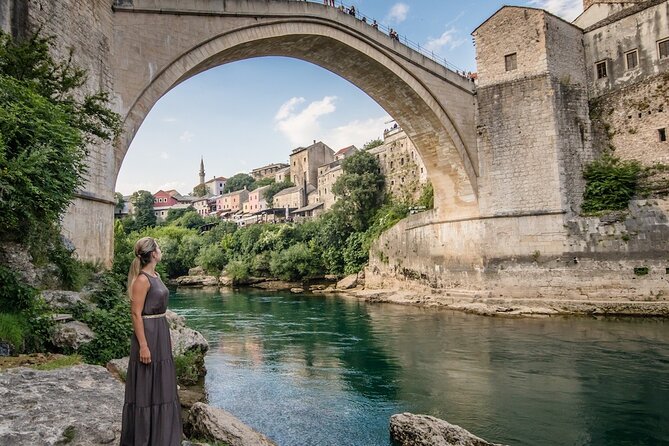
Mostar’s main focus is the iconic Old Bridge, Stari Most, built in the 16th century in Islamic architectural style and part of UNESCO. You also wander the Old Bazaar with colorful lanes and a lively atmosphere. The tour includes “Don’t Forget” memorial stones placed around town, meant to keep history present.
Stop 4: Bišćevića Kuća (Bišćević House).
This is included and it matters. The Bišćevića Kuća is described as one of the finest Ottoman residential examples in the region, built in the 17th century and preserved. You get an intimate look at how a wealthy Ottoman family lived in a riverside setting.
Possible drawback: the walking can be uneven and the day is packed. If your feet get cranky, wear shoes that handle cobbles without stress.
Day 7 Sarajevo: War-era Marks, Latin Bridge, and Turkish Coffee at Caffe Divan
Sarajevo is the emotional capstone of the route, and the tour makes that clear without turning it into a lecture.
Stop 1: Sarajevo walking tour.
You drive from Mostar to Sarajevo after breakfast, and then you walk over uneven terrain and visit ruins. The tour points out visible reminders of the Yugoslav War, including bullet holes and cannon marks. You also hear the origins of Sarajevo and the medieval Bosnian Kingdom, plus the Ottoman and Austria-Hungarian parts. The practical value here is that the architecture and the markets and religious buildings help you understand how multiple empires shaped daily life.
Stop 2: Latin Bridge.
You visit Latin Bridge and learn the story of how World War I was triggered there. The tour notes the bridge name connection to how it linked different city quarters, including an Ottoman-era informal reference to the Catholic neighborhood as Latinluk.
Stop 3: Caffe Divan and your complimentary drink.
You finish at Caffe Divan, with Turkish coffee or tea complimentary. The idea is simple and smart: after days of walking and borders, you get a clean moment to slow down and absorb Sarajevo at street level.
If you love learning details, Sarajevo is where the tour leader’s skill really shows. Past guests have praised guides such as Illir, described as a former teacher with intimate regional knowledge, and also Gerion for friendly, well-organized guidance. The point for you: this kind of trip depends heavily on how your leader explains what you’re seeing.
Day 8: Airport Drop in Sarajevo or Ending with a Belgrade Drop
Day 8 is your exit day. After breakfast, you transfer to your ending point.
If you want Sarajevo, the tour notes that airport drop-off in Sarajevo is free of charge only on the last day. If you prefer Belgrade, you’ll end with a transfer option based on preference, including a hotel drop in Belgrade as part of what’s described.
Practical advice: on the last morning, keep your schedule light. You will not want to turn “transfer day” into a late sightseeing marathon.
What This Tour Style Is Best At (and Who Should Choose It)
This route is best for you if you:
- Want a semi-private trip with a max of 10, not a huge bus crowd
- Like food stops that feel like local routines, not just a single tasting
- Want a guided mix of forts, markets, monasteries, and UNESCO towns
- Are comfortable budgeting for meals beyond breakfast
It is a weaker fit if you:
- Hate long drives and border days
- Want every meal included, or you dislike planning around food
- Prefer minimal walking on cobblestones and uneven streets
A quick comfort check: the tour notes that most travelers can participate, but it also mentions uneven terrain walking in Sarajevo. So if mobility is a concern, consider that as you evaluate your own comfort needs.
Should You Book This Balkan Circuit?
I would book this tour if you want an organized path through Albania, Kosovo, Montenegro, and Bosnia, with food culture at the center and major heritage stops that actually connect to lived places. The private transportation, small group size, and guided pacing are doing real work here, especially for people who do not want to stitch together trains, cars, and tickets across multiple borders.
I would hesitate if $2,549.21 feels high for you right now, because lunch and dinner are not included and the schedule includes multiple full sightseeing blocks plus driving. Also, if you’re the type who needs downtime every day, this itinerary will feel busy.
Bottom line: if you are excited by markets, monasteries, and old towns, and you’re ready for a full week of “go, look, learn, eat,” this is a strong value for what’s handled for you.
FAQ
Where does the tour start, and what time does it begin?
The tour starts in Tirana, Albania. Start time is 9:00 am, with hotel pick up in Tirana.
How long is the tour?
The duration is listed as 8 days, approximately.
What is the group size limit?
The maximum number of travelers is 10.
What countries and major cities are included?
The route includes stops in Tirana and Krujë and Shkodra (Albania), Prizren and Gjakova and Deçan (Kosovo), Budva and Kotor and Sveti Stefan viewpoint (Montenegro), and Blagaj and Mostar and Sarajevo (Bosnia and Herzegovina). The end point can be Sarajevo or Belgrade.
Are airport transfers included?
On the last day (day 8), airport drop-off in Sarajevo is free of charge. The tour also mentions ending with a transfer option to Belgrade based on your preference.
Is hotel accommodation included?
Yes. It includes accommodation in 3-star hotels, with breakfast included.
What meals are included?
Breakfast is included (7). Lunches, dinner, drinks, and snacks are not included.
Are entrance tickets included?
Entry tickets are included for the sites that are marked as will be visited. Some specific stops list admission tickets as included, like Krujë Castle, Venice Art Mask Factory, and Bišćevića Kuća.
Is there any included drink in Sarajevo?
Yes. One Ottoman style coffee or tea is included in Sarajevo on day 7.
Is this tour refundable if I cancel?
No. The experience is non-refundable and cannot be changed for any reason. The amount you paid will not be refunded if you cancel or request an amendment.
Newly listed around Tirana
- Private Day Tour of Saranda Gjirokaster,Butrint from Tirana★ 5.0 · 3 reviews
- Rafting And Swimming Adventure on the Black Drin River★ 5.0 · 3 reviews
- From Tirana: Visit Prizren city and Kukesi lake★ 5.0 · 3 reviews
- 3 Hour Pub Crawl Tour in Tirana★ 3.5 · 3 reviews
- Private Transfer: Tirana Airport&City to/from Dhërmi★ 5.0 · 3 reviews
- Tirana: Bovilla Lake & Gamti Mountain 4×4 Off-Road Tour★ 5.0 · 3 reviews
- Tirana/Durres: Saranda, Ksamil, Blue Eye & Vjosa River Tour★ 4.7 · 3 reviews
- From: Tirana and Shkoder: Theth & Blue Eye Full Day Tour.★ 5.0 · 3 reviews
Private, compared.
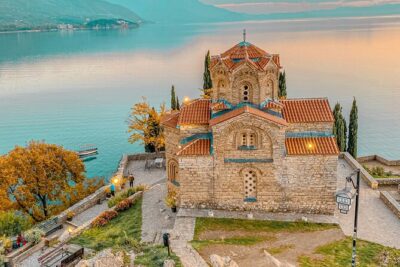
Semi-Private Tour of North Macedonia: Ohrid & Struga from Tirana
Read our review →
Semi-Private Day Tour of Montenegro: Budva & Kotor from Tirana
Read our review →
Private Ohrid Day Tour and Authentic Village from Tirana & Durres
Read our review →
From Tirana; Semi – Private Day Trip to Berat & Belsh Lake
Read our review →
Semi-Private Day Tour of Theth & Blue Eye from Tirana / Shkoder
Read our review →
Semi – Private Tour of Saranda, Ksamil & Blue Eye from Tirana
Read our review →