
Butrint National Park is the kind of place where history doesn’t sit behind glass. In just a few hours you move through Roman engineering, Byzantine faith, and then up toward views that hint at later Venetian power.
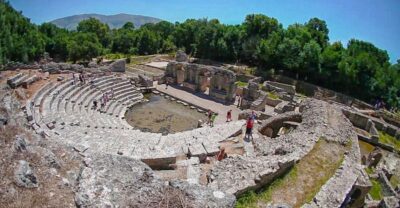
I especially love the Roman theatre remains, because the scale feels real even when the stones are quiet. I also like the stop at the Byzantine church and baptistery, since it’s the sort of detail that makes the ruins feel specific, not generic. One thing to plan for, though: the Butrint entrance ticket is not included in the tour price.
In a private format, the guide matters. I’ve seen excellent guiding from people like Mara and Kacie, who focus on how things worked, not just what you’re looking at. I also recommend you keep an eye on guide quality, because one darker account flagged weak interpretation on a different day.
Quick Hits
- Roman theatre ruins that help you visualize how entertainment worked in antiquity
- Byzantine church and baptistery that stand out for how well preserved they are
- Hilltop Venetian-era castle views to close the walk with a big-picture moment
- Butrinti Lake and Ksamili Islands panoramas on the way in, for a sea-and-sun break
- Private pacing with English guiding, so you can ask questions instead of getting rushed
Butrint National Park in Saranda: Why This Mix of Eras Works
If you only know Albania for beaches and cities, Butrint changes that quick. The site is layered, and not in a vague way. You can see how different eras used the same ground, reused what made sense, and built on top of earlier ideas.
For me, the best part is how the route stays logical. You walk from showy public spaces like the Roman theatre toward civic and religious life, then end with viewpoints that make the geography feel important. It’s history you can follow with your feet, not just history you read about later.
And yes, the scenery helps. Even though you’re inside a national park, you’re also near water, and the ride includes a scenic overlook at Butrinti Lake plus views toward Ksamili Islands.
More Butrint Trips in Saranda
- Best of Saranda: Blue Eye, Butrint, Ksamil & Lekuresi Castle
★ 4.4 · 300 reviews - Saranda: Butrint, Blue Eye, Ksamil and Lekuresi Castle Tour
★ 4.5 · 141 reviews - Butrint, Ksamil, Blue Eye, Lekuresi Castle. All-in-one daytrip.
★ 4.5 · 125 reviews
The 3.5-Hour Time Budget: What Fits and What Might Feel Tight
This is a 3 hours 30 minutes outing in total. Inside the park, the core walk is around 2 hours 30 minutes, then you have travel time and the quick panorama stop on the way.
That timing is usually a sweet spot. You get meaningful interpretation of the major sights, and you still have energy for a few photos without turning the day into a full-day marathon.
The small consideration: if you want to linger at every single corner, 2.5 hours in a site like Butrint can feel like it moves fast. The private format helps here, but the tour still runs on a schedule.
Price and Value: What You Pay, What You Still Need to Budget
The price is $73.34 per person for this private tour. What you get for that money is practical: transport in an air-conditioned vehicle, private transportation, WiFi on board, and all fees and taxes tied to the tour itself.
What’s not included is the big one: the entrance ticket for Butrint National Park. So your real all-in cost will be tour price plus the site admission.
To judge value, I look at two things. First, you’re not paying extra for a bus shuffle or waiting around. This is just your group. Second, the route is structured so the guide can connect buildings and ruins to how people lived. In a place like Butrint, that context is what makes the walk worth your time, not just the photos.
Private Tour Means Your Guide Sets the Tone
A private tour sounds fancy, but what it really changes is attention. You can ask for clarification, ask why something is shaped a certain way, or request a slower pace at the spots that catch your interest.
The guide quality is the heart of the experience. In the strongest accounts, guides like Mara and Kacie were described as on-time, enthusiastic, and focused on explaining history, culture, engineering, and architecture, not just pointing at structures. Those guides tend to make the Roman and Byzantine parts click.
One caution: there’s also a negative report about a guide named Arber where the complaint was about limited historical and archaeological interpretation and a rushed pace. I cannot judge what happened on that specific day, but it is a useful reminder. If guide information is important to you, ask what approach they take and confirm the guide is actively explaining, not only walking and letting you read signs.
Other ways to see Butrint:
- Butrint, Blue Eye, Ksamil and Lekuresi Castle Tour From Saranda
★ 4.0 · 102 reviews - Saranda: Butrint, Ksamil, Blue Eye and Lekuresi Castle Tour
★ 4.1 · 48 reviews - Tour to Butrint Antic City/Blue Eye Spring/Lekursi Castle
★ 5.0 · 43 reviews - Ancient City of Butrint, UNESCO World Heritage site – A Must
★ 4.5 · 27 reviews
Entering Butrint: The Roman Theatre and the Public-Space Feeling
Once you’re at the park, you start with the Roman theatre. This is one of those features where even partial remains communicate purpose. It’s built for gatherings, for performance, and for crowds to watch and listen.
What I like about having a guide on this first big stop is that the Roman theatre isn’t just a pretty ruin. It’s part of a larger system of public life. A good guide helps you connect the shape and positioning to how people would have experienced events.
Also, the theatre acts like a reference point for the rest of the route. As you keep walking through the historical complex, you start noticing how different structures fit together into one functioning town.
The Historical Route Inside the Park: Temple, Baths, Aqueduct
After the theatre, you travel along a route that strings together multiple categories of ancient life:
- A temple stop, which gives you a sense of how religion was woven into civic space
- An ancient fitness center with public baths, which helps you understand daily routines and social behavior
- An aqueduct, a reminder that water management was a serious engineering job, not an afterthought
The best value of guided time here is interpretation. Without a guide, you can still see the remains, but you might miss why they matter. A guide can explain how these pieces connect into a lived environment, from water supply to public gatherings.
A small practical note: this is a moderate-fitness activity. Plan for walking and uneven ground in an archaeological site, and bring comfortable shoes. If you’re the sort of person who needs steady footing, go slow and take breaks.
Byzantine Church and Baptistery: Why This Stop Gets Attention
The Byzantine church and its well-preserved baptistery are a highlight for a reason. Baptisteries are not just decorative. They connect directly to ritual and practice.
In Butrint, this stop feels special because it gives you a clear “type” of building and a clear function. A good guide will point out what makes the baptistery notable and why the preservation matters for understanding what it once looked like and how it worked in its original setting.
If you care about early Christian architecture, this is the kind of detail that makes the site memorable. It’s also the moment where Butrint stops feeling like a timeline on paper and starts feeling like people with real beliefs and routines lived here.
Finishing with Venetian-Era Castle Views
The route ends with panoramic views toward a hilltop castle from the Venetian period. This part is less about standing close to stones and more about orientation.
I love that ending, because it changes your posture. You look out, you take in the geography, and you get a sense of why strongholds mattered in this region.
It also offers a nice emotional rhythm. After concentrated ruins and explanations, the view gives you a calm payoff and a moment to catch your breath, plus great photo angles if the light is friendly.
Butrinti Lake and Ksamili Islands: The Scenic Break on the Way
Before or after the park, you’ll stop to see Butrinti Lake and the Ksamili Islands. The point of this is not museum-level detail. It’s the panorama.
This is a smart add-on because it gives you a contrast to all the stonework. You get sea-and-sun context, and it makes the trip feel tied to the actual region, not only to the archaeology.
It also helps break up the drive from Saranda. If you’re combining beach time with ruins time, this scenic stop makes the day feel less abrupt.
Pickup, Meeting Point, and How to Show Up Without Stress
The meeting point is Rruga Mitat Hoxha, Saranda, Albania, and the tour ends back there.
Pickup is flexible. You can arrange pickup in Saranda City Center, at your hotel, and even from the port if you’re visiting on a cruise ship (the operator notes their office is next to the port).
This matters if your day is tightly planned. If you’re using public transit or you want to avoid taxi hassles, pickup is a big help. If you are staying close to the center, meeting at the stated location can be simple too.
The tour runs Monday to Sunday, roughly 8:00 AM to 2:00 PM, and it depends on good weather.
English Guiding and What You Can Expect
The tour is offered in English, which makes a big difference at an archaeological site like this. You’ll get explanations tied to what you’re seeing, not just a list of names.
In the strongest experiences, guides weren’t only translating. They were connecting topics like architecture, engineering, and how the town functioned. If you care about “how it worked,” this is where the private guiding time earns its keep.
If your English is strong and you like asking questions, a private format is a good match. You can steer the conversation toward what matters to you, Roman civic life versus Byzantine ritual, for example.
Weather, Comfort, and Photo Tips That Actually Help
Because the tour requires good weather, keep your clothing ready for Albania’s coastal conditions. If it looks like rain or heavy wind, you might get a different date or a refund offer.
For comfort:
- Wear comfortable walking shoes since this is a moderate-fitness site visit
- Bring sun protection, especially if you’ll be outside during viewpoints
- Use the car time to hydrate and reset, since the park portion is the main effort
For photos:
- Start with the theatre early, before your energy fades
- For the castle viewpoint, aim to shoot during the clearest, less harsh light you can find
- Keep your phone or camera charged, because you’ll want shots at both the ruins and the lake and islands panorama
Should You Book This Butrint Tour?
I’d book it if you want a structured, English-guided visit to the key parts of Butrint, plus a scenic lake and island stop, without spending the day driving yourself. The price can be solid value, because transport and tour fees are included, and private pacing makes the experience feel personal.
I would think twice if you dislike paying add-ons, because the Butrint entrance ticket is separate. I’d also pay attention to guide quality. When the guiding is strong, the experience sounds like a standout. When guiding is weak, the ruins alone can start to feel like you are walking a signposted route without the extra meaning.
If you match those dots, this is a great way to turn a Saranda day into a real step through multiple eras of the Adriatic world.
FAQ
How long is the Daily Tour to Butrint National Park?
The tour lasts about 3 hours 30 minutes.
How much time will I spend inside Butrint National Park?
The main park route is about 2 hours 30 minutes.
Is the Butrint entrance ticket included in the price?
No. Entrance tickets to Butrint National Park are not included.
Do you offer pickup in Saranda?
Yes. You can be picked up in Saranda City Center, from a hotel, or from the port.
Is this a private tour?
Yes. It is private, and only your group participates.
What language is the tour offered in?
The tour is offered in English.
What is included in the tour price?
Included are an air-conditioned vehicle, private transportation, WiFi on board, and all fees and taxes.
Is the tour suitable for everyone physically?
It’s listed for travelers with a moderate physical fitness level.
FAQ
Do I need good weather for the tour?
Yes. The tour requires good weather. If it’s canceled due to poor weather, you’ll be offered a different date or a full refund.
More National Parks in Saranda
- Visit The National Park of Blue Eye & Lekuresi castel
★ 4.0 · 32 reviews - Visit The National Park of Blue Eye
★ 4.5 · 16 reviews - Full Day Tour: Butrint National Park, Ksamil, Blue Eye and Lekursi Castle
★ 5.0 · 11 reviews - Visit The National Park of Blue Eye and The Fortress of Lekuresi
★ 4.0 · 9 reviews
Newly listed around Saranda
- From Tirana/Durrës/Golem: Gjirokastra UNESCO Town Day Tour★ 5.0 · 3 reviews
- From Tirana: Saranda Blue Eye, Ksamil Islands with Boat Tour★ 5.0 · 3 reviews
- Saranda Private Boat Tour★ 4.4 · 3 reviews
- Visit Kroreza Beach by Boat★ 4.5 · 3 reviews
- Ksamil Boat Tour To Pulebardha, Pigeon Cave & Snorkelling★ 5.0 · 3 reviews
- Sarande Speed Boat★ 5.0 · 3 reviews
- The Darkness of Communism: From Bunkers to Forbidden Faith★ 4.5 · 3 reviews
- Saranda: Ksamil, Ali Pasha Cave, and Krorëza Beach Boat Tour★ 2.3 · 3 reviews
Butrint National Park, compared.
Day Trip to Saranda and Butrint National Park from Corfu
Read our review →
Best of Saranda: Blue Eye, Butrint, Ksamil & Lekuresi Castle
Read our review →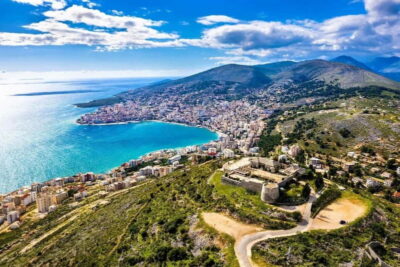
Butrint, Blue Eye, Ksamil and Lekuresi Castle Tour
Read our review →
Butrint, Ksamil, Blue Eye, Lekuresi Castle. All-in-one daytrip.
Read our review →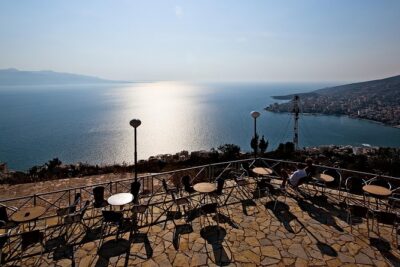
Butrint, Blue Eye, Ksamil and Lekuresi Castle Tour From Saranda
Read our review →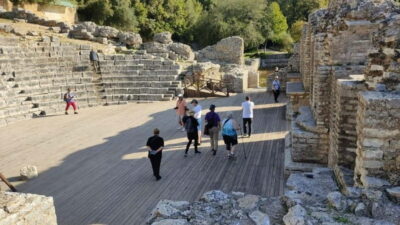
Butrint, Ksamil, Blue Eye and Lekuresi Castle Tour
Read our review →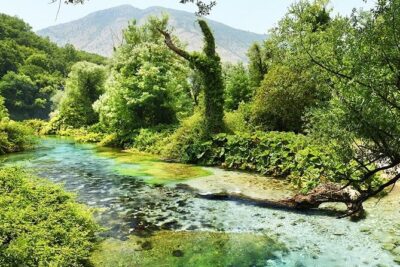
Tour to Butrint Antic City/Blue Eye Spring/Lekursi Castle
Read our review →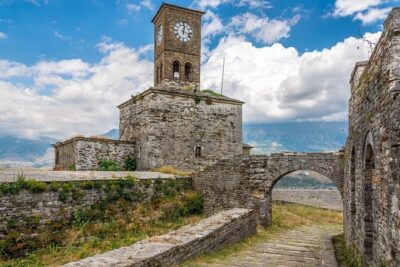
Private Day Tour of Saranda Gjirokaster and Butrint from Tirana
Read our review →Browse the lists this tour appears in