
A small-group day like this is interesting because you watch Albania’s religious mix unfold in real places, not just on a map. I love how the itinerary pairs the 17th-century Ottoman Xhermehalla complex in Delvinë with Orthodox sites like the Monastery of St. Nicholas in Mesopotam. I also like that the guide connects architecture to everyday messages of coexistence, including the kind of symbols and stories people remember from the region.
One possible drawback: it is a full moving day in a minivan, then standing and walking through multiple sites in rural villages. Also, while there is a food stop near the end, meals are not listed as included, so you should be ready for your own budget for lunch snacks.
Key highlights worth planning around
- Xhermehalla Islamic Complex in Delvinë with a mosque, türbe, hammam, and a historic water source
- Gjin Aleksi Mosque in Rusan where the building is known for its striking acoustics
- Finiq Orthodox church set right in village life near the area of ancient Phoenice
- St. Nicholas Monastery in Mesopotam with restored frescoes and a church-monastery layout
- Monastery of the Forty Saints ruins for big sea views and a story tied to Saranda’s name
- Maximum 5 travelers and English-speaking guide, making questions easy
How this religious-sites route tells a real story
This is the kind of Saranda excursion I recommend when you want more than pretty buildings. Here, the point is to see how faiths lived side by side across centuries, then understand how those layers still shape the towns around you. You start in the Saranda area and work outward through Delvinë, Rusan, Finiq, Mesopotam, and finally back toward sea views near Saranda.
What makes it work is the balance of Islamic and Orthodox heritage. You are not rushing past a single church and calling it a day. Instead, you pass through Ottoman-era design, Byzantine church tradition, and village religious life, all within a compact half-day.
And if you care about the Albania message of tolerance, you will likely find it woven into the explanations. I like how the tour does not treat interfaith harmony as a slogan. It comes across as something people built into shared space over time, then remembered as part of local identity.
A few more Saranda options to put side by side
- Saranda: Lekursi Castle, Blue Eye, Gjirokaster, & More Tour
★ 4.9 · 884 reviews - Sarande: Blue Eye Spring and Lekursi Castle Sunset Tour
★ 4.8 · 798 reviews - Sarande: Hidden Cave, Gremina, Kakome & Krorez Boat Tour
★ 4.8 · 665 reviews
Pickup, minivan comfort, and what small-group means in practice
You meet at Saranda Hidden Stories on Rruga Naim Frashëri. If you are using pickup, the driver waits for you at the arrival hall with a sign showing the lead traveler’s name. That simple detail helps a lot in Saranda, where it is easy to lose track of meeting points.
Once everyone is in, you ride out in a comfortable, air-conditioned minivan. The group size is capped at 5, which changes the feel. You can actually ask follow-ups, and your guide can slow down when someone wants more detail about Ottoman urban planning, Byzantine frescoes, or why a mosque is famous for sound.
The tour is listed at about 5 hours. That is a good length if you want a full day, but you still want time left later for beaches, long dinners, or just wandering Saranda streets without feeling wrecked.
Delvinë’s Ottoman Xhermehalla complex: mosque, türbe, hammam, and water
The first stop is Delvinë, at the Xhermehalla Islamic Complex, a 17th-century Ottoman site. You start your walking right at the complex, so you get the full sense of how the place is laid out as a unit, not as scattered pieces.
Within the complex, you visit:
- the mosque
- the türbe
- the hammam
- the historic water source
This mix is what I find most valuable. A mosque is the obvious starting point, but the türbe connects you to where people anchor memory. Then the hammam and water source bring you back to daily life, showing that faith architecture in this region was not only about worship. It was also about systems for community routine, hygiene, and gathering.
The guide’s explanations typically focus on Ottoman influence and early urban planning. Even if you are not a history nerd, you can usually spot the practical logic in the layout once you hear how it functioned as a community center.
One more nice note: this stop is free admission as listed, so you are not hit with extra entry fees partway through.
Rusan’s Gjin Aleksi Mosque: sound that makes you stop talking
After Delvinë, you head toward Rusan, near Delvinë, for the Gjin Aleksi Mosque. This is another 17th-century monument and an easy place to slow your pace, because it sits in a quiet natural setting where you can actually hear your surroundings.
The standout feature here is the mosque’s unique acoustics. The idea is simple, but it is powerful: the building changes the way sound travels, so the architecture feels alive in a way you might not expect. When you stand in the right area and you hear the way voices and echoes behave, it gives you a different appreciation for how form can shape spiritual or communal experience.
You will also learn about its historical and spiritual role in the local community. I like that this part is not only theory. You get the sense that this is still a meaningful landmark for people nearby, not an empty museum piece.
Admission is listed as included for this stop, so the day stays smooth and predictable.
Same base, a completely different day:
- Daily Trip To:Blue Eye,Monastery,Gjirokaster&Lekursi Castle
★ 4.9 · 665 reviews - From Tirana, Durrës & Golem: Saranda, Blue Eye & Ksamil Tour
★ 4.9 · 652 reviews - Sarandë: Boat Tour at Kroreza & Hidden Caves with Snorkeling
★ 4.8 · 608 reviews - Group Tour 7 stops Saranda to Krorez Free Drink and Umbrella
★ 4.9 · 562 reviews
Finiq Orthodox church in a working village setting
Next you move to Finiq, where you visit a medieval Orthodox church inside the village community. The setting matters here. Instead of being isolated, the church sits in the rhythm of ordinary life, so you experience it as something that belongs to local people, not only to visitors with cameras.
The area is also connected to Byzantine heritage, and the visit helps you connect what you saw earlier in Ottoman architecture to the earlier Christian layers in southern Albania. You are not just collecting dates. You are seeing how religious buildings carry identity across eras.
This stop is listed with free admission. That is helpful on a day where the price already covers transportation and English commentary. It also means you do not need to worry about timing entry windows with extra ticket lines.
If you are the type who likes rural culture over big monuments, you will probably enjoy the quieter pace here.
Mesopotam’s Monastery of St. Nicholas: two apses and restored frescoes
In Mesopotam, you visit the Monastery of St. Nicholas, a 13th-century Byzantine church-monastery. This is one of those stops where the details matter, because the structure is described as having two apses and restored frescoes.
Even without expert background, you can usually appreciate restored fresco work because it changes how you interpret the space. Frescoes turn a church wall from flat texture into a narrative surface. The guide’s explanation usually helps you understand what you are looking at and how the monastery functioned as a spiritual center.
I also like the way this stop is framed by setting and stillness. The monastery experience is meant to be calmer than the earlier mosque visits. You get a chance to slow down, look closely, and let the architecture and art do some talking.
Admission is listed as free for this stop, which keeps the day feeling like you get more access than you pay for.
The Monastery of Forty Saints ruins: sea views and a name story
The last major historical stop is the Monastery of the Forty Saints ruins, near Saranda. This is a 6th-century Byzantine site, and the visit is described as panoramic, with sea views. That matters because the setting is part of the meaning. When you can look out over the water while standing in old stone ruins, the place feels bigger than just its walls.
You also get a specific story link: the monastery is historically associated with the origin of the city’s name. That kind of connection is exactly why I like this tour. You end the day with a stronger sense of place. Saranda is not just a beach destination in this narrative. It has roots tied to older sacred geography.
This stop is listed as admission included. After that, the tour ends back near Saranda, and there is a stop at a local spot where you can try freshly made byrek and dhallë.
Quick honesty: meals are listed as not included in the overall tour details. So treat the food stop as your chance to try local flavors, not a guaranteed included lunch.
The practical stuff: timing, walking, and what to wear
This tour is about multiple sites in a single stretch, so plan for a mix of:
- climbing in and around stone areas
- time spent standing for photos
- short walks between stops, plus a longer ride in the minivan
Because the tour is weather dependent, pick a day when conditions are stable. If weather turns, you can be offered another date or a full refund, but it is still better to plan around typical clear-sky windows.
Dress smart for religious sites. Even when entry is not strict, you will feel more comfortable with shoulders covered and legs covered. It is especially useful for church visits and mosque areas, where you might need to respect local norms.
Also, bring a small water bottle. The itinerary does not list water as included, and you will likely want it on the road and during the panoramic ruin stop.
Price and value: what $59.15 gets you in real terms
At $59.15 per person, the value is mostly about transportation plus a full guided loop through Ottoman and Byzantine sites. You get:
- transport in an air-conditioned minivan
- an English-speaking guide
- mobile ticket support
- pickup in Saranda at the arrival hall, when you select pickup
- admission coverage for some stops and free admission listed for others
For a day that touches five separate religious sites, including major complexes and monasteries, this is not a bad deal. The bigger question is your interests. If your idea of a good half-day is art history, architecture, and cultural context, this price feels justified.
If you only want one big museum-style site, you might prefer a shorter or more focused option. But if you like the way a single day can show multiple centuries, the cost per site ends up feeling reasonable.
Who should book this tour
I think this tour is a strong fit if you:
- want Ottoman and Byzantine heritage in one day
- like interfaith stories grounded in real places
- enjoy small-group pacing and easy questions for the guide
- plan to stay in Saranda and want a half-day culture hit without stress
It may feel less ideal if you are not into walking around old stone sites, or if you are very sensitive to long drives and quick transitions between stops.
Should you book the Old Religious Sites around Saranda tour?
If you care about Albania beyond beaches, I would book it. This route gives you a clear contrast between Islamic and Orthodox heritage, and it ties the sites together with a theme you can feel in the architecture and the village settings. The Monastery of the Forty Saints ruins with sea views are a memorable finish, and the early stops in Delvinë and Rusan help you understand how community life and religion shaped the built world here.
Skip it if you prefer a single-site deep visit, or if you want all meals included rather than a food tasting stop near the end. Otherwise, for an efficient 5-hour day from Saranda, this is one of the smarter ways to spend your time.
FAQ
How long is the tour?
The tour runs for about 5 hours.
What is included in the price?
The price includes transport. The tour is offered in English, and a mobile ticket is provided. Admission is listed as free for some stops and included for others.
Is pickup available in Saranda?
Yes. You can be picked up at the arrival hall, and the driver will be waiting with a sign showing the lead traveler’s name.
What language is the guide?
The tour is offered in English.
Are meals included?
Meals are not listed as included. The itinerary includes a stop where you can have byrek and dhallë, but meals are not covered in the included section.
What happens if the tour is canceled due to weather?
The tour requires good weather. If it is canceled due to poor weather, you will be offered a different date or a full refund.
Newly listed around Saranda
- From Tirana/Durrës/Golem: Gjirokastra UNESCO Town Day Tour★ 5.0 · 3 reviews
- From Tirana: Saranda Blue Eye, Ksamil Islands with Boat Tour★ 5.0 · 3 reviews
- Saranda Private Boat Tour★ 4.4 · 3 reviews
- Visit Kroreza Beach by Boat★ 4.5 · 3 reviews
- Ksamil Boat Tour To Pulebardha, Pigeon Cave & Snorkelling★ 5.0 · 3 reviews
- Sarande Speed Boat★ 5.0 · 3 reviews
- The Darkness of Communism: From Bunkers to Forbidden Faith★ 4.5 · 3 reviews
- Saranda: Ksamil, Ali Pasha Cave, and Krorëza Beach Boat Tour★ 2.3 · 3 reviews
Saranda Tours, compared.
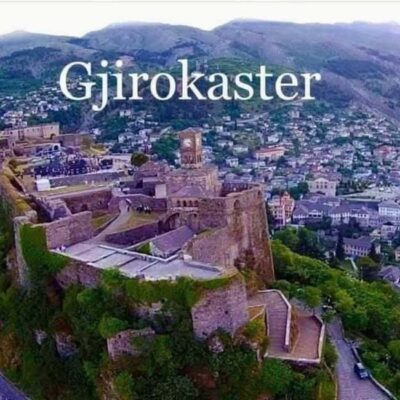
Lekursi Castle, Blue Eye, Gjirokaster, & More Tour
Read our review →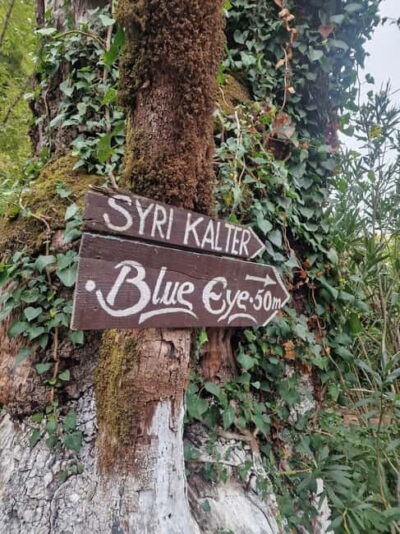
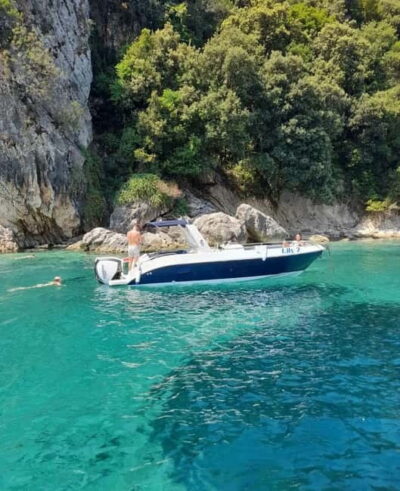
Hidden Cave, Gremina, Kakome & Krorez Boat Tour
Read our review →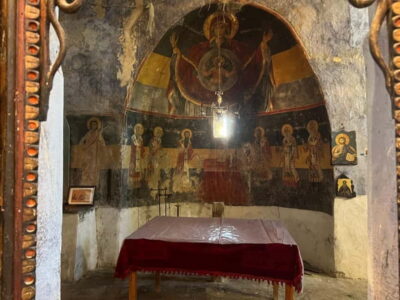
Daily Trip To:Blue Eye,Monastery,Gjirokaster&Lekursi Castle
Read our review →
Boat Tour at Kroreza & Hidden Caves with Snorkeling
Read our review →
Group Tour 7 stops Saranda to Krorez Free Drink and Umbrella
Read our review →
Boat Tour to 7 Destinations with Beach Umbrella
Read our review →Browse the lists this tour appears in